 By admin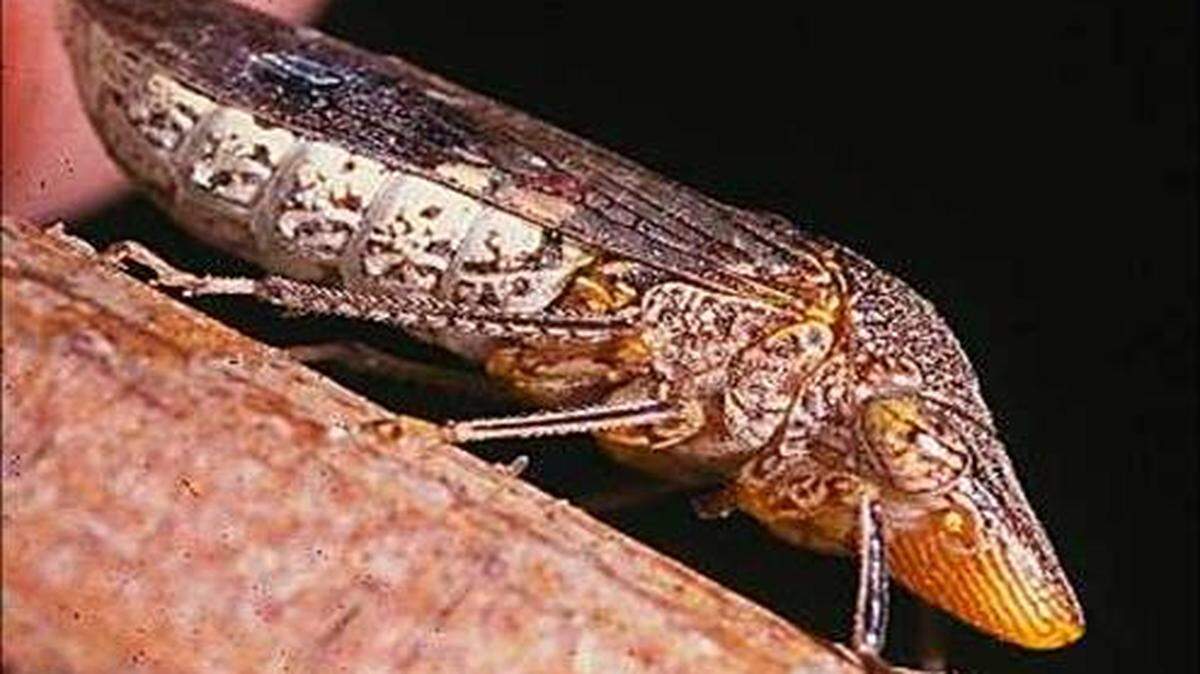
The agriculture industry’s fight against the glassy-winged sharpshooter received a modest influx of cash from the California Legislature following the end of its 2026 session.
Read more California player wins six-figure Mega Millions prize. Where was lucky ticket sold?
The Legislature directed the California Department of Food and Agriculture to provide $10 million to county agricultural commissioners from the agency’s existing emergency funds. The dollars can be used for investigations, emergency detection and eradication of the glassy-winged sharpshooter.
Glassy-winged sharpshooters were found on grapevines and ornamental plants sold at Costco stores in Sacramento County and dozens of other counties throughout the state earlier this summer. Thousands of plants were sold and are still unaccounted for. The destructive pests spread Pierce’s disease, which kills grapevines, and can make homes in numerous other fruits. Glassy-winged sharpshooters are not a risk to humans or animals.
The $10 million in state money falls short in both the amount and type of funds that the agriculture industry requested.
Industry associations asked legislative leaders for $26.8 million in new emergency funds for the state agriculture department in the 2026-2027 fiscal year budget. The dollar amount of the request changed as more pests kept being found in the state, and the groups reevaluated the amount of funding needed.
As for the type of funds, industry representatives fear that when the next emergency comes, such as the spotted lanternfly, CDFA will not have the dollars to handle it due to a smaller pool of emergency funds.
“These are real problems,” said Michael Miiller, director of government relations for the California Association of Winegrape Growers, at a Thursday meeting with two legislative leaders to discuss the glassy-winged sharpshooter. “…I know that people come to you all the time, asking for a handout, asking you for something, and they say, ‘The sky is falling.’ (With the glassy-winged sharpshooters), the sky is falling.”
Hundreds of millions of combined public and private dollars have been spent on the pest control programs since their inception. Yet, since 1999, when the pest control programs started, state funding has trended downward, state figures show. While those dollars declined or remained flat, the state agriculture industry’s worth grew and pest control and prevention costs went up. Concurrently, industry and federal investment in the programs increased.
The wine and grape industries are billion-dollar enterprises in California. The state produces 99% of all table grapes and around 80% of all wine in the U.S., according to industry groups. The wine industry supports more than 422,000 jobs statewide, generating about $73 billion in annual economic activity, according to CDFA.
With wine consumption at historic lows, the wine industry is already facing significant challenges. Some grape growers and winemakers are closing because they can’t afford to be in business anymore. They say the increasing threat of the glassy-winged sharpshooter isn’t helping.
CDFA did not make a request to Gov. Gavin Newsom or the Legislature for additional glassy-winged sharpshooter prevention funding. The state agriculture agency does not comment on pending legislation, according to CDFA spokesperon Devon Keeler.
“We will continue to collaborate closely with our federal, state, and local agency partners as well as industry to rapidly and effectively respond to glassy-winged sharpshooter infestations throughout the state,” Keeler said in a written statement.
State Sen. Christopher Cabaldon, D-West Sacramento, held a meeting on behalf of the Senate Select Committee on California’s Wine Industry Thursday in Davis. Cabaldon, the committee chair, was joined by State Assembly Majority Leader Cecilia Aguiar-Curry, D-Winters. Presenters included representatives from University of California Agriculture and Natural Resources, the California Association of Winegrape Growers and the county agricultural commissioners.
The state department of agriculture was invited to participate in the event but did not attend due to scheduling conflicts, Keeler said.
At the committee meeting, Miiller asked that the state increase its funding of the Pierce’s Disease Control Program to at least $10 million annually.
Read more 1 dead in Arden Arcade shooting. Eastbound Highway 50 shut down at Howe Avenue
Cabaldon told The Bee last week that he and Aguiar-Curry fought hard for the new $10 million in this budget cycle. At the same time, Cabaldon said he recognizes that it takes money away from future pest emergencies.
“But we have these resources to deploy now for the crisis that we know we have now,” Cabaldon said. “…That’s not the way we would have funded it, but we need those resources on the ground at the county level now. …We’re going to need much more.”
A 2026 report from the California Agricultural Commissioners and Sealers Association and the state agriculture department warned that the state pest prevention system is “under increasing strain” and, as a result, “falling behind growing threats.” The report identified more than $90 million in “immediate one-time funding needs” and $25 million in annual investments to strengthen the pest control programs. These dollars, the report said, do not account for the long-term investment required to maintain the system’s effectiveness.
The agricultural commissioners association said the state spends 10 to 15 times more on emergency funding than it would if it systematically invested in pest control programs.
The presence of invasive insects is rising overall as growing season lengths and temperatures shift due to climate change.
The majority of the glassy-winged sharpshooter detections from the Costco incidents have been of immature life stages of the invasive pest, such as egg masses. But recently, more adult insects have been found throughout the state, according to CDFA. The agency said it is not clear yet if all new detections are connected to the Costco incidents.
The leaf-hopping insect destroyed more than 1,000 acres of grapevines in Northern California from 1994 to 2008, causing $30 million in damage, according to California’s agriculture department. Pierce’s disease, in a year when it infects grapevines, can cost California grape growers tens of millions of dollars.
Sens. Alex Padilla and Adam Schiff and 12 U.S. House members requested $32 million from USDA and were rejected. Lawmakers said in their USDA funding request that if unaddressed, the glassy-winged sharpshooter could cost the state $104 million annually.
As of last month, CDFA was still awaiting a decision from USDA on its $8.2 million one-time funding request for the Costco incidents.
CDFA’s Pierce’s Disease and Glassy-Winged Sharpshooter Board announced recently that it has committed an additional $820,000 to the ongoing emergency response. That money comes from industry assessment fees paid to the state.
Following the board’s announcement, the Consolidated Central Valley Table Grape Pest and Disease Control District said in a news release that it earmarked up to $1.7 million from grape industry funds to support CDFA’s prevention and eradication efforts for Pierce’s disease and the glassy-winged sharpshooter.
Tracy Cleveland, Napa County’s agricultural commissioner, told the two legislators at last week’s hearing that the overall pest situation in California is at the “red alert” level.
“We are doing more with less and that is not sustainable,” Cleveland said of the state pest budget. “…(Pests) are getting in and, at a certain point, they will become established. And when you talk about eradication instead of prevention, common sense goes out the window and so does any reasonable kind of budget.”
Read more 1 dead in Arden Arcade shooting. Eastbound Highway 50 shut down at Howe Avenue
This story was originally published September 8, 2026 at 2:29 PM.