 By admin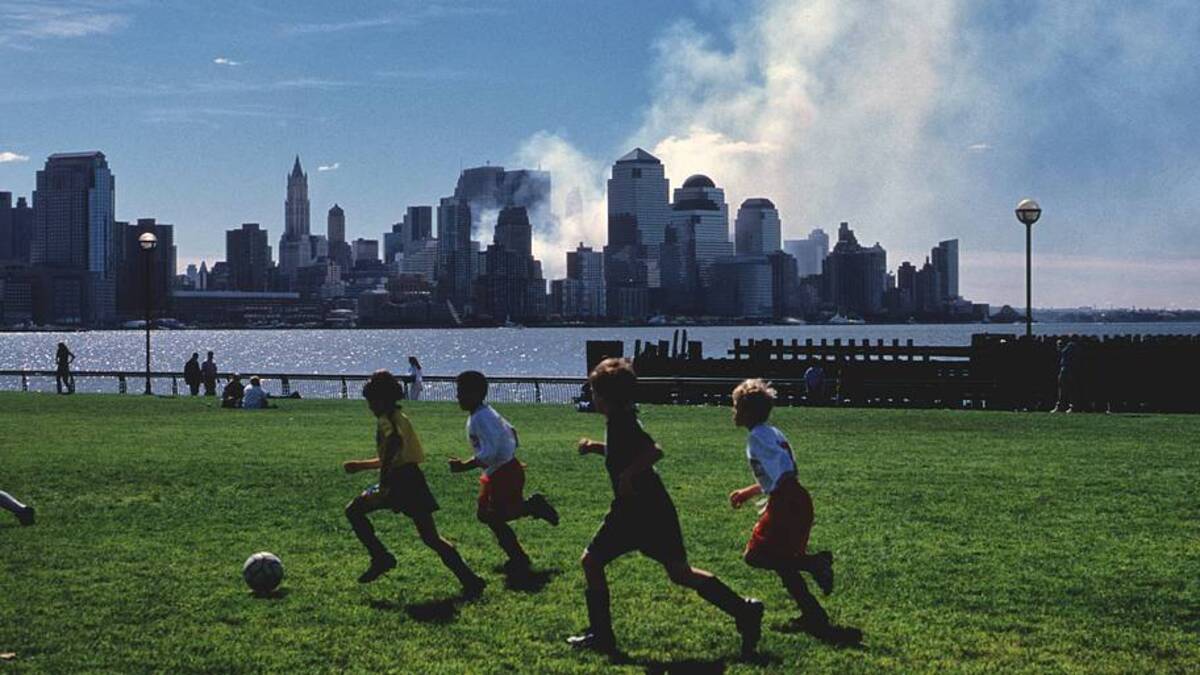
What do I remember about 9/11? Nothing.
None of the horror, none of the panic, none of the shock. None of the hours of time Americans spent glued to their televisions in the week afterward. None of the brokenness-the physical brokenness of the World Trade Center, the spiritual brokenness of a nation grappling with its place in a new, dangerous 21st century. No firsthand stories of the victims’ heroism, none of the stories of the perpetrators’ cowardice. None of the emotions that calcified and oozed into the art of the decade afterward-25th Hour‘s sadness, 24‘s paranoia, The Dark Knight‘s solemnity. And certainly none of the cancellations that roiled and rearranged the world of sports, a world that was about to change forever.
Read more 5 Critical Storylines to Watch As Patriots Open Season vs. Seahawks
Like Cam Schlittler (Feb. 5 in Weymouth, Mass.), or Anthony Edwards (Aug. 5 in Atlanta), or Paige Bueckers (Oct. 20 in Edina, Minn.), or Caleb Williams (Nov. 18 in Washington, D.C.), I was born in 2001. So were millions of Americans coast to coast. We were dealing with cribs and pacifiers while the United States was dealing with Ground Zero and anthrax, with frightened parents left to mediate.
Now, we are 20-somethings. We are getting married and having children, thumbing through Hinge and slipping into situationships, navigating law school and medical school and jobs we’ve been working since we were in high school, playing recreational soccer and watching Netflix and reading and knitting. We are cheering on the Cubs in Chicago, the Trail Blazers in Portland, the Falcons in Atlanta, the Rangers in New York. We are taking off our shoes in TSA lines and we are emptying our pockets before sporting events. We are singing “God Bless America” in the seventh inning and we are handing over data on the Internet with the implicit promise of security.
And we are doing this because that is all we know.
It has now been 25 years since 19 Al-Qaeda associates hijacked four airplanes and flew them into the World Trade Center, the Pentagon and a Pennsylvania field-killing thousands across every social stratum on a day without parallel in American history. Twenty-five years-the same distance between the sinking of the Titanic and the Hindenburg disaster, or Pearl Harbor andThe Beach Boys’ Pet Sounds, or the assassination of John F. Kennedy and the election of George H.W. Bush. A long time, and yet no time at all.
The loss to sports: incalculable. Garnet “Ace” Bailey, a longtime NHL scout, was aboard United 175 and died when it hit the South Tower. Welles Crowther, a former Boston College lacrosse player, saved as many as 18 lives before dying at age 24 in the South Tower’s collapse. Four masterminds of the plan to fight back against the hijackers and divert United 93 from its target in Washington, D.C.-Todd Beamer, Mark Bingham, Tom Burnett and Jeremy Glick-all played college sports. In May 2002, Cardinals safety Pat Tillman, moved by the attacks, joined the U.S. Army; friendly fire would kill him in Afghanistan in April 2004.
Sports, which had spent the late 20th century in the United States growing steadily bigger, now seemed oh-so-small. So, like all institutions in the days after 9/11, they coped-but did they know the relentless march of history would dissolve their gestures into drops in a future content ocean? That Mets catcher Mike Piazza’s legendary go-ahead home run against the Braves in the first post-attacks sporting event in New York would one day sit alongside the Legion of Boom Seahawks and early-2010s Oklahoma City Thunder clips in “best sports crowd pop” video compilations? That U2’s classy Super Bowl halftime tribute to 9/11 victims would take its place in “best Super Bowl halftime show” listicles alongside Prince and Bad Bunny?
Amid this outpouring of public grief, a new world was being born. Long after the victims were laid to rest and the mourning period subsided, patriotic imagery remained. The flyover, the giant flag and the salute to veterans-previously the reserve of special occasions-were to become ubiquitous. Suddenly, Sept. 11 became Patriot Day-to many of my generation, a triumphalist red, white and blue-colored holiday gradually divorced (not unlike Memorial Day and Labor Day before it) from its original meaning. By the time high school rolled around for me in the late 2010s, it had become another football spirit theme day, sandwiched between Beach Week and Tie-Dye Week.
Maybe that had to happen, because the truth of how immensely the country had changed was too awful to consider. Never to be the same again: Americans’ relationship with death, television and death on television. When the COVID-19 pandemic took more than 1.2 million lives, media outlets often expressed the disease’s death toll relative to 9/11’s. Television stations rushed to add tickers to their broadcasts after the attacks, a feature that remains unmissable today in sports and beyond. Those same stations unwittingly broadcast to millions (both in the moment and in years to come, through the coming invention of YouTube) a snuff film of sorts, priming the world for horrors from 2019’s Christchurch mosque shootings to Charlie Kirk. In fact, the crash of cell networks in New York and beyond on 9/11-caused in part by the attacks’ destruction, and in part by the sheer volume of people trying to communicate their horror instantly-could be interpreted as a dress rehearsal for the looming social-media age.
“The 22 babies born in New York City while the World Trade Center burned will never know what they missed,” Hunter S. Thompson famously lamented on ESPN’s Page 2 days after the attacks. “The last half of the 20th century will seem like a wild party for rich kids, compared to what’s coming now. The party’s over, folks.”
Prescient though Thompson was in many respects, let it be said that Generation Z-a cohort that the author identified in his column by name-endured. Nihilistic, shallow and vapid in spots? Of course-what generation isn’t? Scarred by history? In the words of Billy Joel: We didn’t light it, but we tried to fight it. But Generation Z is resilient, and Generation Z is strong, and you can see that as easily in your local sports venue as in the halls of power worldwide (canvassing Wikipedia for protests described as “Generation Z protests” yields 40different results) .
New York, of course, is resilient, too. The glistening One World Trade Center stands sentry over Ground Zero, a poignant reminder of what remains a hard-to-fathom, single-day loss of life. In June, the Knicks’ first NBA championship since 1973 sent a multicultural, cross-class coalition streaming into the city streets-a counterpunch to bigots and fundamentalists everywhere. It also gave young New Yorkers a where-were-you moment to celebrate rather than mourn, and one to rival their sporting peers in Chicago, Cleveland, Philadelphia and elsewhere in the decade prior.
In August, I traveled to Pittsburgh for a wedding. With free time the morning of the celebration, I puttered around the city’s Oakland neighborhood with a friend. We made our way to the University of Pittsburgh’s Cathedral of Learning, taking in its soaring Gothic arches, and then-having ascended unimpeded to the 36th floor, the highest accessible to the public-looked out over the bustling city below.
A gradual revelation followed. How many skyscrapers in the United States can one simply travel up, free of charge? In how many buildings can one peek at the horizon without having to contemplate the liberty-security trade-off that occurred in the attacks’ wake? Without realizing what I’d been missing, I’d been given a gift-a small one, but one that proved that the sky was still the limit in this grounded century.
Today’s best reads
- Amid the Horrors of 9/11, Sports Became the Cultural Force That Brought Us Together
This article was originally published on www.si.com as Growing Up 9/11: A 2001 Baby Reflects on the Attacks That Changed Sports Forever.
Copyright ABG-SI LLC. SPORTS ILLUSTRATED is a registered trademark of ABG-SI LLC. All Rights Reserved.
Read more NFL Facing Backlash For Kicking Off 2026 Season With Wednesday Game
This story was originally published September 9, 2026 at 6:00 AM.