 By admin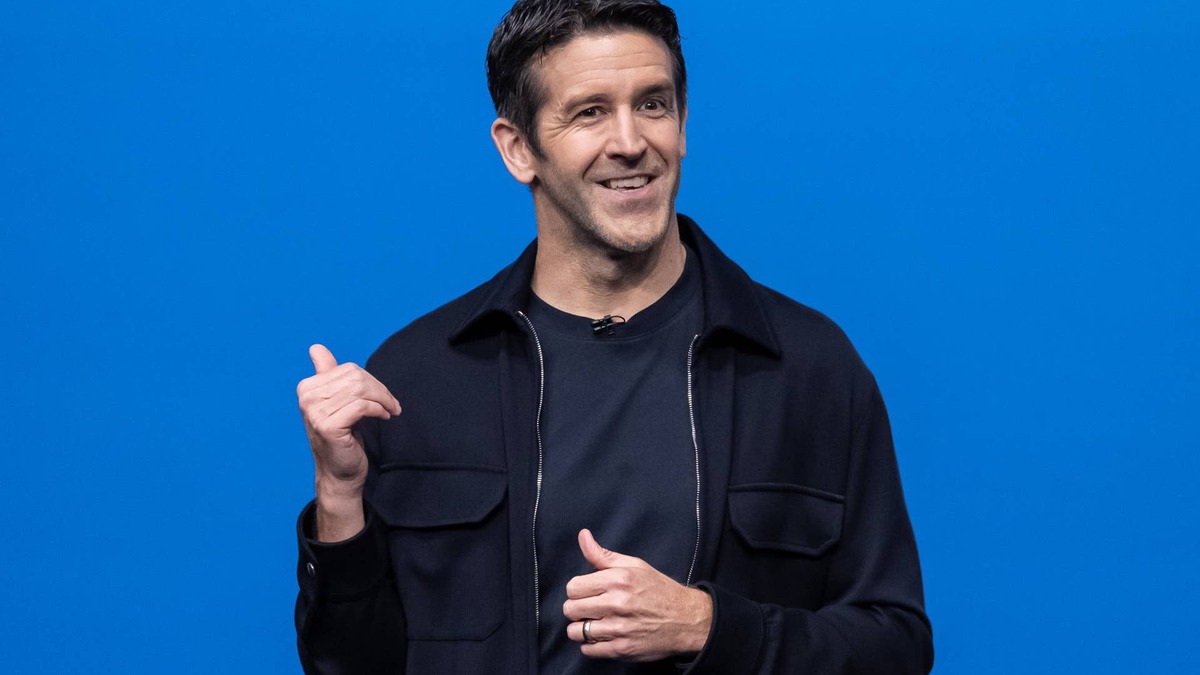
Apple (AAPL) flipped the script onSeptember 9, 2026, after revealing its much-anticipated iPhone Duo.
Read more BMW X5’s Lease Prices Look Attractive Before Next-Gen Model Arrives
Unlike at an annual iPhone launch, the conversation this time was about more than a cooler camera or a faster chip.
Here was an iPhone that opened into a 7.6-inch display, with a crease early testers were barely able to see. CEO John Ternus’s subsequent TechRadar interview, though, offered Apple stock investors another big reason to pay attention.
The iPhone Duo’s eye-catching hardware clearly supplied the spectacle.
Apple’s first-ever foldable phone layers a compact 5.4-inch outer screen with a large canvas for videos and side-by-side apps. Moreover, its robust A20 Pro chip powers the experience, while a nano-texture finish offers an anti-glare effect, with Apple Pencil support coming later this year.
Early reactions captured that enthusiasm.
Tom’s Guide’s Mark Spoonauer described “something magical” about using it, as reported by Women Love Tech. Moreover, MacRumors found it “thin, but feeling sturdy”, while AppleInsider’s Andrew O’Hara came away from his hands-on session declaring, “I think I’m sold.”
Excitement isn’t exactly a sales forecast, though. Starting at $1,999 and hitting stores on October 23, the Duo needs to persuade buyers that the extra screen is worth the extra money.
That said, Ternus’s broader argument in his TechRadar interview warrants much more attention. His confidence extends beyond a foldable display. Even as AI opens the door to new devices, he sees a familiar product holding its own.
Ternus pushes back on a future without the iPhone
For Apple investors, the big threat is less about competition and more about whether AI can eventually shift everyday computing away from smartphones, weakening the iPhone’s role in consumers’ lives.
In his TechRadar interview, John Ternus emphatically pushed back against that possibility.
“And so we don’t see the phone losing significance in any way, shape or form.”
He took a practical approach: even though AI wearables offer convenience, the phone already has layers of computing power, battery life, and a screen in something people are routinely carrying.
“But I think the key is that the phone is kind of the perfect device. It’s powerful and has a great battery life. It has a display. People want displays.”
More Wall Street:
- Wall Street’s AI trade faces its biggest valuation test
- The next Wall Street shift is already underway
- Wall Street sends strong 4-word verdict on the stock market
Apple sees AI as a way to solidify its existing customer relationships. Watches and AirPods could extend that experience, while the iPhone remains the go-to device that anchors it.
Ternus also stressed the importance of keeping users’ personal information private and under their control.
“And yeah, there’s lots of talk about what comes next and wearables and things like that. And the reality is we make amazing wearables. Apple Watch is an incredible device, an incredible device for AI. AirPods are as well.”
That adds a lot of nuance to the discussion, where it’s clear that Apple is looking for those devices to complement the phone, preserving its role as AI spreads across more products.
That’s a big defense of the iPhone’s relevance, but it’s not exactly proof of quicker upgrades or stronger sales. Whether customers embrace that vision over time remains a major commercial test.
Read more Hospitality company says it could lay off 128 workers at fairgrounds
iPhone 18 faces a $170 billion act to follow
Another of Ternus’s arguments was that AI creates opportunities to improve existing devices and to create entirely new products.
“You can see what we’re able to do now in our products that we were never able to do before,” he said, pointing to Smart Take’s automated photography.
For the iPhone 18 cycle in particular, those capabilities need to become convincing reasons to upgrade.
The iPhone 17 set a formidable benchmark.
Counterpoint’s September 9 report, as reported by Barrons, put iPhone 17 series wholesale revenues above a jaw-dropping $170 billion in its first sales year, comfortably beating the iPhone 16 generation by 11% and every previous lineup’s launch-year total. Additionally, China’s sales alone jumped 35%.
Moreover, the standard iPhone 17 captured 6% of global smartphone unit sales in the June quarter, ranking number 1 worldwide. Counterpoint pointed to meaningful upgrades that effectively narrowed the gap with Pro models, alongside financing and promotions.
That said, Apple showed off the iPhone 18 Pro and Pro Max on September 9, as reported by Reuters, with availability September 18, starting at $1,199 and $1,299. Variable-aperture photography, A20 Pro performance and promised battery gains are at the core of the hardware pitch.
It’s important to note, though, that the standard iPhone 18 is expected in 2027, which leaves its premium models to carry the initial upgrade cycle.
Investor takeaway on Apple stock
Apple stock has built a decent head of steam over the past month, gaining 9% in value, compared to negative returns from the S&P 500. Also, over the past six months, it has returned 28% in value, compared to the broader market’s 13% gains.
Hence, investors are rewarding the product story already, but it also raises the stakes for what follows.
Apple stock is trading at 37.63 times forward adjusted earnings, 28% above Apple’s five-year average of 29.3, according to Seeking Alpha data. That premium leaves a lot less room for disappointing sales or sluggish earnings growth.
Nevertheless, Apple has easily beaten earnings and sales estimates in each of the past four quarters.
Hence, even though Apple deserves recognition for its tremendous brand equity and recurring sales engine, investors are paying substantially more than its typical multiple.
As we look ahead, investors should focus on iPhone 18 demand, Duo availability, China sales, and gross margins. Longer delivery times alone can’t distinguish between robust orders from limited supply, and higher device prices also need to translate into healthier profits without discouraging upgrades.
Related: Jim Cramer says big tech stock could double in 3–5 years
The Arena Media Brands, LLC THESTREET is a registered trademark of TheStreet, Inc.
Read more 2026 Lexus RX Vs. Rivals: Is It Compact or Midsize?
This story was originally published September 13, 2026 at 7:47 AM.