 By admin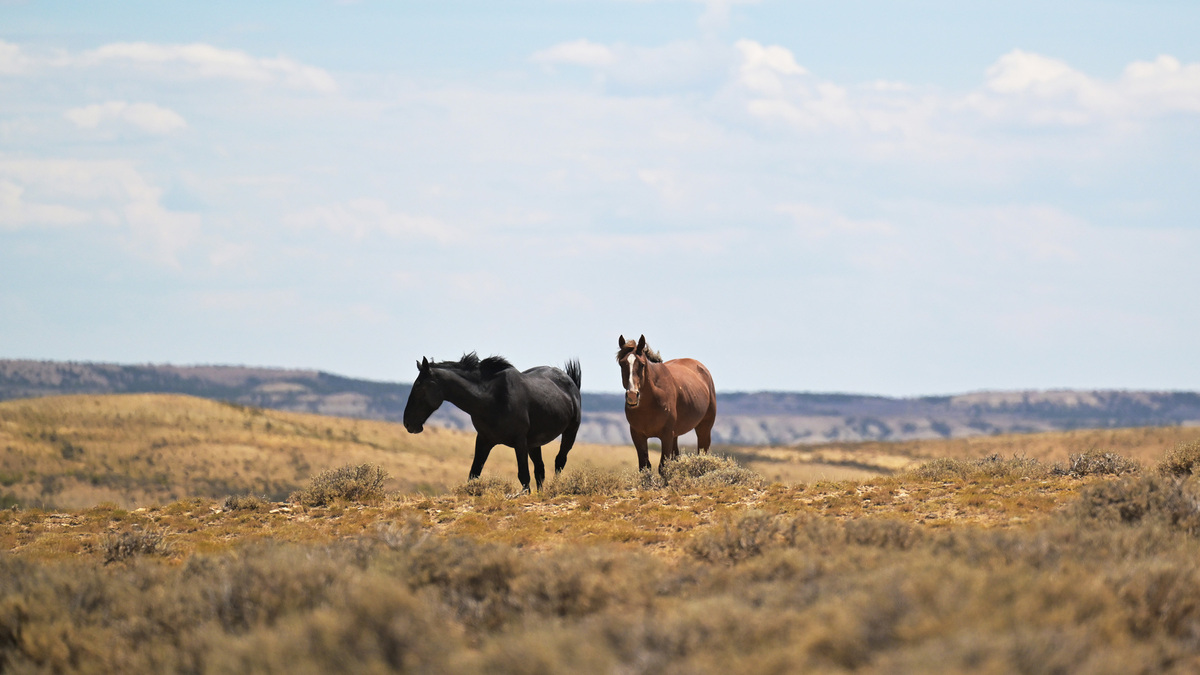
A federal operation is removing hundreds of wild horses from western Colorado in the largest helicopter roundups in the state in several years, a tactic that has prompted criticism from state leaders and advocates.
Read more Jocelyn Benson’s new ad calls for ending data center tax breaks
Since early August, contractors for the Bureau of Land Management gathered and shipped off 880 horses from the Piceance-East Douglas Herd Management Area west of Meeker. This week, the agency plans to begin a roundup to remove 245 horses from the Sand Wash Basin Herd Management Area west of Craig.
The horse populations in the two herd management areas on the Western Slope have exceeded the number of animals the BLM believes the range can support. This summer’s extreme drought has shriveled grasses and dried water sources, amplifying the need to move horses, said Tyrell Turner, the BLM’s Colorado northwest district wild horse specialist.
“We were seeing some impacts to the land health and horses starting to move outside the herd management area for resources – food and water – and space,” he said.
Wild horse management has been a controversial topic across the West for decades. The horses – which number in the tens of thousands across the region – are not a native species but are protected by federal law. The Bureau of Land Management primarily manages the horse population by removing horses from the wild and adopting them out, or paying for them to stay in long-term holding facilities.
More than 60,000 horses sit in those holding facilities, which cost taxpayers more than $100 million a year and eat up two-thirds of the BLM’s spending on the wild horse program. That leaves little money to address the underlying challenges with more proactive solutions, BLM leaders have said.
Federal, state and local leaders in Colorado in recent years have worked to prevent the use of helicopter roundups, which some wild horse advocates say are dangerous and needlessly stressful for the animals. During a helicopter roundup, a pilot flies a helicopter close to the ground to push the horses toward a corral, sometimes for miles.
The BLM’s plans in Colorado have prompted calls from the governor, federal lawmakers and some wild horse advocates to halt the roundups.
“While we understand the need to reduce the size of these herds in accordance with the level that can be sustained on the land, the current methods being used by your agencies, including helicopter roundups, are inhumane and unnecessary,” Gov. Jared Polis and four of Colorado’s congressional representatives this month urging federal leaders to halt the roundups.
The roundup at Piceance-East Douglas significantly reduced the number of horses in the 190,000-acre management area. An estimated 1,145 horses were living in the area before the roundup – significantly more than the 135 to 235 horses the BLM believes the land can support.
Nine horses died during the operation, which began Aug. 2 and ended Sept. 2, according to the BLM. Staff members euthanized six of the horses for preexisting deformities or injuries, like blindness and a broken leg. Three others died unexpectedly: One mare died while being put in a trailer, a colt died while at a temporary holding facility and another mare died potentially from heart failure.
The BLM shipped the horses that were gathered to a holding facility in Wheatland, Wyoming. After receiving veterinary care, some will be made available for adoption. Those that are not adopted or are not offered for adoption will eventually be transferred to long-term, government-funded holding facilities.
Read more Sweden’s centre-left opposition bloc seen winning by one seat, election authority projects
The BLM’s contractor did not allow volunteers with the nonprofit Piceance Mustangs to observe the helicopter roundup or be near the holding pens this year, as has been allowed in the past, said Cindy Day, the public relations director for the group.
While some wild horse advocates say the use of helicopters is inhumane, Day said they can be useful tools when used correctly, especially when hundreds of horses need to be found and moved across rugged land.
“There are heated debates around gathers and activists trying to stop gathers,” Day said. “And maybe they need to spend some time on the range and see horses that don’t have any water and are thirsting and starving to death. It is not a pretty death.”
A BLM contractor is scheduled to begin a roundup in the Sand Wash Basin on Thursday to remove 245 horses from the 157,730-acre area. The BLM’s target population for the herd area is between 163 and 362 horses, but it estimates the current population is 505, Turner said.
The BLM has not used a helicopter for a roundup in Sand Wash Basin since 2021, said Stella Trueblood, the president of Sand Wash Advocate Team, a nonprofit group that works to support the basin’s horses. The agency instead has conducted smaller gathers by luring horses into a pen and trapping them.
The herds were “pretty much decimated” after that 2021 roundup, Trueblood said. The helicopters stress out the horses, which can become fatigued and prone to injury if they are forced to run for miles.
“There’s just the risk of more physical damage to the horse; there’s more stress on the horse,” she said.
The BLM in Colorado manages three wild horse herd management areas – Sand Wash Basin in Moffat County, Piceance-East Douglas in Rio Blanco County and Spring Creek Basin in Dolores County – and one wild horse range, Little Book Cliffs in Mesa County.
The BLM last used a helicopter in Colorado for a wild horse gather in 2024 to remove 140 horses from the Little Book Cliffs. The last large-scale helicopter roundup occurred in 2022 in the Piceance-East Douglas Herd Management Area, when 761 horses were collected.
BLM leaders in Colorado hope to use helicopters less frequently once the herds are back within the targeted sizes, Turner said. Instead, fertility treatment, combined with smaller bait-and-trap gathers, could control population.
But some areas, like the Piceance-East Douglas, will likely continue to require helicopter gathers because of the size of the management area and the rugged nature of the terrain, Turner said.
Read more Enormous whale shark caught on video swimming along California coastline
_____
Copyright 2026 Tribune Content Agency. All Rights Reserved.