 By admin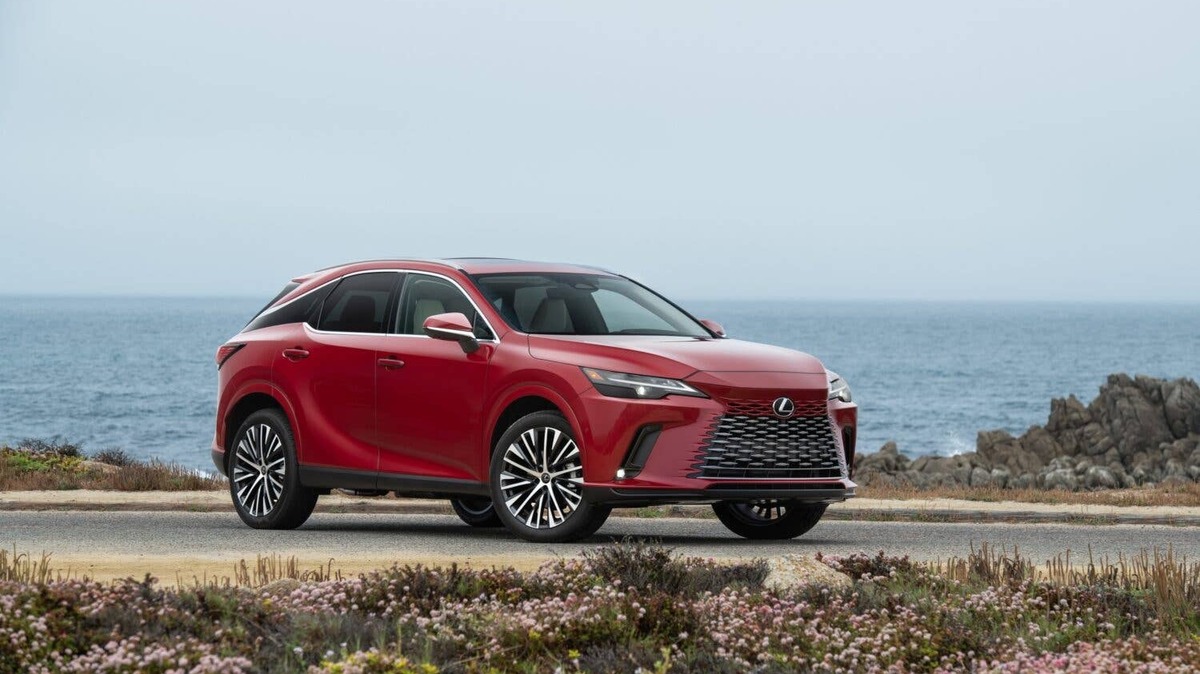
Fourteen miles per gallon separates these two, which is the widest fuel gap between any pair of luxury SUVs we have compared. Lexus pairs a 2.5-liter four with an electric motor and returns 36 mpg combined, while Acura uses a 3.5-liter V6 and returns 22. That difference is large enough to pay back the Lexus premium inside five years, which is unusual for a hybrid and worth working through carefully.
Read more L’Experience Paris coffeehouse owner Chenin files for Chapter 11 as competition grows
What’s New for 2026
Lexus offers the RX in four powertrains, and the 350h is the volume hybrid. Its 2.5-liter four-cylinder pairs with an electric motor for 246 horsepower, all-wheel drive is standard, and the EPA rates it at 37 mpg city, 34 mpg highway and 36 mpg combined. The range also includes the 275-horsepower RX 350, the 366-horsepower RX 500h F Sport Performance and the RX 450h+ plug-in hybrid, and pricing for the hybrid starts at $55,075.
Acura continues the MDX with a single naturally aspirated engine across most of its range. The 3.5-liter V6 produces 290 horsepower and 267 lb-ft through a 10-speed automatic, rated at 19 mpg city, 26 mpg highway and 22 mpg combined, with the Type S above it using a turbocharged 3.0-liter V6 at 355 horsepower. Three rows and seven seats are standard, towing reaches 5,000 lbs, and pricing starts at $51,800.
Specs and Pricing
Lexus RX 350h
- Price: From $55,075
- Powertrain: 2.5-liter four-cylinder with an electric motor, 246 hp
- Transmission: Continuously variable
- Drivetrain: All-wheel drive standard
- EPA city / highway / combined: 37 / 34 / 36 mpg
- Seating: 5 across two rows
- Cargo behind second row: Near 30 cu ft
- Towing: 3,500 lbs
- Basic warranty: 4 years or 50,000 miles, with two free scheduled maintenance visits in the first year
- Other powertrains: RX 350 at 275 hp, RX 500h at 366 hp, RX 450h+ plug-in hybrid
Acura MDX
- Price: From $51,800
- Standard engine: 3.5-liter V6, 290 hp, 267 lb-ft
- Type S engine: 3.0-liter turbocharged V6, 355 hp
- Transmission: 10-speed automatic
- EPA city / highway / combined: 19 / 26 / 22 mpg
- Seating: 7 across three rows
- Cargo behind all seats: 18.1 cu ft
- Maximum cargo: 71.4 cu ft
- Towing: 5,000 lbs properly equipped
- Fuel filler: Capless
Acura undercuts Lexus by $3,275, and the two vehicles are not the same shape of purchase, since the MDX carries three rows and the RX carries two. The RX range offers four powertrains including a plug-in hybrid, and the MDX lineup offers two V6s.
Lexus applies the same hybrid advantage one class down, where the UX costs $9,174 less to own than the Volvo XC40 on the same principle. That pattern repeats across the brand’s lineup and it is the reason its hybrids dominate ownership comparisons rather than only fuel ones.
Powertrains and Driving
Acura makes more power and Lexus makes better use of it, which is the standard trade between a V6 and a hybrid four. The MDX produces 290 horsepower and 267 lb-ft against the RX 350h’s 246 horsepower, a gap of 44 that shows up when merging with a full load. Acura’s 10-speed automatic also shifts through defined ratios where the Lexus uses a continuously variable transmission.
That transmission is the RX 350h’s weakest point and reviewers are consistent on it. Under hard acceleration the CVT holds engine speed high and produces a droning note that disrupts what is otherwise a quiet cabin, which is the cost of keeping the engine at its efficient point. Buyers who accelerate gently will rarely encounter it, and buyers who do not should drive one before committing.
Lexus offers three alternatives if the hybrid four does not suit. The RX 350 uses a 275-horsepower turbocharged four at 25 mpg combined, the RX 500h F Sport Performance produces 366 horsepower through a six-speed automatic that reviewers rate as more responsive than the CVT, and the RX 450h+ is a plug-in hybrid. Acura’s only alternative is the Type S at 355 horsepower, which gives back fuel economy rather than improving it.
Real-World Fuel Economy
The RX 350h returns 37 mpg city, 34 mpg highway and 36 mpg combined, and the MDX returns 19, 26 and 22. That is 18 mpg in the city, 8 on the highway and 14 combined, which is the widest gap we have measured between two luxury SUVs at similar money.
The city figure is where the hybrid does its work and where the difference is most dramatic. Thirty-seven miles per gallon against 19 is nearly double, produced by electric assistance and regenerative braking in exactly the conditions where a 3.5-liter V6 is least efficient. A buyer whose driving is mostly urban will see the full effect of that gap rather than a diluted version of it.
Over 60,000 miles the RX 350h consumes 1,667 gallons against the MDX’s 2,727, a difference of 1,060 gallons or $4,242 at $4.00 a gallon. That works out to $848 a year, which is a meaningful line in any household budget and unusually large for a fuel comparison in this segment.
Both run on regular unleaded, so neither carries a fuel-grade penalty on top of the difference. Acura fits a capless fuel filler that opens when the nozzle is inserted, and Lexus still uses a conventional cap on a tether, which is a small convenience running the other way.
Where the Gap Comes From
Two design decisions produce the difference and neither is a tuning refinement. The first is displacement combined with electrification: Lexus uses a 2.5-liter four with an electric motor and Acura uses a 3.5-liter V6 with nothing, so the Lexus burns less fuel to produce less power and recovers energy the Acura throws away as heat.
The second is transmission philosophy. A continuously variable transmission holds the engine at its most efficient operating point regardless of road speed, where a 10-speed automatic steps through fixed ratios and spends time above or below that point. That is the same choice that produces the RX’s droning note under acceleration, so the efficiency and the noise come from the same engineering decision.
Weight and size contribute less than either factor but not nothing. The MDX carries three rows of seats and the structure to support them, and the RX carries two, so Acura is moving more vehicle with every gallon.
The conclusion for a buyer is that no amount of careful driving closes a 14 mpg gap, because it is architectural rather than behavioral. Someone who wants MDX space and RX economy is looking for a vehicle neither manufacturer builds in this pairing.
What Trim and Configuration Cost Each One
Configuration moves the numbers considerably within the Lexus range and barely at all within Acura’s. The RX 350 with its turbocharged four returns 25 mpg combined with front-wheel drive and 24 with all-wheel drive, which is 11 mpg behind the hybrid and still 3 mpg ahead of the MDX. The RX 500h F Sport Performance trades efficiency for its 366 horsepower, and the RX 450h+ plug-in hybrid extends the advantage further for anyone who charges at home.
Acura’s range offers no efficient alternative. The 3.5-liter V6 at 22 mpg combined is the economical MDX, and the Type S at 355 horsepower returns less, so a buyer choosing Acura accepts the fuel figure rather than configuring past it.
Read more Breaking: Stoney Fire reported in Tulare County on Sep. 13
All-wheel drive is standard on the RX 350h, which means the 36 mpg figure already includes the penalty that a front-drive comparison would hide. That matters because many hybrid figures quoted in this segment describe front-wheel-drive cars, and this one does not.
What the Difference Actually Costs Over Five Years
The gap is large enough that the arithmetic changes the purchase decision rather than only informing it. Assumes 12,000 miles a year over five years, 60,000 miles total, and regular fuel at $4.00 a gallon, which both vehicles use.
Fuel over 60,000 miles
- Lexus RX 350h at 36 mpg: 1,667 gallons, $6,667
- Acura MDX at 22 mpg: 2,727 gallons, $10,909
- RX 350h saves: 1,060 gallons, $4,242
Against the purchase gap
- Acura MDX starting price: $51,800
- Lexus RX 350h starting price: $55,075
- Lexus premium: $3,275
- Fuel saving over five years: $4,242
- Net position after five years:$967 in the Lexus’s favor
The RX 350h costs $3,275 more to buy and saves $4,242 in fuel across five years, which puts it $967 ahead before resale enters the calculation. That is unusual, since hybrid premiums in this segment normally take longer than five years to repay, and it happens here because the gap is 14 mpg rather than the three or four a hybrid typically delivers. A buyer covering more than 12,000 miles a year reaches the break-even point sooner still.
Which Version to Buy
On the Lexus side, the RX 350h at $55,075 is the fuel argument and it arrives with all-wheel drive included, so the 36 mpg figure is not a front-drive number. Anyone who dislikes the CVT’s behavior under acceleration should drive the RX 500h F Sport Performance, which uses a six-speed automatic and produces 366 horsepower, at the cost of the economy that makes this comparison one-sided. The RX 450h+ plug-in hybrid is worth pricing for anyone who charges at home.
On the Acura side, the 3.5-liter V6 at 22 mpg combined is the efficient MDX and the Type S returns less, so no configuration improves the fuel position. Buyers should treat the MDX as a three-row purchase rather than a fuel one, since its 5,000-lb tow rating and 71.4 cubic feet of maximum cargo are where its case actually sits.
Anyone shopping on fuel alone is not really comparing these two, because one is a two-row hybrid and the other is a three-row V6. The useful question is whether the third row is needed, and the fuel figures only matter once that is answered.
Scorecard
- City fuel economy: RX 350h. 37 mpg against 19, which is nearly double in the cycle these vehicles spend most of their time in
- Highway fuel economy: RX 350h. 34 mpg against 26, a gap of 8
- Combined fuel economy: RX 350h. 36 mpg against 22, the widest luxury SUV gap we have measured
- Powertrain choice: RX 350h. Four powertrains including a plug-in hybrid against Acura’s two V6s
- Refinement under acceleration: MDX. A 10-speed automatic against a CVT that drones under load
- Fuel convenience: MDX. A capless filler where Lexus uses a conventional cap on a tether
- Five-year fuel cost: RX 350h. $6,667 against $10,909, a saving of $4,242
RX 350h 5, MDX 2.
So Which Gets Better Gas Mileage?
The RX 350h, and the margin is wide enough that it changes the financial comparison rather than merely winning a category. Thirty-six miles per gallon combined against 22 is 14 mpg, and 37 against 19 in the city is nearly double, produced by pairing a 2.5-liter four with an electric motor where Acura uses a 3.5-liter V6 with no electrification at all.
The money follows in a way hybrids in this segment usually cannot manage. Lexus charges $3,275 more and saves $4,242 in fuel across five years, which puts the RX 350h $967 ahead before resale is considered, and a buyer covering more than 12,000 miles a year reaches that point sooner. Most hybrid premiums take longer than five years to repay, and this one does not because the gap is architectural rather than incremental.
Acura’s case is real and it has nothing to do with fuel. The MDX seats seven across three rows where the RX seats five across two, tows 5,000 lbs against 3,500, holds 71.4 cubic feet of maximum cargo, and produces 290 horsepower against 246 through a 10-speed automatic that avoids the droning note reviewers criticize in the Lexus CVT. It also costs $3,275 less at signing and fits a capless fuel filler.
Three buyer profiles should take the MDX regardless of the fuel figures. Anyone who needs three rows, since the RX does not offer them and the fairer Lexus comparison is the TX rather than this one. Anyone who tows near 5,000 lbs, because the RX stops at 3,500. And anyone who finds the CVT’s behavior under acceleration unacceptable, which is a preference no efficiency number overrides.
Take the Acura MDX for three rows, 5,000 lbs of towing and a transmission that shifts. Take the Lexus RX 350h for 14 mpg more, $4,242 less in fuel and a premium that repays itself inside five years.
Alternatives to Consider
The Lexus TX is the three-row Lexus and the fairer comparison against the MDX, with a hybrid option of its own. The Genesis GV80 adds a ten-year powertrain warranty and complimentary maintenance with valet collection. The Volvo XC90 holds a 2026 Top Safety Pick with a plug-in hybrid available. And the Acura RDX steps down a size at $46,550 with 23 mpg combined.
Frequently Asked Questions
Which gets better gas mileage?
The RX 350h, at 37 mpg city, 34 highway and 36 combined against the MDX’s 19, 26 and 22. That is 14 mpg combined and nearly double in the city.
How much does the difference save?
$4,242 across 60,000 miles at $4.00 a gallon, which is $848 a year and 1,060 fewer gallons than the MDX consumes.
Does the Lexus premium pay for itself?
Yes, inside five years. It costs $3,275 more and saves $4,242 in fuel, leaving it $967 ahead before resale is considered.
Which has more seats?
The MDX, with seven across three rows against the RX’s five across two. Lexus sells the TX for three-row buyers instead.
Read more Three dead and one injured after crash, car fire in El Dorado Hills Saturday
Copyright 2026 The Arena Group, Inc. All Rights Reserved
This story was originally published September 13, 2026 at 2:30 PM.