 By admin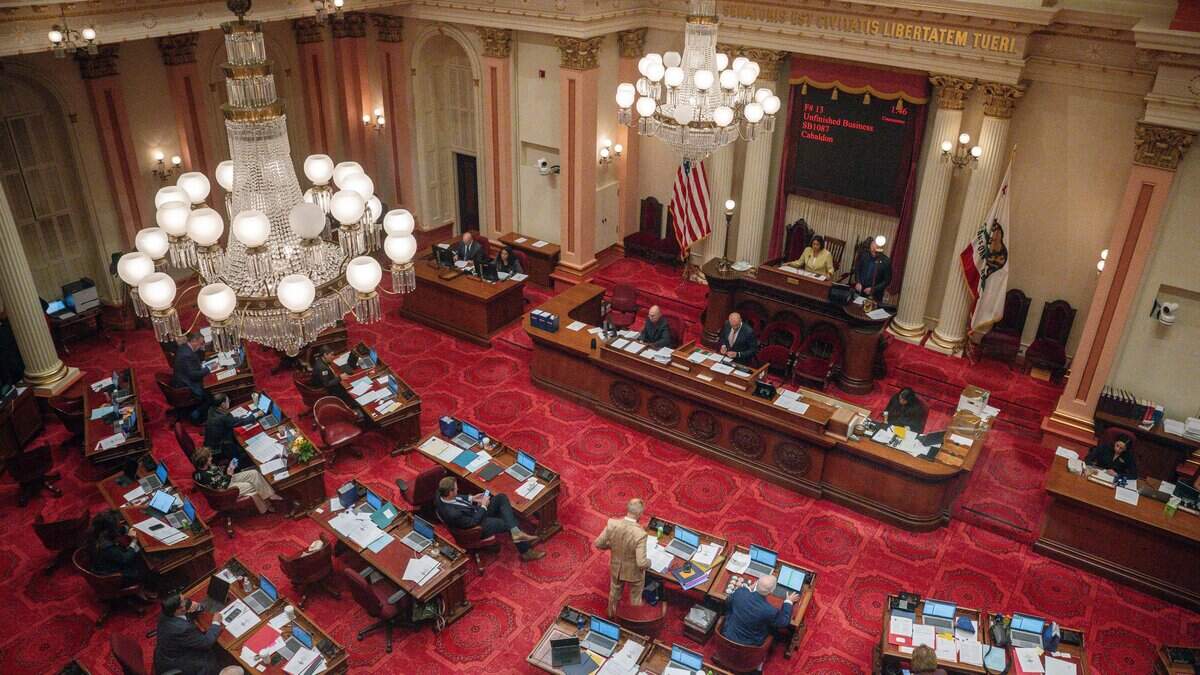
As the Legislative session came to a close, California legislators sent more than a dozen bills to Gov. Gavin Newsom’s desk to regulate federal immigration enforcement and detention and support the state’s immigrant communities.
Read more Supercomputer Predicts Brutal Impact of Man Utd’s Derby Day Disappointment
Newsom has until Sept. 30 to approve or veto legislation.
Detention centers
The largest portion of immigration-related bills on Newsom’s desk regulate detention centers — both the construction of new facilities and the conditions inside.
California has opened two new detention centers in the last year, bringing the state’s total count to eight; California City Detention Center opened in August 2025 and the Central Valley Annex facility opened in McFarland, California, this April. The new constructions added nearly 3,000 beds to the state’s capacity for those detained by Immigration and Customs Enforcement.
Senate Bill 1367 would prohibit a city or county from approving the construction of new detention facilities or the conversion of existing buildings into detention centers. Sen. Sabrina Cervantes, D-Riverside, authored the bill to prevent further expansion of ICE facilities in California, particularly those constructed from sites like warehouses and industrial buildings not meant for human habitation.
Assembly Bills 1633 and 2465 would impose financial penalties on detention centers. AB 1633, authored by Assemblymember Matt Haney, D-San Francisco, would impose a 25% tax on private detention centers. AB 2465, authored by Assemblymember Liz Ortega, D-San Leandro, would prohibit companies that own private detention facilities from collecting tax credits and receiving state grants or loans.
Haney and Ortega rallied alongside advocacy, labor and faith groups Tuesday to urge Newsom to sign the pair of bills. Both would contribute the funds collected from detention centers to a “Due Process for All” fund that supports immigration-related services.
SB 942, or the “Civil Detainees Bill of Rights Act,” would establish protections for those in immigration detention. The legislation affirms the rights of those in private detention facilities to access medical and mental health treatment, clean drinking water, food that is safe to consume and livable quarters. It also guarantees the freedom of religion and the ability to send and receive correspondence.
Other bills on Newsom’s desk also aim to regulate detention centers, including:
- Senate Bill 423: Amends the California Public Records Act to require that local agencies disclose records of 911 and other emergency services calls made from immigration detention centers.
- Senate Bill 941: Prohibits markups of over 35% on products in canteens at private detention facilities.
- Senate Bill 957: Requires the California attorney general to submit a health and safety oversight plan for private civil detention facilities to the Legislature.
- Senate Bill 1399: Indefinitely extends the period during which reviews of detention centers can take place at the county level, which was previously set to sunset in 2027.
- Assembly Bill 1801: Prohibits a city, county, or public agency from approving the construction of a private detention facility without notifying the public at least 180 days prior.
Immigration enforcement
Bills to regulate federal ICE agents’ activity in California have often met opposition in the Legislature, typically from lawmakers who see these efforts as an overreach of state power. However, several statewide measures to regulate ICE currently await Newsom’s signature.
AB 1806, authored by Assemblymember Jesse Gabriel, D-Encino, would mandate independent state investigations of shootings by ICE agents against unarmed civilians. According to Gabriel, he introduced the bill as a response to two recent shootings at the hands of ICE officers in California: Keith Porter Jr., who was killed Dec. 31 by an off-duty ICE agent, and Carlos Ivan Mendoza Hernandez, who was shot seven times in the face by an ICE agent April 7.
AB 1896, known as the Get the Feds Out Act, would disqualify former ICE agents from holding public employment. The legislation was authored by Assemblymember Mark Gonzalez, D-Los Angeles, and backed by Assembly Speaker Robert Rivas, D-Hollister. If Newsom signs the bill, it would be the first law of its kind in the nation.
Amid nationwide concerns about ICE officers’ use of electroshock gloves in the field, Assemblymember LaShae Sharp-Collins, D-San Diego, authored AB 2760. The bill would ban the use of electroshock gloves in California by both federal and state law enforcement agents. If the bill becomes law, California would become the first state to enact such a ban.
Other bills on Newsom’s desk also aim to restrict ICE activity in California, including:
- SB 747: Applies existing federal standards to ICE agents in California, allowing claims of constitutional violations at the hands of ICE agents to be prosecuted.
- SB 873: Prohibits a person from being subject to civil arrest while traveling to and from or being present at a courthouse for any lawful activity.
- SB 938: Ensures immigration agents can’t bypass California’s basic training requirements if they become state officers.
- SB 1004: Bans state and federal law enforcement officers from wearing face masks on duty.
Immigrant services
Bills to improve the services available to immigrants and their families are up for Newsom’s consideration alongside regulations on ICE officers and detention centers.
SB 1194, authored by Sen. Anna Caballero, D-Merced, would establish the Immigration Legal Fellowship Project to support fellowships for individuals who provide immigration legal services. The program would provide grants or enter into contracts with nonprofits to administer the legal fellows program under the California Department of Social Services.
Under AB 1655, someone held in ICE detention would be classified as “temporarily absent” from their home. This would allow families receiving state benefits, which are determined based on household size, to remain eligible for assistance. Assemblymember Isaac Bryan, D-Jefferson Park, authored the bill after reports that families had lost benefits under the California Work Opportunity and Responsibility to Kids program after a member of their household was deported.