 By admin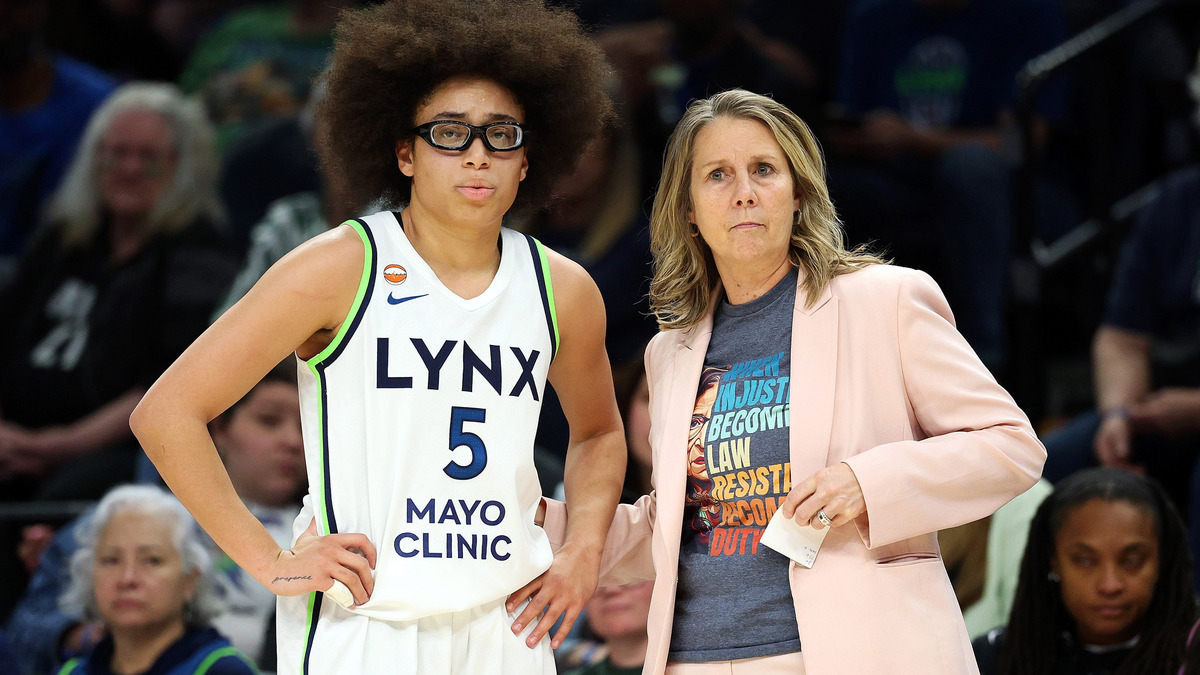
MINNEAPOLIS – Cheryl Reeve gathered her players for a customary end-of-practice huddle. The Lynx coach pointed to a dozen media members waiting off to the side for interviews.
Read more Jim Alexander: Will – or can – Congress actually ‘protect’ college sports?
Look at all those people, she told the group.
“There used to be one,” Reeve said, reminding her players how different media coverage of the WNBA is now compared with when current assistant coaches Lindsay Whalen and Rebekkah Brunson played for the organization.
Reeve shared that story with me half an hour later in an auditorium connected to the practice facility. It provided a perfect segue to a topic that I wanted to revisit: A one-on-one interview I had with Reeve 10 years ago to learn more about her outspokenness on media coverage of the WNBA and, more broadly, gender inequality in society.
At the time, Reeve was well on her way to becoming a Hall of Fame coach, having already won three WNBA championships. Something else nudged me to request a sit-down interview.
In a world in which coaches purposely give boring, non-controversial answers, Reeve does not hold back on issues that bother her. She uses her voice to challenge slights against the WNBA, unafraid of criticism or ruffling feathers.
She once gently chided a local reporter for omitting the Lynx in his Twitter bio among teams he covers. She gets frustrated when the WNBA is not referred to as a “major” sport alongside the top four American men’s professional leagues.
Reeve joked that we would need several hours for that initial interview because she had a lot to share.
Her words that day:
“If I don’t say something, who’s going to? Those of us that have a voice, if we don’t use our voice, then you can’t enact change.”
And: “It’s discouraging when women are told that you have to be two, three, four, 10 times better than our male counterparts to even approach the conversation of – it’s not even equal coverage.”
And: “We feel like every day we’re fighting it, but it’s worth the fight. It drains the heck out of you. There are some days you walk out of here so angry at some of the things that you hear and see because it’s not right.”
Ten years later, her instincts and belief in the product have been proven correct.
The WNBA’s popularity has soared, reflected in several markers: attendance, TV ratings, media coverage, player salaries and team valuations.
Reeve saw it clearly back then.
“My belief was so great in what we were doing,” Reeve said in our recent interview.
Average regular-season attendance has doubled in five seasons, from 5,646 in 2022 to 11,226 at the All-Star break this season.
The All-Star Game drew a record 19,783 fans. TV viewership across national networks is up 12%. Teams now fly charter instead of commercial.
“If you just treat women’s sports like you do men’s sports, the same thing’s going to happen,” Reeve said. “I’ve said it for years, the trajectory of the NBA will be the trajectory of the WNBA if we commit to it. It’s taking much longer than it should have.”
Read more Mike Sielski: Landon Dickerson revealed the cold reality of the NFL. Does anyone even care?
Reeve has long argued that increased media exposure would drive interest. She believed media companies looked at it backward in making decisions on coverage.
“If you go back and look at Major League Baseball in the beginning, media popularized Major League Baseball,” she said. “They wanted it to be successful. The NBA needed the Harlem Globetrotters to be interesting for people to come see. All of the same things existed. We were the next [league]. Finally.”
Reeve cites a few factors that spurred momentum. First, U.S. women’s national soccer players filed a lawsuit citing gender discrimination in their fight for equal pay.
“My visuals of them being at the Capitol,” Reeve said, “hit me that something was different about it because of the community and the support. It wasn’t just the players going in there going, ‘Darn it.’ There were thousands of people that were there supporting it, and it felt different.”
An inflection point came with the arrival of Caitlin Clark and Angel Reese. Two players with massive followings brought new attention to the WNBA.
“The two of them together was like a Bird-Magic moment for the league,” Reeve said. “The momentum had already started. These guys took it and just pushed it.”
Reeve acknowledges the league was not fully prepared to capitalize on a larger audience. Preseason games featuring Clark and Reese were not televised. A Lynx fan livestreamed on her phone from the stands Reese’s preseason WNBA debut versus the Lynx in 2024.
“It got 2 million views when it was all said and done,” Reeve noted.
Reeve views mainstream relevance as tied to critical analysis of games, individual players and coaches. Not the patronizing fluff. The more legitimate criticism there is, the more the league can stand on equal footing.
“The way that we were covered was not as a real sports league,” Reeve said. “Now we actually have [TV] shows. Every day you can turn on ESPN and the WNBA is a part of it. There are conversations about decisions being made, whether it’s about roster decisions or coaches decisions.”
Reeve still sees room for growth.
“I don’t think we’re there yet,” she said. “If you get ready for a Wolves matchup versus Denver, you’re going to get a ton of conversation around, ‘Jaden [McDaniels] versus this player, Rudy [Gobert] is going to do this.’ It’s still not how we talk about [the WNBA].”
Conversations that have engulfed the WNBA this season involve anything but basketball, which is unfortunate because those diversions are ignoring the elite talent on display. Reeve waded into one much-publicized controversy, but let’s not keep fanning those embers here.
“We’re navigating a lot right now in this league,” Reeve said. “We have cultural wars happening.”
I asked Reeve if, in general, she ever regrets taking a public stance on an issue.
“My goal is always to be thoughtful,” she said. “Also, I think media appreciates there’s not going to be canned answers. Thoughtful, truthful, tell it like it is. There are times when maybe you go, ‘I probably could have phrased that differently. Maybe I could have been a little more graceful.'”
She paused to smile.
“I don’t have any regrets about fighting the fight and saying what’s necessary and calling things out,” she continued. “How are we supposed to get anywhere? Sitting idly by is never the answer. Being told, ‘Well, let’s just be quiet and be patient and you should be happy, look at how much progress we’ve made up.’ “
Read more Wisconsin vs Eastern Michigan Prediction: Who Are the Real Badgers?
She is happy with that progress. She just sees more that is attainable.
Copyright 2026 Tribune Content Agency. All Rights Reserved.
This story was originally published September 17, 2026 at 2:34 AM.