 By admin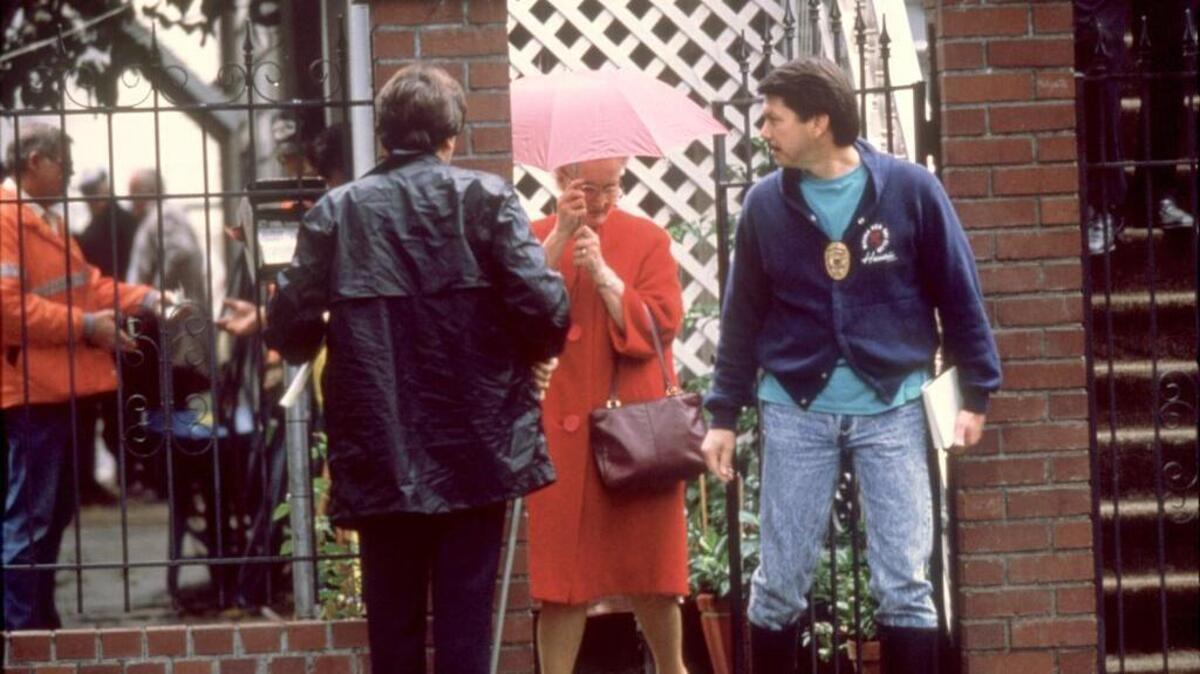
Nearly 38 years after bodies were unearthed from Dorothea Puente’s yard, her crimes remain one of Sacramento’s most enduring fascinations.
Read more Larry Lee recenters Sacramento area’s Black community in ‘purpose-driven’ work
Puente’s story is regularly revived in documentaries and true-crime retellings. The enduring curiosity keeps attention fixed on the current residents of her former boardinghouse at 1426 F St., where investigators dug up the bodies of several former residents. The house will make a rare appearance Sunday on a historic home tour organized by Preservation Sacramento.
Puente was charged with nine killings, convicted of three and died in 2011 at 82 at the Central California Women’s Facility in Chowchilla.
Sisters Deborah Smith and Tamara Welch, 73, have a rare view of Puente. Long before the serial killings, Puente publicly claimed to have adopted them — revealing her desperate need for attention and a compulsion to lie.
Welch has never told her story. Smith spoke at a 1993 sentencing hearing for Puente. The fraternal twins shared their story in August in Springfield, Oregon, where Smith lives. Welch lives a few miles away.
Adopted by Dorothea Puente
Smith began laughing when Welch showed her the decades-old newspaper clipping attesting to their supposed adoption.
The story, like so much associated with Puente, was fantastical and largely invented.
The sisters corroborated that they stayed with Puente in the Sacramento area in June 1963 when they were 10. Welch said they spent a few weeks with Puente and returned afterward to their parents.
But Puente, who lied pathologically, spun a more elaborate story of the sisters’ visit. Puente claimed to a Sacramento-area newspaper, over multiple stories, that she was adopting the girls after their father had died and their mother had gotten sick. Puente also claimed that she’d lost a twin son and daughter at birth the year before.
“She said that she put money away for us,” Smith said of Puente.
“Really?” Welch replied. “I never saw any.”
“Not me either,” Smith said.
Welch and Smith were born in 1952 and moved to Chico in early childhood. They were the youngest of five children born to Robert and Lorrayne Marti and came from an impoverished background.
“Our parents today would have been classified as child abusers because when they spanked us, it was with a belt and my dad had a hard time reining his anger in,” Welch said.
Puente had had her own troubled childhood, born Dorothea Helen Gray in Southern California in 1929 and orphaned around her 10th birthday.
She developed an ability to draw people in, be it vulnerable individuals, needy families or reporters she cultivated relationships with. The Sacramento Union wrote in 1966 about her work with a short-lived charitable operation, The Samaritan House, when she was known as Dorothea Johansson.
“Mrs. Johansson, long active in local charity work, makes this her first formal work in the field of the problem drinker and alcoholism,” the paper noted. “Most notable of Mrs. Johansson’s work for many years has been her assistance in work with unwed mothers and underprivileged children.”
The sisters were living in Chico when they met Puente. Puente and her husband at the time, Swedish-born carpenter Axel Johansson lived nearby, Welch said.
“My memory is that they lived down quite a long driveway, and we spent some time – not a great deal that I recall – but we did spend some time with them,” Welch said.
Ada Scott, an elderly reporter who was close to retirement, regularly wrote glowing dispatches about Puente in the 1960s for The East Yolo Record, a newspaper that operated in what is now West Sacramento.
In a May 1963 story where she referred to Puente as Dorothy Johansen, Scott wrote that Puente “became acquainted with her future adoptive daughters two and one half years ago when their mother, a widow with five other children, left the youngsters with the Johansens overnight. They stayed 10 months.”
“Liar,” Welch said in a sing-song voice as she listened to the passage.
By this stretch of her life, Puente was already having problems. This included her arrest on prostitution-related charges under the name Teya Johansson in April 1960. She was busted running a fake bookkeeping office on Fulton Avenue in Sacramento County, receiving a 30-day jail sentence.
Carla Norton wrote in the 1994 book “Disturbed Ground” that Johansson had Puente committed to DeWitt State Hospital in 1961, where doctors determined she was a “pathological liar” with an “unstable personality.”
Puente babysat Welch and Smith in Chico. Those visits didn’t pass without multiple incidents for Welch at the hands of Puente.
“The first time was, she was trimming my bangs or cutting my hair or something, and she told me to go in the bathroom and get a mirror, but do not look,” Welch said.
Welch said she did as was told but when she returned from the bathroom, Puente “just hauled off and hit me across the face and said that I had looked.”
Then there was the time Puente had Welch sweep up the kitchen and then inspected her work.
Read more Sacramento sheriff’s deputies shoot carjacking suspect after Arden Arcade pursuit
“She said, ‘Did you sweep under the refrigerator?’” Welch said. “Well, no. So she swept under the refrigerator and put it in the dustpan and made me eat it.”
Welch said she felt horrified but that she didn’t recall telling her parents of either incident.
Staying with Puente
The Marti family moved to Oregon around October 1962. The sisters’ parents kept in contact with Puente. Welch isn’t sure how they did it, though Scott offered an account for The East Yolo Record.
“During the ensuing years, after the mother took them home again, the Johansens and Martis have corresponded,” Scott wrote. “The local couple has sent the girls clothes, money and playthings. Now their mother in ill health has consented to their adoption.”
Asked if any of this was true, each sister said no.
“You had to ask, I know, but I think you already knew the answer,” Welch said.
However it occurred, the sisters made their way in time to Puente in the Sacramento area.
“It was simply just to go see her and come back,” Welch said. “There was no mention, ever, of us staying with her. Well, there’s no way. My mom was raised in an orphanage, so her kids were pretty much everything. So I could never imagine my parents ever relinquishing custody.”
Smith remembered traveling by bus when she and Welch went to stay with Puente in June 1963.
It is unclear where the girls stayed with Puente. Scott reported that Puente and Johansson lived at 226 Fifth Street in Broderick, which is now part of West Sacramento. But the sisters remember features of 2100 F St. in Sacramento, another house that Puente was associated with in the ’60s.
In the girls’ time with Puente in 1963, they went to the park, swam in a pool and tried smoking. Puente sent them downtown to buy silver hairspray for her hair, which she kept in a French roll.
Welch said she and Smith only stayed with Puente once.
“She was just so eccentric,” Welch said. “That’s the way I look at it.”
After the visit
Before Puente was sentenced in 1993, Welch received a call about testifying on her behalf. Puente’s defense team was trying to prevent her from receiving the death penalty.
Welch had been married for roughly 20 years. Her husband, a homicide detective, had investigated Diane Downs, an Oregon mother convicted in 1984 of killing two of her children.
Welch put the call about testifying at Puente’s sentencing on speaker, so her husband could hear.
“I wouldn’t say it was like, ‘No thank you, goodbye,’” she said. “I think there was a little bit of conversation around it.”
She turned down the request. Welch wouldn’t learn until years later that her twin sister accepted the invite. Smith had her travel expenses paid so she could go to Monterey County, where Puente’s trial was held after a change of venue from Sacramento.
Smith was one of several people to appear in 1993 on behalf of Puente, who was ultimately sentenced to life in prison without the possibility of parole.
Smith didn’t tell her sister about the trip until five years ago. During the August interview, Welch asked Smith why she went to sentencing. Smith replied that she was curious. Welch also quizzed her sister on why she hadn’t told her sooner about her testimony.
“I don’t know, I don’t know,” Smith said.
“I just find that so incredibly weird,” Welch said.
The sisters never saw Puente again. Puente is not known to have ever mentioned the women, though she told an interviewer late in life that she’d had twin girls who died by suicide within a week of each other in early adulthood.
A Bee story about Puente’s sentencing described Smith as “an impeccably dressed and groomed mortgage and loan officer” living in Oregon.
Smith testified that she and her sister spent a summer with Puente, which she said was a reprieve from dysfunctional home life and that it represented sanctuary. Puente, Smith said then, showed them “the feminine side of being a young lady.”
“I just hate to think about where I would be today if this woman had not touched my life,” Smith said then.
Asked if she remembered saying this, Smith said she did not. Nor could she recall having positive feelings toward Puente in the years after the visit.
For Welch, she said her association with Puente was good fodder for playing the game “Two Truths and a Lie.” She said she played once and said that a serial killer had babysat her and that she’d had a cousin who was murdered.
Read more Sac City approves budget revision, but cash outlook hinges on success of spending cuts
“Then I made something up,” Welch said.