 By admin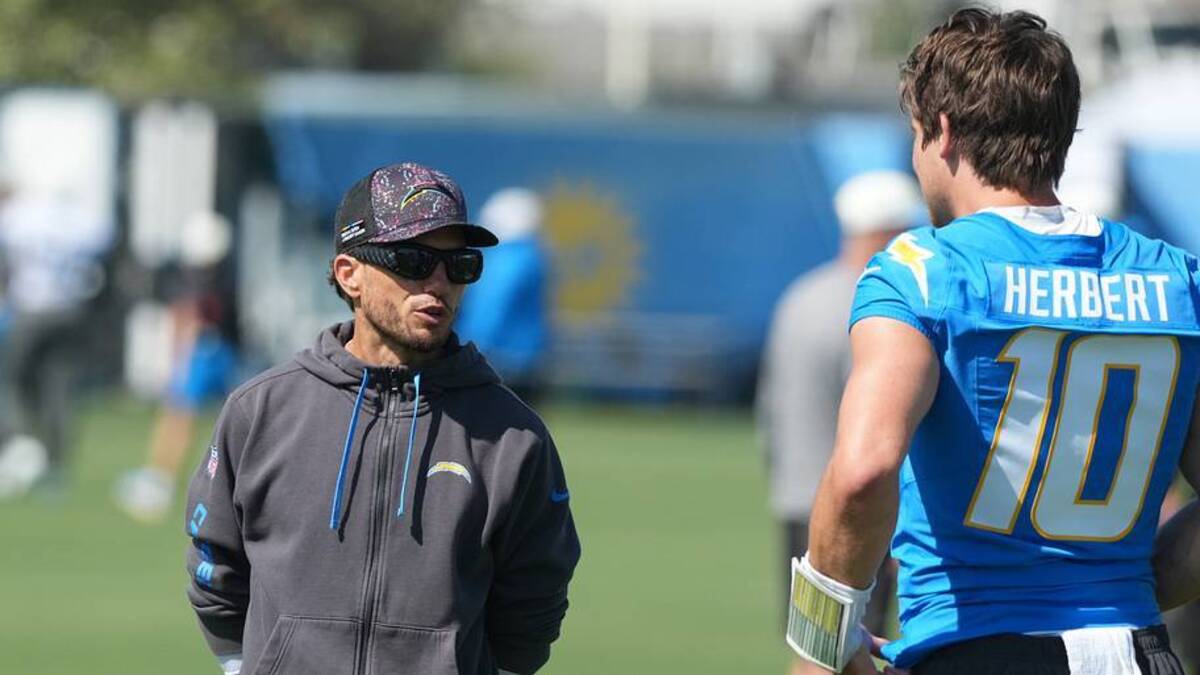
Condolences to all who bought in on the Chargers’ offense after they hired Mike McDaniel. Thus far, you’ve been bamboozled.
Read more Marvin Harrison Trade Market on Kalshi Skyrockets
McDaniel’s hiring as Jim Harbaugh’s offensive coordinator was one of the most praised moves of the offseason. After a stellar start to his head coaching tenure in Miami, McDaniel flamed out while his quarterback, Tua Tagovailoa, dealt with injuries and limitations, and amid reported concerns over aspects of the team’s culture. But McDaniel left South Beach still highly regarded as an innovative offensive whiz. In Los Angeles, he would be paired with Justin Herbert, a signal-caller with seemingly unlimited talent but never the right supporting cast to succeed when it matters most. The pairing offered visions of Herbert unlocking unseen parts of McDaniel’s playbook while McDaniel could have the seventh-year pro playing like an MVP contender and winning his first career playoff game.
It’s only been two games and plenty could still change, but none of those dreams have come to life for Los Angeles. Instead, the Chargers have started the season 0–2, despite being favored against the Cardinals and Raiders, and playing both games at home. Now, their ability to contend for even the playoffs is in serious jeopardy as the toughest part of their schedule awaits.
Amid the Chargers’ puzzling start under McDaniel, here are five numbers that explain what has gone wrong for Los Angeles offensively.
5
The number of times the Chargers have turned the ball over through two weeks. The easiest way for a team to blow a game it’s supposed to win is by committing turnovers, which is exactly what the Chargers did in a pair of 26–14 losses to Arizona and Las Vegas.
The Chargers are fortunate they haven’t committed even more turnovers. On Sunday, they fumbled six times against the Raiders. They recovered five of those fumbles, but the loss could have been even worse had they failed to jump on top of the loose footballs.
The turnovers are an especially puzzling trend for the Chargers since Harbaugh is known for having well-run teams. In Harbaugh’s first two seasons with the Chargers, they started 2–0 each year and turned the ball over a combined three times over those four games. Their defense, meanwhile, forced seven turnovers during those contests.
28
The number of negative plays (penalties, sacks, turnovers and/or plays that went for negative yardage) that the Chargers committed in their first two games. This number doesn’t account for special teams errors, which include a blocked punt and missed field goal.
There is no ideal time for a negative play, but the Chargers have been skilled at committing them at the worst time, or going back to their roots of “Chargering.” Against the Cardinals, Herbert got sacked on fourth-and-goal, keeping them from coming away with points. While trailing 17–10 to the Raiders, Jake Slaughter’s snap hit wide receiver Tre Harris while he was in motion on third-and-inches. The Chargers recovered the football, but lost yardage and had to punt instead of converting for a first down.
Like with the turnovers, the Chargers are simply beating themselves. It’s already proved unsustainable against the Cardinals and Raiders, and could be even worse when they take on the Bills, Seahawks and Broncos in the weeks ahead.
Read more The Chiefs’ Move From Missouri to Kansas Is More Complicated Than Many Fans Realize
Herbert said as much while speaking to reporters this week. “I think it just comes down to executing things cleaner-not having presnap penalties, not turning the ball over and making sure we’re scoring points in the red zone,” he said.
26.9%
The Chargers’ success rate when Ladd McConkey is not on the field, according to Next Gen Stats. The Chargers have averaged just 3.7 yards per play and a 7.7% explosive play rate without McConkey. In comparison, they average 7.7 yards, a 20.5% explosive play rate and 48.7% success rate when McConkey is on the field, per NGS.
It’s safe to say, the Chargers’ offense is much better when McConkey is available. The offense was indeed off to a solid start in their Week 1 matchup against the Cardinals before McConkey exited the game with a rib injury, scoring two touchdowns and failing to convert a fourth-and-goal in the red zone. McConkey played less than half of the Chargers’ offensive snaps in Week 2, and it showed. He is their best receiver at getting open, and most reliable target in general.
21.5%
The rate of quick pressures (pressures under 2.5 seconds) Justin Herbert has faced, the seventh-most in the NFL according to NGS. He has been pressured overall 40% of the time, which is tied for the ninth-most. With Herbert and the Chargers, it goes back to the offensive line. After he was pressured at historic rates last season, the Chargers went out and drafted Jake Slaughter and signed center Tyler Biadasz in free agency. Biadasz got injured before the season, leaving the Chargers with a weakened interior offensive line once again. Slaughter was initially expected to play guard for the Chargers, but he has taken Biadasz’s place at center, where he did play in college at Florida.
Time to check in on the Chargers revamped offensive line to protect Justin Herbert this season pic.twitter.com/ySQS2A4EI0
– NFL Memes (@NFLMemes) September 14, 2026
The Chargers did get both tackles Joe Alt and Rashawn Slater back from injury this season, though Alt has had a tough start to the year, committing multiple penalties, one of which resulted in a safety against the Raiders. Overall, Herbert has completed 59.3% of his passes this season for 401 yards, two touchdowns and three picks, while averaging 7.4 yards per attempt. When pressured, he has completed 50% of his passes for 96 yards and a touchdown, and taken six sacks while averaging 5.3 yards per attempt. Herbert’s protection isn’t as porous as last season, but there’s still plenty of room for it to be better.
-0.42
The Chargers’ EPA per rush through two games, which ranks 31st in the NFL. One of the many perks of hiring McDaniel was expected to be his expertise in the run game and the impact he could have on promising second-year back Omarion Hampton. Thus far, that hasn’t been the case. The Chargers have run the second-highest amount of 21-personnel (two backs, one tight end), often using fullback Alec Ingold, who played under McDaniel in Miami. This has not translated into success for the Chargers’ run game, which ranks 27th in rushing success rate (34%). According to Next Gen Stats, the Chargers lead the league in carries with a lead blocker (25), but have averaged just 3.4 yards per carry and a 28% success rate on those plays, below average in both metrics. With Ingold on the field, they’ve averaged just 2.9 yards per carry. The Chargers have had some nice runs so far, but like last season, they have not found efficiency in the ground game.
MORE NFL FROM SPORTS ILLLUSTRATED
- 2027 NFL Draft: The Best Edge Rusher in This Class and Revising Our QB1 Tiers
- Why There’s No Easy Solution to Prevent QB Injuries, Given League Data Trends
- Albert Breer on Packers’ Problems, Chargers-Bills, Rams-Broncos
- Embarrassing Loss in Home Opener Exposes What’s Wrong with the Packers
- Kyle Juszczyk’s NFL Fine for Beer-Chugging Celebration Is Lame. Here’s What His Celly Actually Means.
This article was originally published on www.si.com as Five Stats Behind the Chargers’ Shocking Offensive Woes to Start 2026.
Copyright ABG-SI LLC. SPORTS ILLUSTRATED is a registered trademark of ABG-SI LLC. All Rights Reserved.
Read more Cheryl Reeve Has Already Cemented Her Legacy, But She’s Nowhere Near Finished
This story was originally published September 25, 2026 at 4:00 AM.