 By admin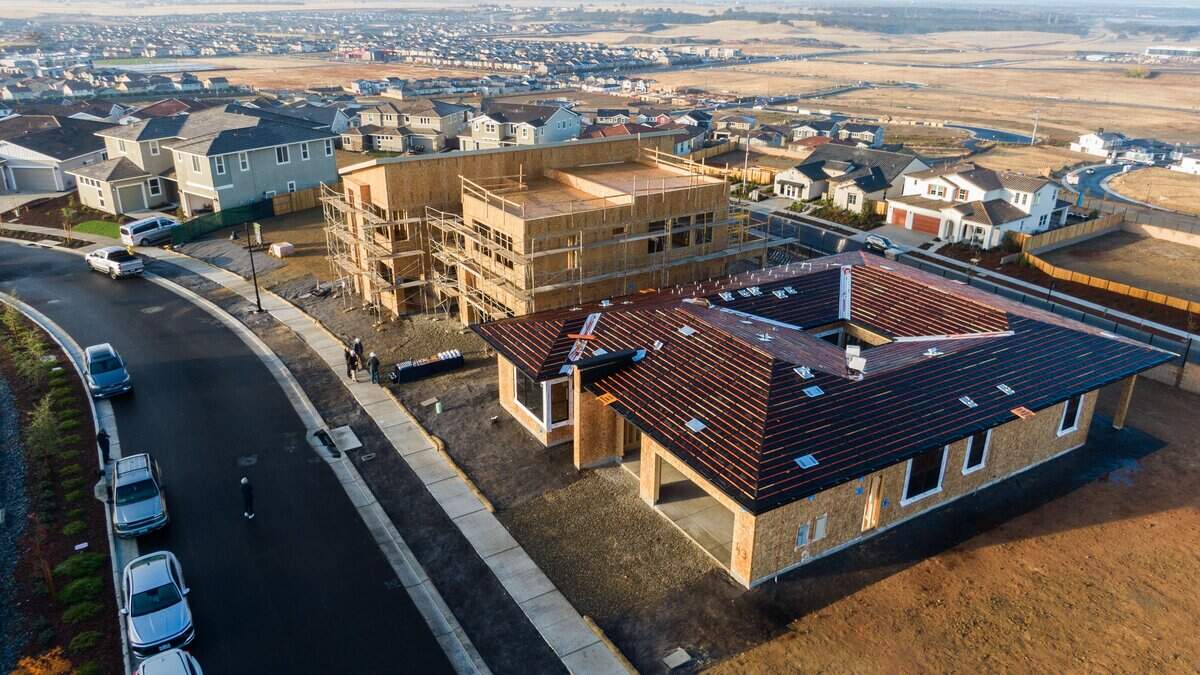
For many middle-class Californians, homeownership has become something they can imagine but cannot quite reach.
Read more Students say a Sac State building is in urgent need. Its repair funds are on hold
They may earn enough to make a mortgage payment, but a down payment of $100,000 is out of reach.
THE BEE’S VOTER GUIDE: Your guide to Proposition 37
Proposition 37 offers an intriguing solution. It would allow the California Housing Finance Agency to issue up to $25 billion in revenue bonds to finance second mortgages of up to 17% of a qualifying new home’s purchase price. Buyers would put down at least 3%. Their monthly payments on the second mortgage would repay the bonds and cover administrative costs.
McClatchy’s California editorial board, representing The Sacramento Bee, Modesto Bee, Merced Sun-Star, Fresno Bee and San Luis Obispo Tribune, recommends a “Yes” vote on Prop. 37.
We didn’t arrive there without reservations.
The biggest is the second mortgage itself. Because it sits behind the primary mortgage, investors take greater risk if borrowers default. They may demand higher interest rates in exchange.
The initiative directs CalHFA to keep borrowers’ interest costs as low as possible, but markets ultimately determine what investors will accept.
Proponents told us they have modeled relatively high second-mortgage rates and found buyers could still save money compared with private mortgage insurance, an added monthly cost typically imposed on buyers who put down less than 20%.
That comparison deserves attention.
Buyers who cannot put 20% down already can face the substantial cost of private mortgage insurance, or PMI. Some stretch their finances to make large down payments simply to avoid it. Others pay PMI until they accumulate sufficient equity.
In other words, Prop. 37 isn’t introducing financial risk into an otherwise risk-free home-buying system. Middle-class buyers already confront expensive trade-offs to get through the door. That is what ultimately persuaded us.
Younger Californians on our editorial board saw something in this proposal that those of us who bought homes years ago can too easily overlook: Prop. 37 could help move homeownership from a distant aspiration to a realistic possibility.
That matters in a state with one of the nation’s lowest homeownership rates. It also matters for economic mobility. A home remains one of the principal ways American families accumulate wealth.
Prop. 37 also connects assistance to new housing. Buyers must be the first purchasers of qualifying homes. The aim isn’t merely to give buyers more money to bid against one another for the same houses. It’s to create demand that encourages developers to build more homes for purchase rather than for rent. The initiative is trying to bridge the financial gap stifling middle-class Californians who can afford monthly housing costs but cannot accumulate a six-figure down payment.
Proponents say Prop. 37’s first and second mortgages would carry fixed rates, so falling home values alone wouldn’t increase a family’s monthly payments.
That’s reassuring, but a fixed mortgage payment doesn’t protect a family from a job loss or other financial shock that leaves it unable to make that payment.
Read more Prop. 44 is a high-stakes test for California health clinics. Here’s our endorsement | Opinion
The state’s role may be largely invisible to borrowers when they obtain these loans. But if borrowers run into financial trouble, they will quickly discover that their second mortgage exists because California created and authorized this program. That could create an expectation that the state bears some responsibility for protecting them.
Yet California guarantees neither that home values will rise nor that a recession won’t cost borrowers their jobs.
Proponents acknowledge that a catastrophic downturn could create political pressure for state intervention even though taxpayers would have no legal obligation to repay these revenue bonds. The Legislative Analyst’s similarly concludes there would be no direct state or local costs because homeowners’ payments are designed to repay bond investors.
CalHFA and lawmakers should ensure borrowers receive clear, independent counseling about what happens during unemployment, falling home values or other financial distress. The agency should seek financing terms no more onerous than the PMI costs borrowers otherwise might face.
Also, CalHFA should give homebuyers, researchers and its own team regularly updated data to assess how residents are faring when they use this down-payment assistance program. The agency should build the public dashboard proponents embraced during our interview, reporting information such as interest rates, loans issued, homes created, borrower incomes, geographic distribution, delinquencies, hardship deferrals, defaults, foreclosures and resales.
Prop. 37 isn’t risk-free, but neither is trying to buy a first home in California today.
For too many middle-class Californians, however, the greater risk is that homeownership—and the wealth it can build—will remain permanently beyond reach.
BEHIND THE STORY
MORE
What are editorials, and who writes them?
Editorials represent the collective views of the editorial boards of McClatchy Media’s California opinion teams.
They do not reflect the individual opinions of board members or the views of reporters in the news sections of The Sacramento Bee and its sister publication, the San Luis Obispo Tribune. Reporters do not participate in editorial board deliberations or weigh in on board decisions.
In Sacramento, the board includes Executive Editor Chris Fusco, California Opinion Editor Marcos Breton, opinion writers Robin Epley, Tom Philp, LeBron Antonio Hill, Cathie Anderson and op-ed editor Hannah Holzer.
In San Luis Obispo, it includes Opinion Editor Stephanie Finucane.
We base our opinions on reporting by our colleagues in the news section, and our own reporting and interviews. Our members attend public meetings, call people and follow-up on story ideas from readers just as news reporters do.
Read more by clicking the arrow in the upper right.
Tell us what you think
You may or may not agree with our perspective. We believe disagreement is healthy and necessary for a functioning democracy. If you would like to share your own views on events important to California, you may write a letter to the editor (150 words or less) using this form, or email an op-ed (650-750 words) to [email protected]. Due to a high volume of submissions, we are not able to publish everything we receive.
Read more Over utility resistance, Northern California fire survivors’ bill signed into law
This story was originally published October 2, 2026 at 10:30 AM.