 By admin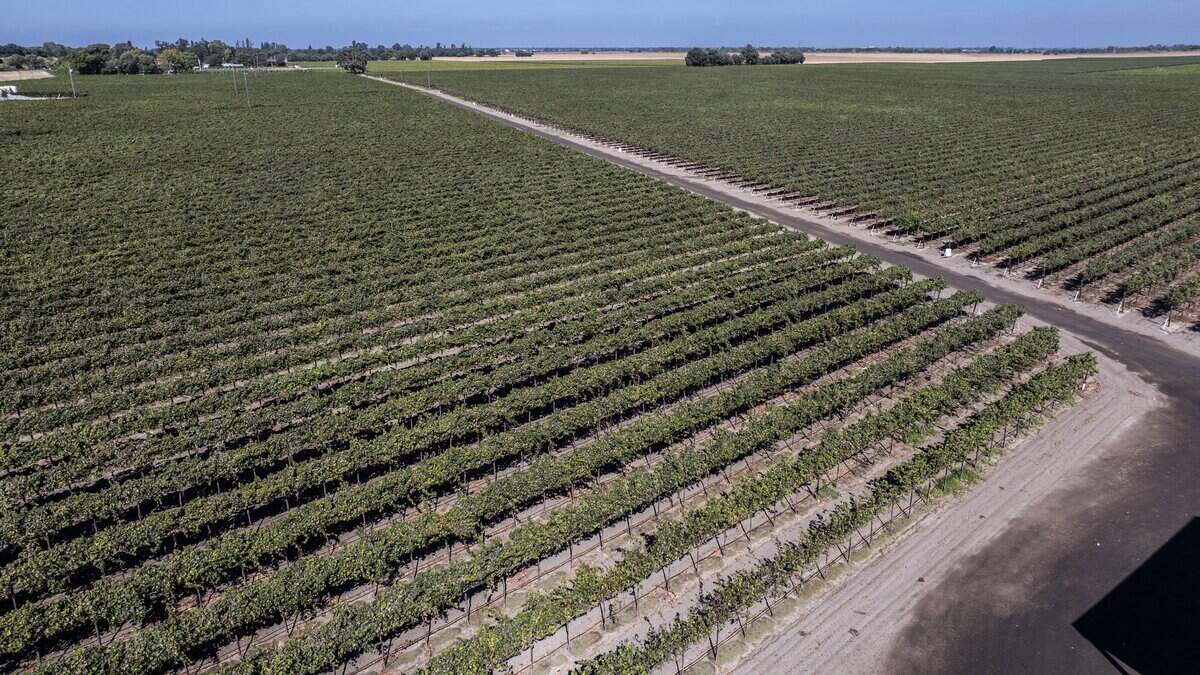
Sacramento County’s agriculture sector provided nearly $1.2 billion to the local economy in 2024 through food production, processing and their ripple effects.
Read more Airbnb billionaire — an ex-Democrat — cuts $8 million check for voter ID measure
That’s according to a first-time economic analysis conducted for Sacramento County’s Department of Agriculture by Monterey County-based Agricultural Impact Associates. The analysis was included in the county’s 2025 crop and livestock report released Tuesday, Oct. 6.
Sacramento County’s agriculture sector produced $768.2 million in economic output from farm production and $429.5 from locally sourced food processing. These numbers include the indirect and induced economic effects — also known as “multiplier effects” — from the agriculture industry such as employee and business-to-business spending.
The agriculture industry directly supported nearly 5,000 jobs and indirectly supported nearly 1,950 jobs, the report found.
“I think it was timely for us to do this report because there’s a lot of pressure in Sacramento County for urban expansion and development,” said Chris Flores, Sacramento County’s agricultural commissioner. “And I think it’s important for our policymakers to understand the value of agriculture.”
The economic report goes a step further than the annual crop report, as it shows the economic contributions of agriculture beyond the gross production values. It details how agriculture is linked to other sectors that drive the economy. And with small California farms increasingly going out of business and more agricultural land being fallowed, the report’s findings help show how difficulties in the food production and processing industries could spell trouble for other sectors.
Sacramento County, which is the 25th California county to commission this economic report, had extra funds last year through the unclaimed gas tax and used those dollars to conduct the analysis, Flores said. The economic analysis primarily uses two data sources: Sacramento County crop reports and IMPLAN, a proprietary database.
Jeff Langholz and Fernando DePaolis, the report’s authors, found that Sacramento County’s commodities are diverse, mitigating the economic risks posed by events such as pandemics, wildfires and droughts for the local industry and the county as a whole. The county’s diversification is about average compared to the 23 other counties analyzed by this specific measure but is high compared to typical United States counties.
Read more Councilmember blasts Mai Vang over fundraiser with controversial streamer Hasan Piker
This crop diversification was evident during the COVID-19 pandemic, which severely disrupted industries such as agriculture. For 28 of Sacramento County’s reported agricultural products in 2020, 13 declined in value and one stayed flat, the report shows. These declines were offset by an increase in value for the remaining 14 commodities, leading to a minimal loss for the county’s agriculture industry of 1.2% that year. For example, cattle declined in value while the value of cherries skyrocketed. In 2021, the agriculture sector saw a nearly 25% increase in value in the county.
County and regional leaders can use and are using the insights from the economic analyses to inform decision-making across industries, including planning and development.
“The economic ripple effects can create a sense of the magnitude of what other things are connected to that same (light) switch. If you turn off those farms, there are going to be other lightbulbs turning off,” DePaolis said. “That (information) is not coming straight from the annual crop reports.”
Flores said there will not be another economic impact report next year but hopes to have the funds to pursue the analysis every few years. Other counties commission the reports every five years, according to Langholz.
For the 2025 crop and livestock report, Sacramento County saw a gross production value of $550.3 million, up 2.6% from the previous year.
As in recent years, wine grapes were the top commodity for the county. Wine grapes have seen a nearly 20% decline in value between 2023 and 2025, Flores said. The decline in value is in line with broader trends in the struggling wine industry.
Apart from wine grapes, the 2025 crop report showed overall stability in the market for other commodities.
Read more Ex-Newsom aide Dana Williamson’s sentencing pushed to December
This story was originally published October 7, 2026 at 11:58 AM.