 By admin
It pays $55 an hour. The schedule is part time. Acting experience is preferred but not required.
Read more ATF to stop enforcing registration rules on gun silencers and short-barreled rifles. What to know
The role, however, has one rather personal qualification.
Applicants must be comfortable having medical students repeatedly examine the most intimate parts of their bodies.
California Northstate University’s College of Medicine is advertising a position for a “Standardized Patient – Pelvic Model,” a job that involves helping future doctors learn to perform pelvic, genital, breast and rectal examinations.
And unlike most positions that involve acting, this one requires considerably more than getting into character.
“The major responsibility of this position is to portray all the characteristics of a real patient, simulating the signs/symptoms and behaviors,” the university explains in its job posting.
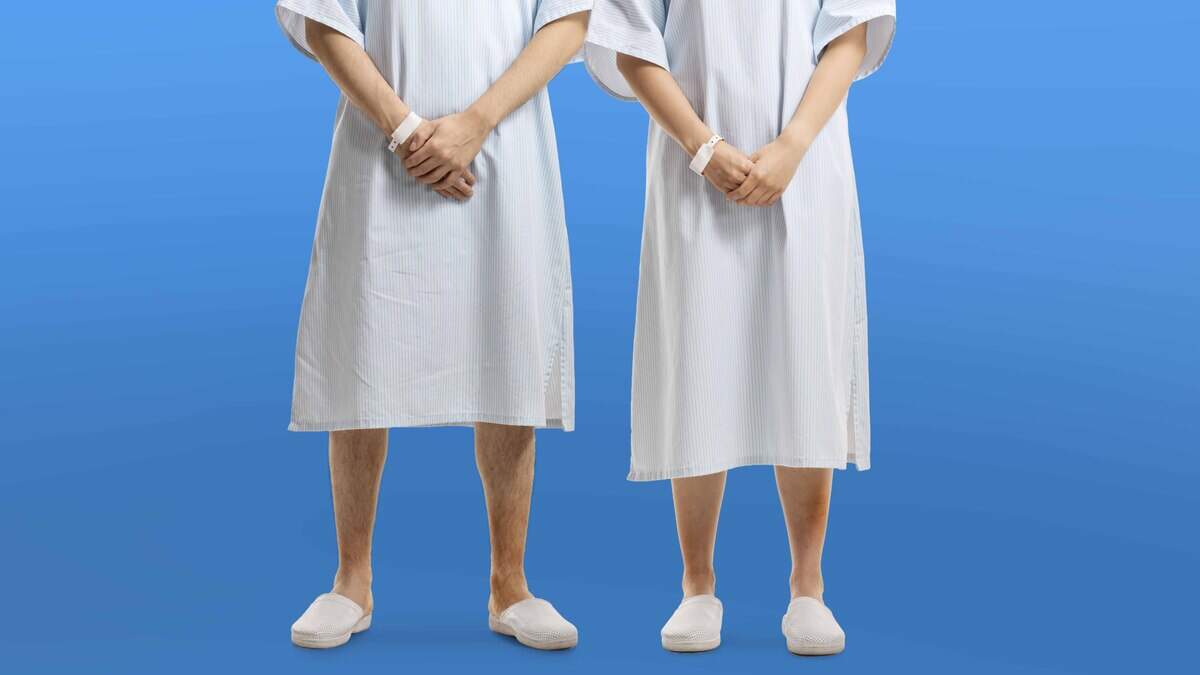
The successful applicant must also be willing to wear a hospital gown, memorize scripts, improvise dialogue and provide medical students with constructive feedback on their professionalism.
Oh, and be comfortable with repeated examinations.
The medical school, which is planning to build a campus on the former Arco Arena site, is looking for someone to work at its current Elk Grove campus intermittently on Tuesdays and Thursdays, between 7:30 a.m. and 2 p.m. The position pays $55 an hour, though the posting does not specify how many hours the successful candidate would work.
It is certainly not your typical side gig.
Alvin Cheung, the university’s president and CEO, said the school recruits people who are comfortable participating in medical education and helping students develop clinical skills.
“Many are motivated by the opportunity to contribute to the training of future physicians and improve the experience of patients undergoing sensitive examinations,” Cheung said in an email Friday.
But behind the attention-grabbing job description is a serious and longstanding medical education practice: hiring people to serve as patients so future physicians can learn how to conduct sensitive examinations before performing them in a clinical setting.
All doctors have to start somewhere.
The qualifications are unusually specific
Northstate’s list of job requirements begins in a traditional way. .
Applicants must be at least 18 years old and possess a high school diploma or equivalent.
They should have strong reading and writing skills, excellent communication abilities and preferably at least a year of acting experience.
Then comes the section that makes the job posting stand out.
Under “Duties and Responsibilities,” CNU says applicants must be comfortable with “having repeated physical examinations performed on self.”
For female models, those examinations include speculum and manual pelvic exams, along with breast exams.
For male models, the examinations include hernia, genital, rectal and prostate exams.
Candidates must also be willing to wear a hospital gown and accept feedback from instructors, course directors and program coordinators.
The university also wants someone who can “improvise or ad lib in the event that a student asks about something not mentioned in the script.”
And, as with many employment opportunities, applicants must be “highly dependable and punctual.”
It’s a real job, and an important one
Despite the unusual description, standardized patients are an established part of medical education.
Medical schools employ people to portray patients with specific symptoms, emotional reactions and medical histories, giving students a chance to practice everything from diagnosing illnesses to delivering difficult news.
Some of these workers specialize in intimate examinations.
They are commonly known as gynecological teaching associates and male urogenital teaching associates. Unlike plastic anatomical models, they can tell medical students what an examination actually feels like — and whether their technique, explanations and bedside manner need improvement.
Read more 2 babies suffered brain injuries at same Texas hospital 25 days apart. 1 died, lawsuits say
That feedback can make a difference.
“Mannequins and simulations are valuable teaching tools, but they cannot fully replicate the experience of examining a real person,” Cheung said. “This training allows students to develop clinical skills while learning how to communicate with patients, recognize discomfort and respond appropriately.”
A 2015 systematic review of 11 studies involving 856 participants found that teaching by gynecological associates improved trainees’ examination skills and communication compared with other instructional methods.
A separate study in the European Journal of Obstetrics & Gynecology and Reproductive Biology involving medical students found that those trained with gynecological teaching associates performed better on assessments than students taught using anatomical mannequins.
The goal is not merely to teach future doctors where to place their hands or how to use medical instruments. It is to teach them how to explain what they are doing, recognize discomfort and treat patients respectfully during procedures that can make even experienced patients uneasy.
Cheung said the training is intended to teach students that intimate examinations require more than medical knowledge and technical proficiency.
“They must explain procedures, obtain consent, respect boundaries and help patients feel comfortable,” he said. “These are skills they will use throughout their medical careers.”
In other words, the job requires the ability to be both a patient and a teacher, sometimes simultaneously.
Not exactly a new career path
The work has been around for decades, even if it remains largely invisible to people outside medical education.
In 2015, The Washington Post profiled teaching associates at Eastern Virginia Medical School in Norfolk, Virginia, including a theater actor who helped medical students learn pelvic examinations.
One teaching associate described how she guided students through procedures using her own body, explaining anatomy and correcting their techniques in real time.
Others discussed overcoming the initial awkwardness of the work and finding satisfaction in helping doctors become more competent and compassionate.
The job could be physically demanding, the newspaper reported, and teaching associates sometimes struggled to explain their unusual profession to friends and relatives.
But many regarded the work as a meaningful contribution to patient care.
A subsequent review of research on these teaching programs, published in 2021 by the medical journal Advances in Simulation, found generally positive educational outcomes while emphasizing the importance of protecting the physical and psychological safety of both instructors and students.
Interested? Here’s how to apply
California Northstate University’s posting describes the position as part time, nonexempt and hourly.
Cheung said professionalism, patience and strong communication skills are particularly important for applicants, as is the ability to offer constructive criticism to students.
“Students need to understand not only how to perform an examination correctly, but also how their communication and demeanor affect patients,” he said.
Applicants are asked to submit a cover letter, curriculum vitae and any additional information. The full posting can be found at cnsu.edu/jobs under the College of Medicine.
The university says applications will be reviewed immediately and that recruitment will continue until the positions are filled.
One final detail from the posting may reassure prospective applicants wondering whether they meet every qualification.
The university says a year of acting experience is “highly preferred, but not required.”
Read more A nurse treated dying students for 2 weeks in 1918. Her ghost is said to still haunt the campus