 By admin
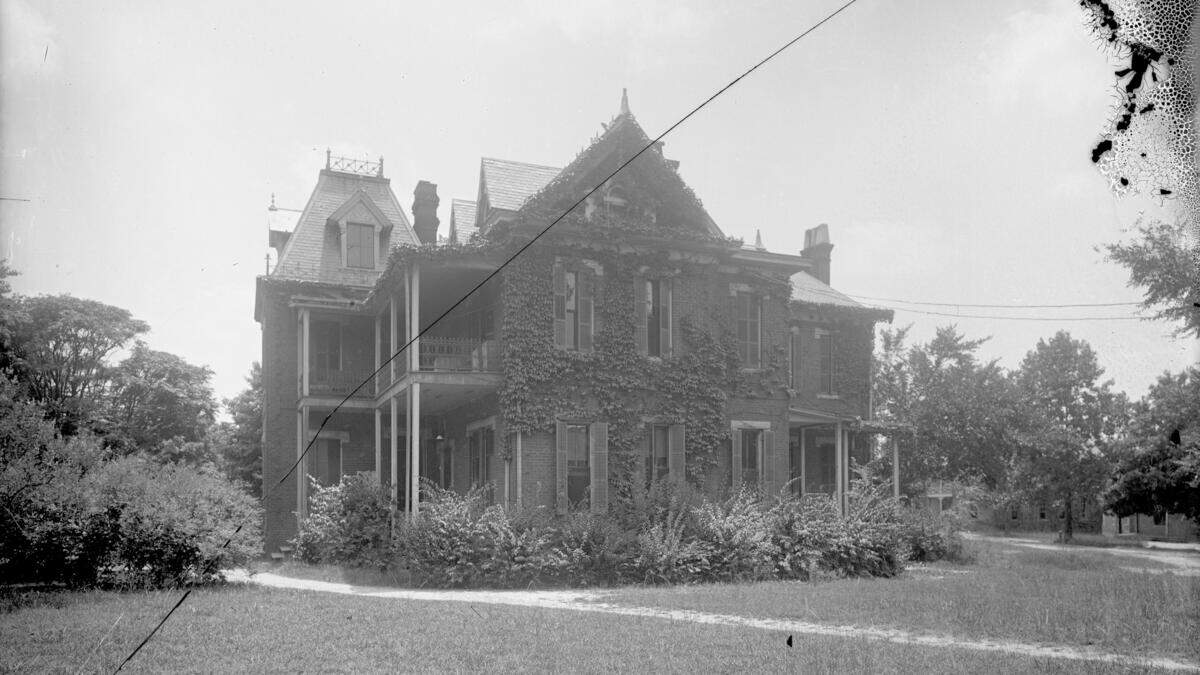
In the fall of 1918, the flu pandemic raged across Raleigh swinging a reaper’s scythe, so sudden and cruel that an ice cream truck doubled as a rolling morgue, carting off the dead.
Read more Sacramento sculptor brings history to life, honoring Robert Louis Stevenson’s honeymoon
Flu killed 288 in a single month, and terrified citizens tried any quack remedy to guard against infection: Tying cucumbers to their ankles, carrying potatoes in their pockets, sprinkling sulfur in their shoes.
As the death toll climbed, a young nurse named Eliza Riddick threw herself into the deadliest trenches, volunteering at the infirmary on what was then the State College campus in North Carolina— full to bursting with sick young boys.
Every student on campus was busy training for World War I, then in its final weeks, and as the flu struck, medics carried them in stretchers to what is now Winslow Hall at NC State, where they died within hours, still wearing soldiers’ boots.
Riddick treated them day and night for two weeks, watching the flu claim 10 souls a day, even her own brother, until she finally succumbed herself — 108 years ago, nearly to the day.
“Men say it is infinitely pathetic that Death should come to one so young, so strong and so fine,” a newspaper lamented.
But some say Riddick never left — at least not in spirit.
Her ghost is still said to roam Winslow — now home to the university’s facilities division — bringing water and fresh linens to the doomed, knocking books off shelves and papers off desks.
She may be the only ghost more frightening in life than in death — a witness to sickness that fed on youth and vitality, watching men trained to fight with tanks and machine guns cry out for their mothers, gasping into their graves.
The story of Riddick eternally tending to corpses on cots unfolds as part of the Red Terror Tour at NC State — a collection of Raleigh’s more academic horrors.
As a century-old ghost, Riddick and her patients scream out at Death’s great carelessness — a phantom who is frightening not because she hides in darkness but rather for her rage against the dying light.
Read more During chilly Charlotte show, Ed Sheeran talked about almost everything. Almost.
“They eternally exist,” The Technician student news site wrote in 2021, “with the injustice of early death that overtook the globe.”
‘The rough path of self-support’
Before she died at 24, Riddick stood out in Raleigh society, mentioned among attendees at teas and dances, including one thrown in 1917 for the students at State College.
“Favors of horns and caps were given,” The N&O raved. “Confetti was in abundance.”
She joined the Junior Suffrage League and the Knitting Club, and she worked as a receptionist at State College, where her uncle Wallace served as president. When her flu turned to pneumonia and killed her, the “boys” of State College comforted themselves that Riddick had been the sort to volunteer without a second thought and was simply following her nature into harm’s way.
“She was an exquisite type of Southern womanhood,” State College students wrote in The N&O after her death, “and by that type is meant a woman not spoiled by luxury nor cast down by woe. Gracing a ballroom, she also had the finer gracefulness of pursuing, with fidelity, the rough path of self-support.”
Riddick and another flu-stricken nurse earned a memorial outside the Wake County courthouse, celebrating their sacrifice. Flowers and flags covered her grave at Oakwood Cemetery, where she joined her brother William in the ground after only a week. Tributes poured in for years after war and pandemic passed.
And still, Riddick keeps working, wiping the sweat off feverish brows.
In this way, her haunting is Raleigh’s scariest — not ghoulish, not bloody, just as senseless and mean as real life.
This story was originally published October 18, 2026 at 3:40 AM with the headline “A nurse treated dying students for 2 weeks in 1918. Her ghost is said to still haunt the campus.”
Read more CA player hits $64 million SuperLotto Plus jackpot. Where was lucky ticket sold?