 By admin
On a sweltering afternoon last month, Reuben Neri Cardenas swept the front of his Bakersfield business on an otherwise quiet downtown block. Inside, rows of fedora hats, lowrider bike accessories and ’90s retro clothing sat untouched.
Read more Can a Bernie Sanders-backed progressive flip the Central Valley’s House seat?
His clothing and accessory store, an ode to Chicano culture, had operated through online sales for more than two decades. Four years ago, Cardenas decided to rent out a modest storefront in downtown Bakersfield.
Business boomed for the most part, he said. But in the last year and half, the national economic strife has plagued his store. His rent increased, tariffs made imported goods more expensive and customers are buying less. Cardenas estimated his sales have fallen about 70% since the summer of 2025.
“If it continues, I have to think about closing down,” Cardenas, 51, said.
Financial struggles have deepened Cardenas’ frustration with the country’s direction and elected leaders. Cardenas, a self-described independent who had backed both President Donald Trump and former Vice President Kamala Harris in past elections, was among the nearly dozen Central Valley voters interviewed over the last few weeks who described feeling disillusioned with politics.
Whether that discontent translates into votes for Democrats is a central question in California’s 22nd Congressional District, a sprawling stretch of the southern San Joaquin Valley that is home to one of the country’s most competitive House races. Despite a voter registration advantage, Democrats have repeatedly struggled to mobilize voters in this majority-Latino district.
This year, Democrats are hoping that a different kind of candidate — and a confluence of political factors — could help them break through.
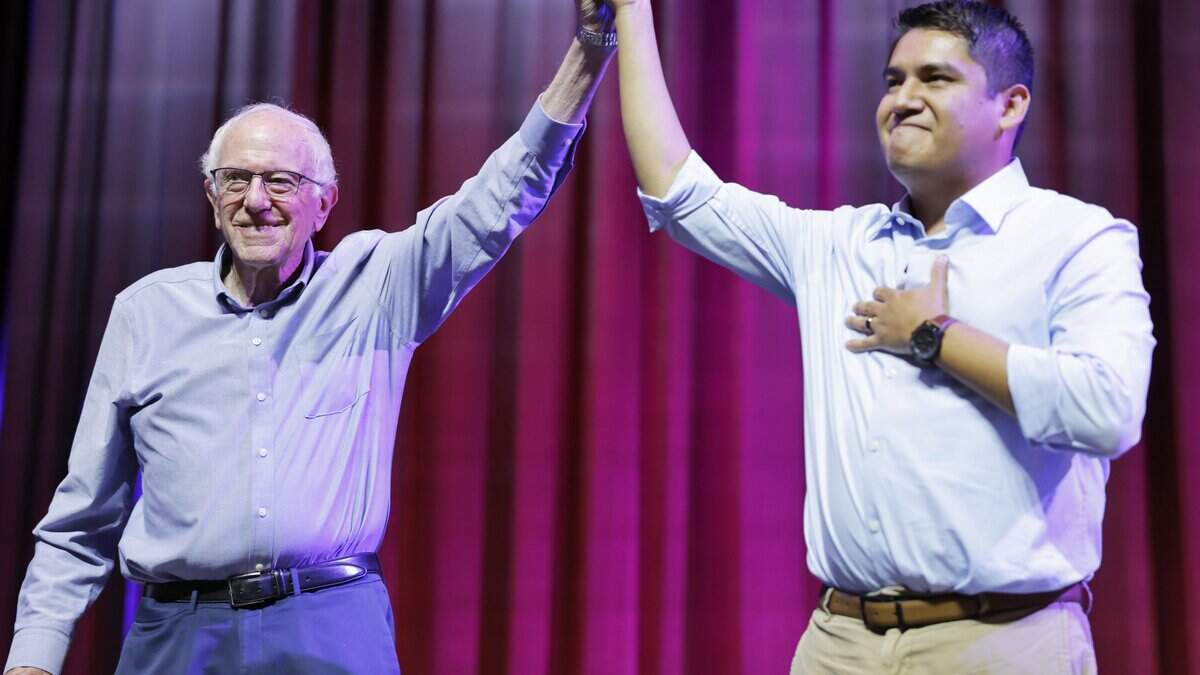
Randy Villegas, a 31-year-old populist endorsed major progressive figures like U.S. Sen. Bernie Sanders, I-Vt., and Rep. Alexandria Ocasio-Cortez, D-N.Y., has built his campaign around mobilizing working-class voters he says have been overlooked and misunderstood by both parties. His policies, which includes Medicare For All and universal childcare, mark a departure from the more moderate Democrats who have long dominated the region’s politics.
If elected, he would be the first Latino to represent the Central Valley in Congress.
“It’s not this fight about left versus right,” Villegas told The Sacramento Bee. “It’s us versus them: Working families in the Central Valley that have been left behind by politicians in both parties.”
Villegas is seeking to unseat Rep. David Valadao, R-Hanford, a formidable incumbent who long branded himself as a leader who works across the aisle and has close ties to the region’s agricultural economy. Valadao, 49, has won six of the past seven elections.
“I understand the issues across the board that affect this district. Having someone who has no background on any of the issues that affect the majority of folks is bad politics for the district,” Valadao said in an interview last month with The Bee.
Valadao has weathered competitive challenges since first winning the seat in 2012. But this election cycle, Democrats are banking on several factors working in their favor.
National polls have shown widespread dissatisfaction with Trump’s handling of the war in Iran and rising gas prices. California voters approved Proposition 50, which redrew congressional boundaries and further increased Democrats’ registration advantage in the district. Valadao must also contend with his deciding vote for H.R. 1, the sweeping federal bill known as the One Big Beautiful Bill Act, which passed last year.
The law is expected to cause tens of thousands of people in Valadao’s district to lose Medi-Cal coverage as stricter eligibility requirements take effect.
“This is somebody who isn’t working for the Central Valley, but working for lobbyists with his billionaire donors, working for his corporate sponsors,” said Villegas, who often calls the legislation a “Big BS Bill.”
Jimmy Olea, 66, and his 87-year-old mother, Angelita, are among the voters who say Valadao’s vote on the legislation cost him their support. Both are longtime residents of Corcoran, a small farming town in King County where campaign signs on front lawns appear to favor Villegas.
Olea and his mother previously supported Valadao’s bids for Congress. But Olea said his mother is on Medi-Cal and is already struggling to “make ends meet.”
“You didn’t vote for our people on this issue, and you don’t represent us, so you have to find yourself another job,” Olea said of Valadao. “We have a saying in Mexico. You fight one bean, you fight the whole burrito.”
Valadao, at least publicly, is unfazed by the criticism. He has defended his vote by arguing that the law’s stricter work eligibility requirements are necessary to keep the program sustainable. He has also dismissed the premise that the race is more difficult than previous contests, saying voter frustration extends party lines.
Read more He’s crossed the US on foot 3 times. Meet Sacramento’s real deal Forrest Gump
“I’ve run in districts this tough in the past. This isn’t new,” Valadao said. “As far as what’s going on with political winds, the issue that we’re dealing with now is Republicans and Democrats are both disliked.”
Still, Valadao has carefully navigated his public positions on Trump and the administration’s decisions in recent months. On immigration, he has issued statements addressing increased enforcement but has stopped short of the strong criticism voiced by some other Republicans politicians across the country.
Valadao did not attend the president’s Republican convention in Dallas last month and declined to say whether he would welcome Trump campaigning for him. Republican House Speaker Mike Johnson visited the district last month to rally support for Valadao.
Valadao remains one of only two Republican House members still in Congress who voted for Trump’s impeachment in 2021.
“I’ve done a pretty good job over the years differentiating myself from the president and the party where I needed to, and taken on my own party,” Valadao said.
That reputation for independence continues to resonate with voters in his hometown of Hanford. At the town’s weekly Thursday night farmers market last month, several attendees praised his moderate streak and his relatability as a local farmer.
“David has got a lot of slack because he does work with the Democrats, but if you’re going to get anything done you have to do that,” said Kathy Neves, who spent 30 years working as a bookkeeper in the cotton industry.
“He’s just a solid individual,” added her husband Joe, who recalled meeting Valadao multiple times over the past decade.
Villegas, who grew up in Bakersfield and is now a community college professor, has drawn on his own background to build connections with voters. On the campaign trail, he has recounted helping his immigrant parents sell goods at a local swap meet and later working at the family’s auto repair shop.
He went on to obtain a Ph.D. at the University of California, Santa Cruz. examined how young people from mixed-status families in the Central Valley are an under-mobilized voter base held back by both political parties.
“Randy is particularly well-situated to say, ‘Well, I’ve actually been there’… I mean, the guy worked his ass off and went to get a Ph.D. and come back and educate people here,” said Christian Romo, chair of the Kern County Democratic Party and a former high school classmate of Villegas.
Villegas’ ability to win the seat will depend in part on how many voters have heard that message.
Cardenas in Bakersfield, for example, said he has been inundated with Valadao campaign advertisements but knows little about Villegas.
Valadao, bolstered by donations from Republican political action committees, maintains a substantial fundraising advantage. Villegas has made gains in recent months but has relied more heavily on grassroots organizing.
Cardenas said he often evaluates candidates based on their public-speaking skills, ability to offer fresh ideas and sense of authenticity. This year, he’s a fan of progressive Democratic Senate candidate Abdul El-Sayed in Michigan and will be backing Republican gubernatorial candidate Steve Hilton in California.
In the 22nd District race, Cardenas remains undecided. He’s had years to judge Valadao and is dissatisfied with the record. But Villegas is untested and comes with a campaign message that hasn’t fully reached Cardenas yet.
“With Randy, I don’t know much about him at all,” Cardenas said. “There’s nothing stopping me from him but I just gotta analyze and evaluate him more. If he seems like a better guy, I will swing that way.”
Read more Fall is a critical time to help migrating monarch butterflies in California