 By admin
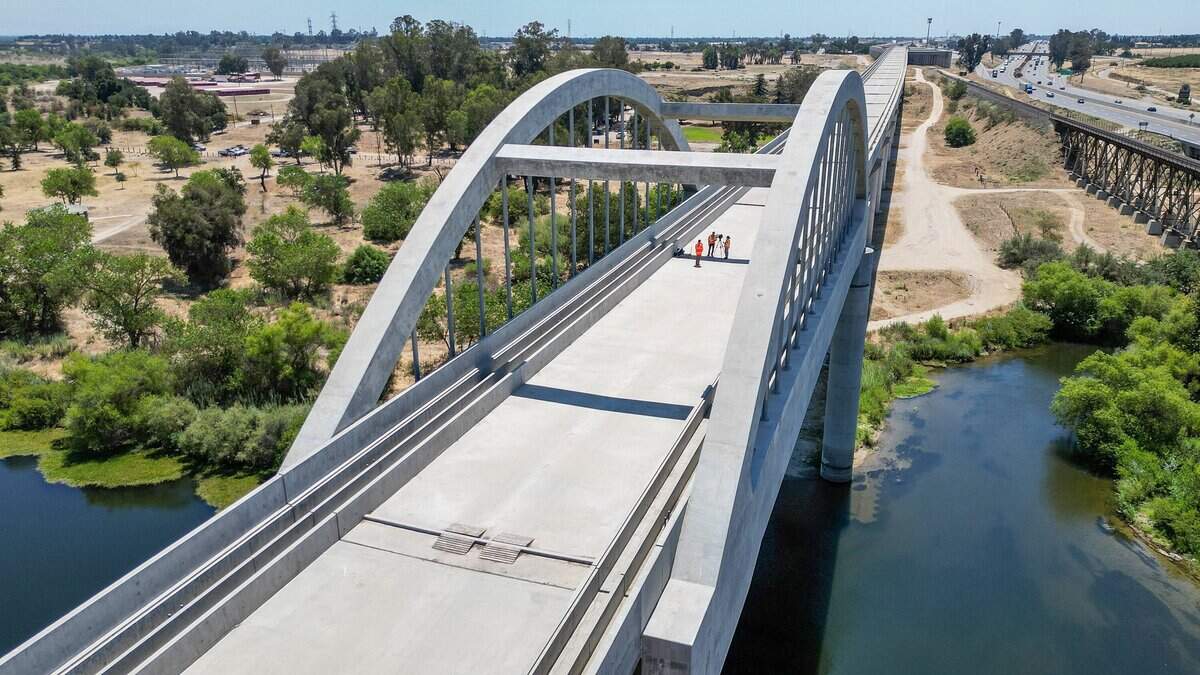
Eighteen years ago, California voters approved $9.95 billion in bonds to begin construction of a Los Angeles-to-San Francisco high-speed rail system that at the time carried a price tag of about $45 billion.
Read more Could California reading reforms match Mississippi’s gains? Lessons from ‘miracle’
Today, they’re still waiting for that system, as problems with the project have mounted.
California High-Speed Rail CEO Ian Choudri quit Oct. 28 following findings that the agency had improperly paid $680,500 for consultants’ luxury travel and leisure during Choudri’s two-year tenure — though consultants are now as a review continues. In another setback, the project has become a punching bag for President Donald Trump’s administration, which last year pulled $4 billion of its federal money while criticizing it as an example of wasteful government spending.
Yet, somehow, rail authority board members are pressing on. They say they’re still moving on the initial segment of the project — a 171-mile, Merced-to-Bakersfield line through California’s Central Valley — with workers laying that line’s first tracks before the end of this year.
“We’re moving forward,” board Chair Steve Kawa said. “We’re going to be getting track, and we’re going to be laying track in 2026.”
The rail authority has spent most of the last two years promising the track milestone by the end of this year — more than a decade after other construction related to high-speed rail began in the Central Valley.
If the agency succeeds in laying track in the next six weeks, it could take a late win in what has otherwise been a politically tumultuous 2026.
Gov.-elect Xavier Becerra, a Democrat, has indicated he wants to reform high-speed rail, but he has provided few details about any potential plans. Jonathan Underland, Becerra’s spokesperson, did not respond to The Fresno Bee’s request for an interview with the governor-elect.
In California, the rail authority in the past two years has inspired controversy by proposing that the system be made smaller in the Central Valley by floating legislation that would increase its land-use power — changes Choudri said are necessary to save time and money.
The agency is being led in the interim by Joe Stephenshaw, director of California’s Department of Finance.
“There’s always issues, and we are going to deal with issues as they come up … with more enhanced oversight, accountability and transparency,” Kawa said.
Read more Sacramento airport disruptions continue; Republic FC playoff game rescheduled
Even if the rail authority starts laying tracks soon, it will face obstacles in 2027. The agency’s inspector general has warned the project is in danger of running out of cash by the end of next year — a problem that could the rail authority from finishing its Central Valley segment by a 2033 deadline and at a low-end cost of $35.7 billion.
The rail authority will need to find a way to get early access to money the state has committed to the project’s future, though it’s not yet clear how the agency will do that. It will also need to finalize a deal with potential private investors who have shown interest in helping to build high-speed rail infrastructure past the Central Valley.
Much of that work will require support from Becerra and the Legislature. That’s where the agency is hoping Stephenshaw can play a key role.
“He’s going to have a lot of credibility with the new Becerra administration, but he’s also going to have a lot of credibility with the Legislature,” Kawa said. “We have to partner with the Legislature on this plan as we move forward.”
‘It’s going to be close,’ California rail board member says
Henry Perea, a rail authority board member from Fresno, acknowledged the agency doesn’t have much time to meet its track-laying milestone this year.
“We’re in the process right now of buying all the materials, and we have the equipment to lay the track,” he said.
A rail authority spokesperson told The Fresno Bee, part of the McClatchy Media network, some of the needed track-laying materials have already begun arriving at the agency’s Southern Railhead Facility, a 150-acre storage and staging yard in Kern County. The agency has begun posting video of the material in the yard on its YouTube channel.
Track-laying would begin in that area, where the system’s civil structures are complete and ready for that work. It would move north from there.
Perea said the agency is in talks with the manufacturers that will provide the steel for the tracks. That steel needs to be tested and certified before it’s used in construction. Perea added that he prefers to make sure those safety measures are met rather than focusing on a certain track-laying, ribbon-cutting by the end of the year.
“It’s going to come close,” he said. “I think we need to let it play out. When it’s tested, certified and ready to get laid — that’s when it gets laid.”
Read more Popular Sacramento brewery to close after 14 years, but its beer isn’t going away