 By admin
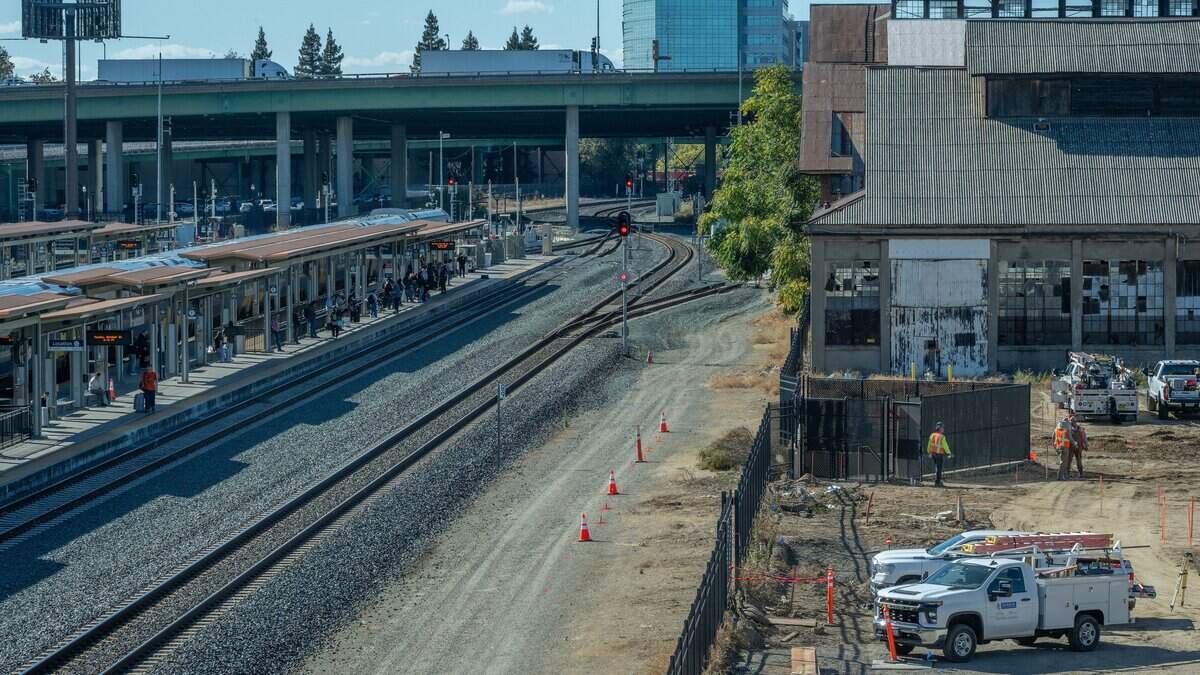
Providing multiple ways to travel to the in-progress Railyards district — with shops, housing, a hospital and a music venue — is almost, if not just, as important as the development itself, according to some involved with the project.
Read more New Roseville neighborhood park is over budget before construction. What happens now?
The city of Sacramento, developers and transit providers have focused on setting up multi-modal access points — and getting those ready early — for one of the country’s largest urban infill projects.
One of those points, a light rail station on Seventh Street near the Railyards district, opened last month.
“Folks can consciously move here because of all of the benefits and accessibilities a station like this affords,” said Josh Leachman, senior vice president of project development for LDK Ventures, which has been handling the redevelopment of the 244-acre former railyard in recent years.
The new Sacramento Regional Transit light rail station is just across from where the Sacramento Republic FC stadium will be. During the ribbon-cutting event, celebrants characterized the construction of the station — which was a public-private effort — as the start of tying the district into the rest of the city.
“The Railyards … is one of the most significant areas of growth in our region, and connecting it directly to light rail is an important investment in Sacramento’s future,” said Elk Grove Mayor Bobbie Singh-Allen, who is also on the RT board of directors. “The station … connects the Railyards to the broader Sacramento system and communities throughout our region.”
Several transportation-related projects are in progress, though at varying points of progress. While some are directly related to the district development, others are on the property that borders the district — Sacramento Valley Station.
Five ‘points of connectivity’
As Sacramento urban designer Gregory Taylor describes it, within the areas of the Railyards district and Sacramento Valley Station there are five “points of connectivity,” or projects that will make it easier for residents to get to the area. Some of these are not on Railyards district property.
The first is the north entrance, which will directly connect anyone arriving by bus, train, vehicle or bicycle to the central shopping and entertainment area. The entrance, which is a set of 20-foot-wide stairs and a 12-foot-wide accessible ramp, will lead to the central shops plaza from an existing passenger tunnel that connects Sacramento Valley Station and the Amtrak tracks, according to the city.
Excavation and demolition for the staircase began the last week of October and construction is expected to wrap up before the end of 2027, said Taylor, who is the Sacramento Valley Station project manager. Visitors can expect to use the entrance when some shops open in the area next year.
Downtown Railyard Ventures, which owns much of the real estate in the district, paid for the design. The construction is funded using $3.19 million from the California State Transportation Authority’s Transit and Intercity Rail Capital Program.
To the south of Sacramento Valley Station, the city is also working to make the block of Fourth Street between J and I streets more accessible for pedestrians and cyclists. That section of Fourth Street leads directly to Sacramento Valley Station from Chinatown and DOCO, Taylor said.
Currently, any residents walking that block must go down a set of stairs into an area with few lights and up another set of stairs to reach the other side. Any pedestrian with a mobility disability or a bicyclist cannot easily use the route, and would likely need to divert a few blocks. The city sought $6.5 million from the Transit and Intercity Rail Capital Program to create a design for that area that would improve lighting and accessibility, but found out on Wednesday that it did not receive the grant, Taylor said.
The third “point of connectivity” expands nearby cycling accessibility. The city plans to eliminate one lane of vehicle traffic and add another bike lane on H Street between 10th Street and Sacramento Valley Station — just west of Fifth Street. About $4.5 million of a Transit Intercity Capital Rail Program grant is being used for the design and construction, the latter of which will likely begin in 2028, Taylor said.
The fourth point — dubbed the “western connector” — will allow pedestrians to walk from the Old Sacramento waterfront into the Railyard district.
The project includes creating a bus layover site, where drivers will rest, west of Bercut Drive and south of Telegrapher Avenue. Class IV bike trails, which provide a physical separation between cyclists and traffic, and pedestrian walkways will be installed around the same area.
Construction is expected to begin next year for the project, which is funded by a $4 million grant from the Transit and Intercity Rail Capital Program. The new walkways will connect to an existing ramp, tunnel and staircase that leads to the waterfront and Second Street. The tunnelway has been closed since it was constructed because there has not been a “connection to public way,” according to a 2026 presentation provided by Taylor.
The final connectivity point is a northbound vehicle ramp onto Interstate 5. This project will likely not manifest for a few years because it is reliant on the construction of the I Street Bridge, which has been in limbo since construction bids came in about 50% over estimates and the response window expired for the city.
Although not a technical “point of connectivity,” one other project will help vehicle traffic move efficiently through the Railyards district.
An about 600-foot segment of Fifth Street — between Summit Tunnel Avenue and North B Street — was completed in September, Taylor said. The road, which cost about $4 million, will not be open to traffic until Kaiser Permanente’s planned hospital opens.
Sacramento Valley Station
The Sacramento Valley Station is in the middle of a 20-year renovation plan that aims to expand the current rail station into a full transit center, complete with a bus mobility hub and more cycling accessibility. It’s not technically part of the Railyards district development, but the two projects are tied by their proximity and likely contribution to each other’s business.
The station is getting ready to begin its next phase, which has multiple parts:
- Filling in 100-year-old passenger tunnels that go under the current light rail tracks, using dirt removed during a separate 2012 project
- Removing the historic platforms, which are currently gated off
- Installing a storm drain
- Relocating the Sacramento Regional Transit light rail station
- Constructing the pick-up and drop-off plaza, which will be between the light rail and the ramps to Amtrak trains.
The last part of the project will cut down the distance between drop-off and the trains by half — about 500 feet — Taylor said.
The city has already received $31.3 million in Transit and Intercity Rail Capital Program funding for portions of the project and will be applying for another grant later this month, after Sacramento City Council approved the submission on Tuesday. Taylor said that Sacramento will if it has received the $32.5 million in California Solutions for Congested Corridors Program funding.
Read more CA joins 12 states seeking to block veterinary supply merger over price concerns
Crews could begin construction work as soon as summer 2028, if the city receives the second grant.
Light rail at Sacramento Valley Station
Since 2002, city plans have included the repositioning of Sacramento Regional Transit’s current light rail station at Sacramento Valley Station, Taylor said.
The current station has an east-west orientation and is parallel to the historic Sacramento Valley Station building, with the tracks running straight from H Street. The new setup would move the location to a north-south orientation, with the tracks still coming off H Street and then curving north just after Fifth Street
The station will have two tracks with a 34-foot-wide platform and the double tracks are expected to continue on F Street until Seventh Street, Taylor said. H Street will still have a single track.
This part of the project is essential to moving forward with other improvements, but it has been delayed multiple times, Taylor said.
“We cannot do anything without moving the light rail station,” he said.
There has been a lot of back and forth between Sacramento Regional Transit and the city, and a timeline has not been set for when the station will be operating in its new orientation. However, Taylor said he hopes the station will be open in the summer of 2029.
“We support the long-term benefits the station relocation would provide for Railyards development and future transit connectivity,” said RT spokesperson Jessica Gonzalez in August. “However, the project is currently being revisited due to funding shortfalls and evolving design considerations.”
On Monday night, the RT board of directors unanimously authorized CEO Henry Li to craft an agreement with the city on the project. It is expected to minimize construction effects on riders and makes the city responsible for environmental documents and potential redesign or overrun costs, according to a presentation from Laura Ham, RT’s senior vice president of planning, grants and procurement.
Before recent discussions between the city and RT, the station could have closed for up to three years during construction. Now, the station is expected to close to riders for about one month, Ham said.
Regional Bus Mobility Hub
Sacramento Valley Station is more or less a train station now, Taylor said. The Regional Bus Mobility Hub will make it more of a general transportation center.
The hub is a two-level center that will have 18 bus bays — 10 of which will have EV charging — and in a subfloor, which is expected to connect to passenger tunnels, according to a 2021 plan. It will also have a “bike hub,” with associated stores and a repair shop, and restrooms.
Taylor said he believes this hub is key to attracting more passengers and bus riders to the Sacramento Valley Station, which he said has the second-most Amtrak ridership next to Los Angeles Union Station.
The city estimates the hub will cost about $120 million and has received about $32 million to go toward the project. A construction timeline has not been set, Taylor said.
Storm drain line
A new storm drain is key to freeing up more than 3.25 acres on the property, Taylor said.
A drain line, which is a pipe that collects and diverts excess water to prevent flooding, will run water underground throughout the property to a new stormwater facility on Bercut Drive and eventually into the Sacramento River.
Though a storm drain itself is not transportation infrastructure, the project “aligns with our future street pattern” and the 3.25 acres currently occupied by the detention basins are needed for the construction of the bus station, Taylor said. One of the basins is in the middle of the Sacramento Valley Station property, just north of the old platforms, and the other borders the west side Fifth Street and south side of F Street.
“We can’t build any more structures without the storm drain,” Taylor said.
Developers have constructed two portions of the storm drain line, mostly north of the Amtrak tracks. The “south-of-the-tracks” portion of the line, which will essentially connect the two existing parts, is scheduled to begin construction in summer 2028.
Seventh Street and Railyards light rail station
Sacramento Regional Transit’s new light rail station at Seventh Street near the Railyards district opened Oct. 15.
The station, which is the 55th in RT’s network, is part of RT’s light rail Green Line, which mostly serves downtown and ends in the River District. The line, which has been shut down since June 2025, reopened a few days prior to the station’s grand opening.
The station was not paid for by the transit agency. Railyards district developers and an Affordable Housing and Sustainable Communities grant funded the station, according to RT.
“The opening of Seventh and Railyards Station ensures people can access this growing neighborhood by light rail, whether they’re commuting to work, visiting a museum, attending a concert or cheering on Republic FC,” said Sacramento Mayor Kevin McCarty. “Connecting these destinations to public transit is an important part of building a vibrant, accessible, and economically thriving city.”
Read more Sacramento could ban horse-drawn carriage rides in Fab 40s during holiday season
This story was originally published November 17, 2026 at 6:00 AM.