 By admin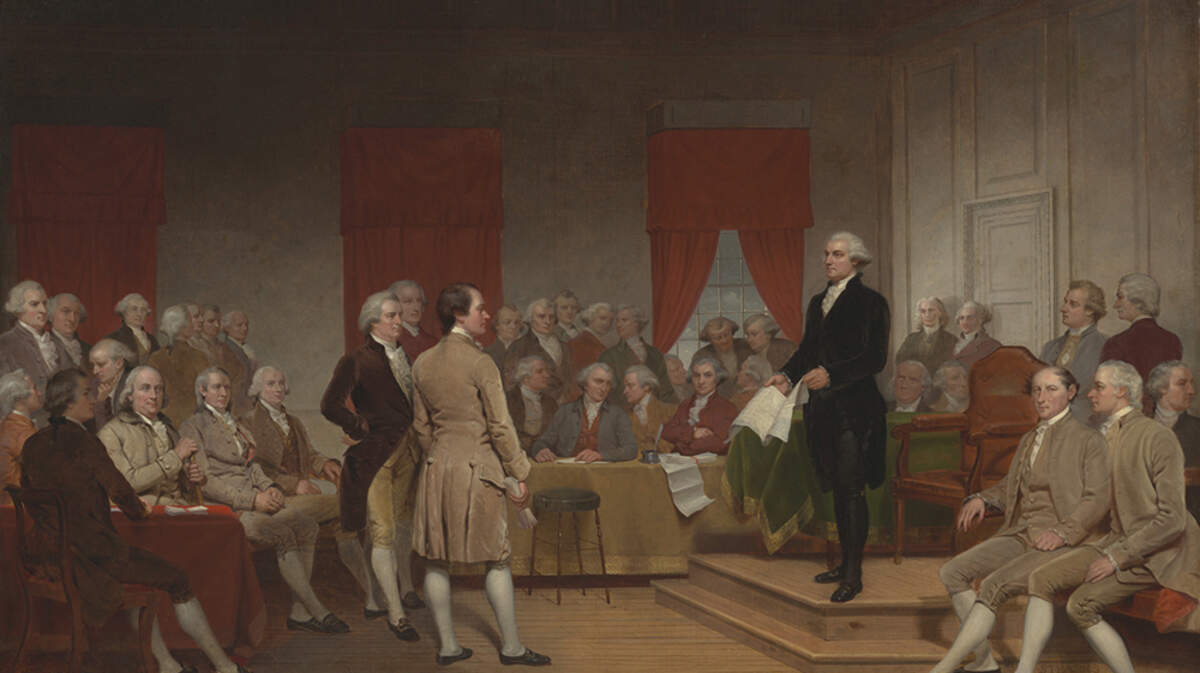
As we celebrate Father’s Day, and in anticipation of the 250th anniversary of American independence, let’s consider the revolutionary idea of fatherhood that inspired the American founding. The “sons of liberty” rejected the ancient idea of the king as father of the country. They viewed themselves as freed from old-fashioned patriarchal authority.
Read more Petty grudge led SLO County supervisor to disrespect immigrants. Unbelievable | Opinion
In the Declaration of Independence, the revolutionaries called the king a tyrant rather than a father. Behind this political point was the idea that a father should care for his children and nurture their liberty.
A hundred years earlier, the British philosopher John Locke renounced the traditional idea that patriarchal power extended from Adam to the divine right of kings. Locke denied that fathers had absolute power over their children. He thought the proper role of fathers was to nurture children “during the imperfect state of childhood.”
For Locke, parents should cultivate liberty by employing liberal means. , Locke condemned beating and dominating children as “mere cruelty” that established a “passionate tyranny over them.” Rather than encouraging “slavish discipline” and cowering obedience, Locke encouraged children’s freedom since “we naturally, even from our cradles, love liberty.”
After children mature, they should be emancipated as free, rational beings. The political implication of this idea was that the king is not a quasi-religious paternal authority. Rather, for adults, government was a social contract among free, consenting people.
This way of thinking inspired the American revolutionaries. In “Common Sense,” Thomas Paine mocked the idea that Britain had parental authority over the colonies saying, “even brutes do not devour their young, nor savages make war upon their families.”
Paine rejected “the hardened, sullen-tempered Pharaoh of England,” who “with the pretended title of father of his people can unfeelingly hear of their slaughter, and composedly sleep with their blood upon his soul.” A good parent would not abuse or attack his children as the king of England did at Lexington and Concord.
A poignant expression of the new idea of fatherhood can be found in a letter written to President George Washington by his adopted son, Jack Custis, in June 1776. Custis thanked Washington for providing “parental care,” including “wholesome advice and reprimands.”
“He best deserves the name of father who acts the part of one,” Custis wrote.
To deserve the title of “father” in the ethical sense has nothing to do with the biological fact of paternity. Washington did not beget Custis, but Custis viewed him as his father.
This implies that deadbeat dads and tyrannical parents do not deserve the name of father. Rather, genuine fatherhood should aim to improve the soul, educate the mind and nurture the spirit of liberty.
Read more CA’s new tax package, Roseville pitcher wins All-Metro. Top Bee stories from June 18
This also implies that a father’s power is limited. Children are not robots or animals who can be programmed or put on a leash. Instead, they are free human beings who ultimately live their own lives.
This conception of fatherhood also rejects the notion that sin is somehow transmitted from father to child. Thomas Paine mocked the idea of “original sin” as being as absurd as the idea that political power should be passed from father to son by “hereditary succession.” Neither theory makes sense if human beings have free will and the capacity for change.
If we believe in freedom, we should believe that kids can overcome the sins of their fathers. Bad habits taught at a young age are not easily surmounted. Criminal fathers may teach their kids to steal, and lazy fathers may encourage their children to be slothful. But bad habits are not innate or inherited. They are the result of bad modelling.
The solution is better parenting.
Moral failure is not a matter of spiritual stain or genetic taint, and good children can blossom despite rotten soil. The sons of liberty rebelled, after all, against the tyrannical king.
Washington once said, “Liberty, when it begins to take root, is a plant of rapid growth.” Despotic fathers and tyrannical governments may attempt to undermine liberty, but liberty can still bloom despite despotism.
The American tradition maintains that political rulers are not father figures. It rejects child abuse and paternal despotism. And it teaches that good fathers should encourage their children to become free and rational adults.
Andrew Fiala is a professor of philosophy and director of The Ethics Center at Fresno State.
This story was originally published June 19, 2026 at 5:00 AM with the headline “What can we learn from the Founding Fathers about being a good dad? | Opinion.”
Read more Sacramento leader: The county’s budget rewards failure, cuts public safety | Opinion