 By admin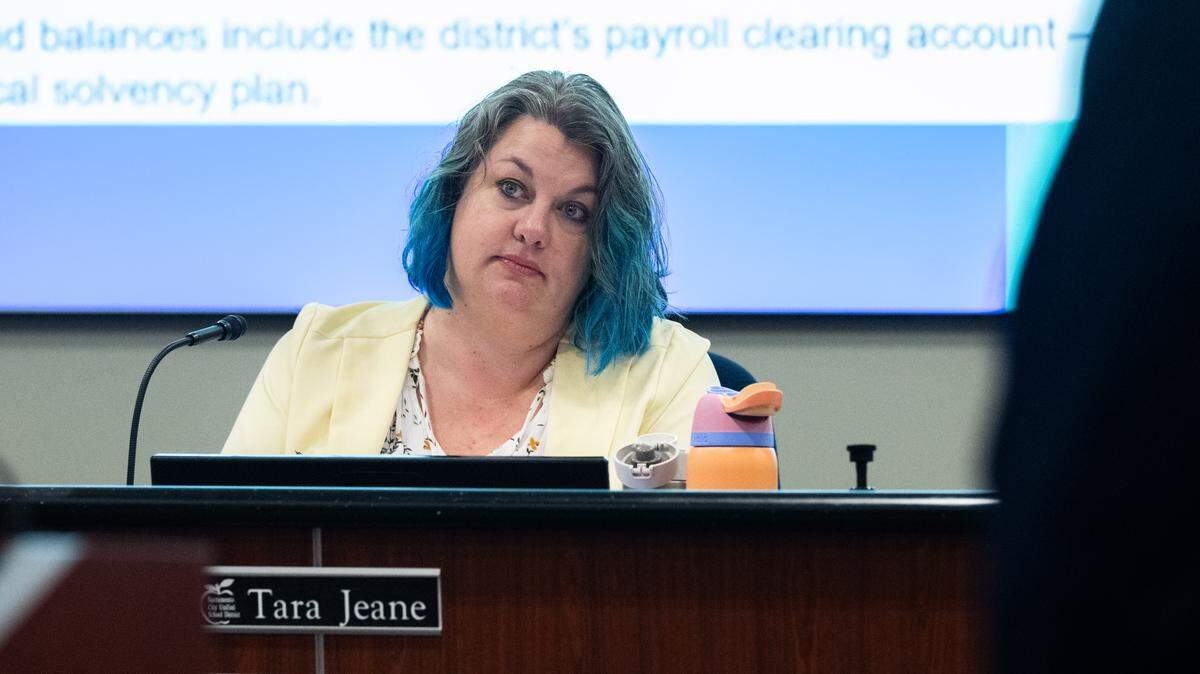
Sacramento City Unified School District trustees approved a 2026-27 budget Thursday that shows the district’s financial crisis carrying into the years ahead.
Read more Bee Appetit: Head to Freeport Boulevard for these slippery, slurpy noodles
The budget projects the district’s unrestricted general fund will end this year at $62 million in the red. The deficit would grow to nearly $284 million in 2026-27 and nearly $510 million by 2028-29.
The projection comes after months of fiscal turmoil, with district officials scrambling to close a roughly $170 million budget gap and avoid state receivership.
“While I’m looking at this and incredibly torn, and I have reluctance, I do intend to vote on approving this budget as is at this time, with the thought that it is yet again one snapshot in time,” Board President Tara Jeane said.
“We’re going to keep watching it and changing as we go along the way.”
The district had identified about $97 million in budget solutions as of May 21, however, officials noted most of those savings are one-time strategies. Narrowing the deficit from roughly $170 million to $62 million may look like progress on paper, but it still means the district is projected to begin next year in the red.
Cash crunch in November
The district’s cash flow is also expected to tighten quickly. District officials still project SCUSD could run a cash deficit by November, even after accounting for property-tax advances.
The projections move SCUSD closer to what state fiscal analysts had warned earlier this year: It may be less a question of whether the district runs out of money than when.
In May, the Fiscal Crisis and Management Assistance Team estimated that the district will be out of money in February, if not January. Michael Fine, chief executive officer of FCMAT, warned that additional state funding might delay the point when the district runs out of cash, but would not meaningfully change the overall outlook.
“Instead of running out of cash in mid-February, maybe they’ll run out of cash in mid-March,” Fine said following Gov. Gavin Newsom’s May budget revision, which added some school funding.
Read more Giants’ Pride Night controversy goes national, continues. Here’s what to know
Fine recommended that the district seek a state loan before the current legislative session ends, warning that waiting until the next session could delay funding until March or April, after SCUSD may have already run out of cash.
Pressing for clearer answers
For months, frustration among stakeholders has centered on numbers that keep shifting as the district revises its budget projections. The Sacramento City Teachers Association has requested more clarity on the district’s special education spending, as SCUSD moved to lay off employees, while trustees have also pressed for more certainty around the district’s assumptions.
Thursday’s meeting did little to resolve that frustration for them.
Jasjit Singh, a board trustee, asked for a 45-day budget revision, saying the board needed clearer numbers after the state budget is finalized.
The board did not separately vote on that request, but Interim Chief Business Officer Lisa Grant-Dawson acknowledged the usefulness of such an update before the district’s first interim report in December.
“These numbers are terrifying,” Lindsay Rowe, pointing to the district’s projected negative cash balance and asking how SCUSD would make payroll.
“It feels like we’re on a speeding train toward state receivership with these numbers, and we need extraordinary measures to slow that train down, much less stop it from crashing.”
The cost of receivership
If the district submitted to insolvency, it would trigger state receivership, meaning that the SCUSD school board would lose local control.
Receivership would bring interim leadership, stricter state oversight while the loan is repaid to the state with interest, while SCUSD works to meet FCMAT’s standards and return power to local elected officials. During that period, decisions about cuts and other cost-saving measures would be made by an unelected administrator.
Read more What can we learn from the Founding Fathers about being a good dad? | Opinion