 By admin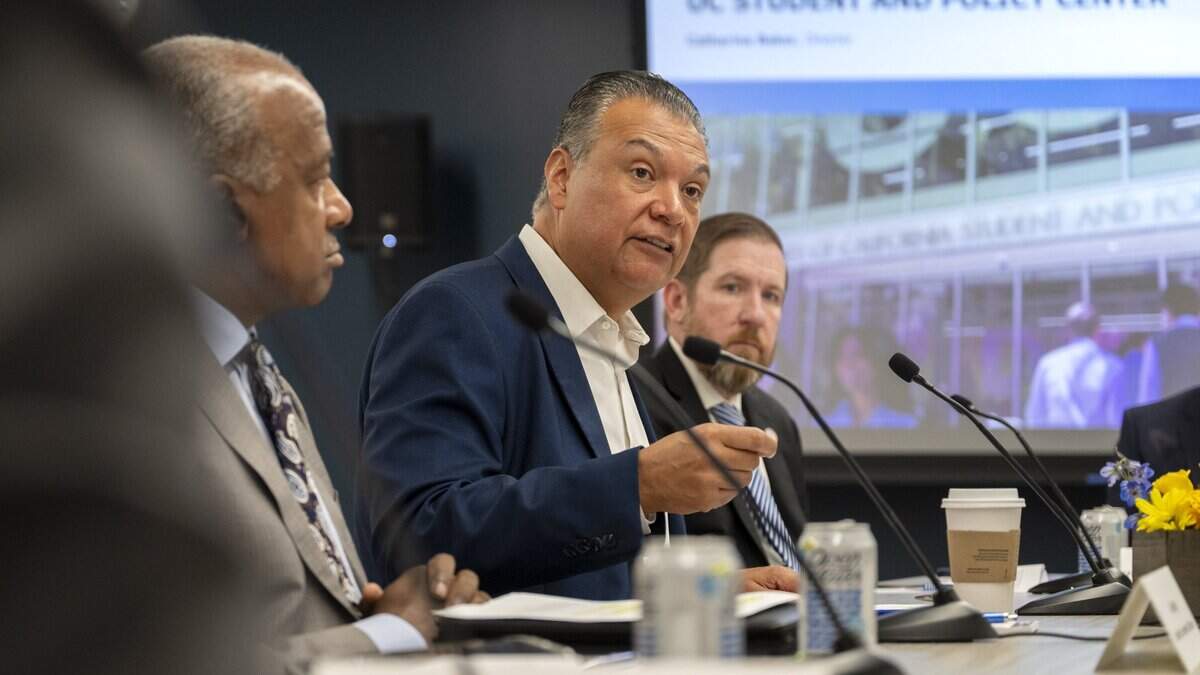
U.S. Sen. Alex Padilla, D-Calif., joined leaders from California nonprofits, universities and community organizations in Sacramento Tuesday to hear how federal funding cuts and policy changes are playing out on the ground.
Read more Will I get a ticket for going around a stopped school bus? What CA law says
Across sectors, they described an atmosphere of uncertainty fueled not only by federal actions already taken, but by the possibility of further funding freezes and rule changes with little warning. They said that instability is making it harder to plan, retain workers and reassure the communities that depend on their services.
“You’re on the ground. You tell me what you’re seeing, what you’re feeling, what you’re hearing, what you felt already and what you’re anticipating in the months ahead,” Padilla told the group gathered at the UC Student and Policy Center. “I’m here to listen more than I am to talk.”
Among the biggest concerns was H.R. 1, the sweeping tax and spending law signed by President Donald Trump last year. Leaders said it will reduce access to healthcare and food assistance and place greater pressure on the nonprofits and community organizations.
California food banks already serve about 6 million people each month, up from 4.5 million at the height of the pandemic, according to Jared Call, director of public policy and advocacy at the California Association of Food Banks. He said food banks expect demand to grow as Californians begin losing access to CalFresh because of the federal legislation.
“SNAP, or CalFresh in California, is the first line of defense against hunger,” Call said. “Food banks are not the safety net. We’re the hands beneath the safety net.”
Food banks are one part of a much larger nonprofit network that has become integral to how California delivers services. According to California Association of Nonprofits CEO Geoff Green, the state has roughly 110,000 501(c)(3) organizations.
Green said the nonprofit sector employs almost 10% of California’s workforce and generates more than $450 billion in annual revenue, about a third of which comes from public grants and contracts.
Nonprofit leaders said prolonged funding freezes and cancellations can force organizations to delay hiring, lose workers and reduce services, creating ripple effects for a sector that represents a significant share of California’s economy.
But leaders said their concerns extend beyond whether federal dollars will continue to flow. Some described changes in the conditions attached to funding.
Read more California Democrats rally opposition to voter ID measure, call it Trump-led effort
Jonathan Porteus, CEO of Sacramento-based WellSpace Health, said beginning in January 2025, notices of federal awards began requiring him to attest to additional language acknowledging he could face criminal liability for not supporting executive orders.
“And so my work and my responsibility as a CEO has now become one where I have to either stand up or to step aside with these executive orders,” Porteus said. “And as someone who’s half German, it’s pretty bad to see this happening again.”
Porteus said that uncertainty extends to scientific research, warning that instability in federal funding risks weakening a research workforce that has helped make the United States a global leader in science.
UC Davis Chancellor Gary May echoed that concern, saying the university has already experienced grant cancellations and delays. May pointed to a multiyear study at the UC Davis Alzheimer’s Disease Research Center that was terminated in 2025 before its funding was ultimately reinstated. Despite the reversal, May said the cancellation left a “chilling effect.”
That chilling effect could deepen under proposed changes from the Office of Management and Budget to the rules governing federal grants, May said. The changes would give political appointees more discretion over which projects receive funding and allow funding to be canceled or redirected as federal priorities change.
May warned that if researchers cannot count on funding lasting through a project, universities may be less willing to take chances on innovative science, hire staff or make long-term investments.
“Fortunately, Congress sees the dangers of the proposed changes to the rule, and thanks to the leadership of Senator Padilla and colleagues, the Senate passed a continuing resolution to keep the government running through Dec. 11. This includes a provision prohibiting OMB from implementing these harmful changes,” May said.
Padilla said the firsthand accounts he heard at the roundtable could help lawmakers push back against federal actions. He urged nonprofit leaders to keep sharing their experiences.
“The folks in the nonprofit sector are so critical as our social safety net is being attacked by the Trump administration. Don’t lose hope,” Padilla said. “We’re going to keep working together through these difficult times … this is when the community needs us the most.”
Read more Aisha Wahab leads Melissa Hernandez in race to fill Rep. Eric Swalwell’s seat
This story was originally published August 18, 2026 at 5:30 PM.