 By admin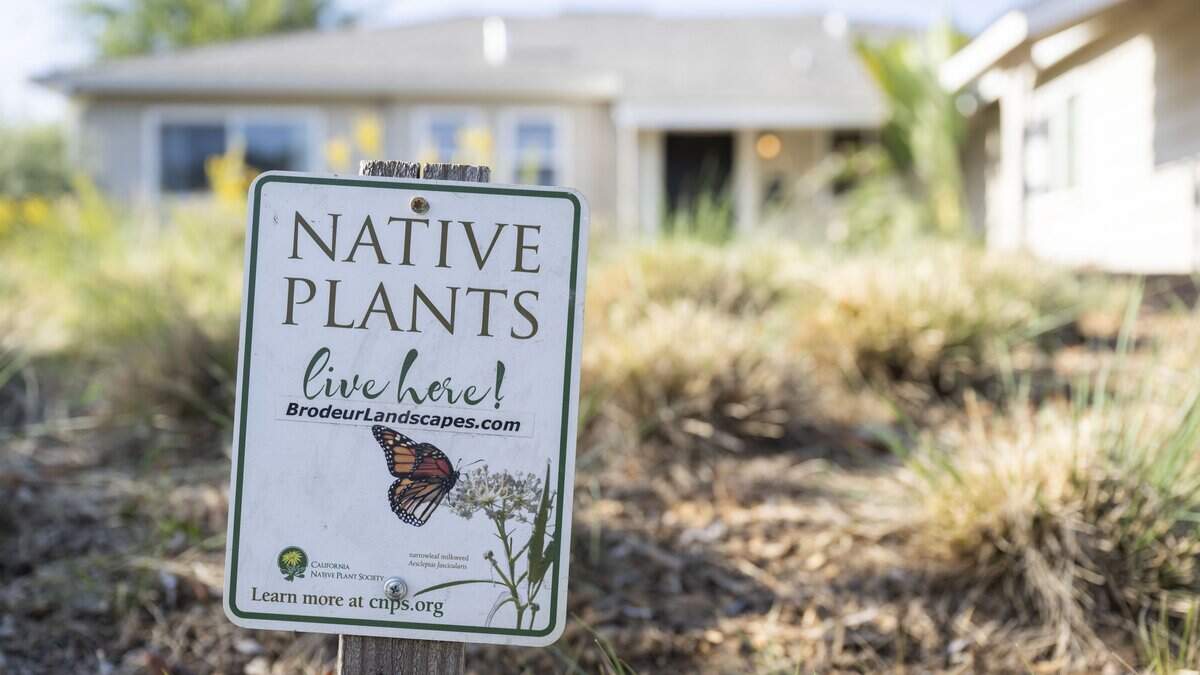
You could say this whole dust-up was a case of mistaken identity: The “weeds” that Code Compliance objected to were Stipa pulchra, the official state grass since 2005 and a California native bunchgrass since long before any human involved in the kerfuffle was born.
Read more ‘More and more’ regulation at root of High-Speed Rail delays, CEO says in Fresno speech
What’s more, before the threat of the $900 fine, documents show that the very same purple needlegrass had been planted in 2024 with a $1,678 rebate from the Sacramento Department of Utilities’ River Friendly Landscape Program. To participate in the program, residents had to submit their plans for review.
The garden in essence was city-sanctioned.
But a bureaucracy can sometimes look like a Pacific gopher snake eating its own tail: This summer, homeowner Marc Dantona found himself asking his landscaper to significantly whack down the tufts of needlegrass approved by the Sacramento government that were now — erroneously, he argued — out of compliance with that same government’s city code.
“They just kept calling it all weeds,” said Nicole Brodeur, who designed the garden in 2024 through her company, Brodeur Landscapes. Standing in front of the house earlier this month, Brodeur said the intention had always been to pull out the lawn and establish a small, mostly tidy meadow with a slightly shaggy “natural” look.
Brodeur coincidentally pulled up the actual weeds on the property June 19, just before Dantona received the first non-compliance notice. At the time, she said, the unwanted growth in the yard was some Bermuda grass emerging through the mulch. In other words, the real weeds she did remove were the result of breakthrough growth from the zombie lawn she had removed two years before using the city rebate.
On June 20, the day after she worked on the property, Dantona texted her a violation notice from the city saying he had an “unmaintained yard.” The notice was dated just before the clean-up, which gave Brodeur a false sense of security.
“I was thinking we’re all good,” Brodeur said. “They must’ve been complaining about the weeds which we had just cleaned up.”
She thought wrong: The complaint was related to the purple needlegrass itself.
In an email, city spokesperson Julie Hall said that Sacramento “allows and encourages native and drought-tolerant landscaping,” but that someone had complained to Code Compliance “regarding a potential fire hazard.” Although Dantona’s yard had been previously approved by a city program, Hall said, “The program also requires converted landscapes to be maintained.” It wasn’t the native plants per se, she said, it was their size.
But Dantona wondered whether anyone would have complained at all if the needlegrass had been a little less unusual-looking in a front yard. Just across the street from the Golf Course Terrace home, a few Bermuda grass lawns had actual weeds sprouting up — a source of bemusement for the homeowner.
“I think there is some confusion here,” Dantona wrote to a Code Compliance liaison on July 14. “There are no weeds in my professionally maintained California Native plant garden.”
The liaison wrote back that an officer “conducted the initial inspection on July 14th, 2026, where he observed overgrown grass/ weeds more than 12 inches. A re-inspection will occur no sooner than July 17th, 2026.”
Dantona wrote back, “I wanted to re-iterate that there are no weeds present on the property.”
Weeds or no weeds, the liaison told him he had violated Sacramento City Code 17.612.010 on landscaping requirements, although emails provided to The Sacramento Bee do not specify exactly which part of the code was violated. The physical notice said the yard was “unmaintained.” In an email to Dantona, the liaison said that the weeds were supposedly more than 12 inches. The city spokesperson, Hall, said the vegetation was 4 or 5 feet tall. Brodeur estimated the needlegrass was between 2 and 3 feet tall. The California Native Plant Society says the prickly bunchgrass’ stalks grow up to 3 feet.
Worried about the potential fine — which, Dantona noted, the city worker had been polite about explaining — the homeowner backed down and asked Brodeur to cut back the grass.
She returned sadly to trim it down in July, several months before she wanted to do so. “It was looking really gorgeous,” she said; she showed a video of the grass swaying in the Delta breeze.
Read more Greg Papa name-drops well-wishers: Bay Area sports figures, broadcasters and legends
The former Democratic state senator from Linden who authored the bill to make needlegrass the state grass, Mike Machado, did not respond to requests for an interview left by email and voicemail at his almond, cherry, olive and walnut farm. In 2004, however, he told the Stockton Record, “Purple needlegrass can become a signature species.” It once blanketed the state. He said he hoped the recognition would increase demand for the plant.
More recently, Sacramento added the species to a list for its rebate program. “Transform your lawn into a waterwise landscape using the City of Sacramento’s River Friendly Plant List!” the Department of Utilities said. Dantona excitedly sent Brodeur his own tailored list in July 2024.
But even as the “kill your lawn” movement gains momentum, hiccups persist.
Why replace a traditional lawn?
In some circles, a well-maintained lawn seems like the true violation.
“Our local native wildlife co-evolved over thousands of years to rely on these specific plants,” Brodeur said. She gestured to the logo on her Brodeur Landscapes polo: a pipevine swallowtail on a pipevine. The butterfly species’ larvae feed exclusively on that plant. Monarch butterflies, she said, are a more famous example of an insect-plant co-evolution. The iconic migratory butterflies will lay their eggs only on milkweed.
“If we don’t have milkweed, we don’t get monarchs,” she said. And the benefits of planting native will spread beyond the species directly involved. For example, Brodeur said, caterpillars are an important food source for many baby birds.
When Dantona first bought the house, a live oak was growing in the front yard. Otherwise, it featured non-native plants: crape myrtle, the ornamental tree that produces crinkly purple-pink flowers; various hedges and shrubs; a wiry lawn of Bermuda grass; and a tangle of English ivy.
Those plants weren’t providing quality habitat or food sources for local birds and other wildlife.
This summer, as Brodeur stood in front of the reimagined outdoor space, dragonflies cut a daffy path through the air overhead. A Valley oak which might support more than 200 native species was growing across from the old live oak. Solitary bees buzzed through the purple flowers of the California aster. By the front door, a hummingbird repeatedly flitted to the tubular magenta blooms of the Salvia spathacea.
Although this native plant garden had run afoul of code inspectors, Brodeur urged Sacramento residents to consider ripping out their lawns to provide pockets of habitat to urban wildlife.
She said it’s easy to pick up native species at two local nurseries: Find Out Farms and Mother Natives (she noted that both are closed until September because native plants prefer not to be planted during the hottest days of the year).
For more than a decade, Brodeur has been replacing lawns with native gardens — it’s a calling, she said. As humans encroach on the natural homes of insects and animals, she’s become obsessed with building mini-habitats wherever she can.
She contrasted her work on Dantona’s house with a nearby yard, which had crape myrtle and rocks.
“You can’t even call it a garden,” she said. “That landscape is offering zero habitat or sustenance.”
She’d worked with ornamental plants — they had their place, she thought. But who wouldn’t prefer a hummingbird in their bush?
Read more One Reason for Panthers Fans to be Optimistic Going Forward
This story was originally published August 18, 2026 at 7:00 AM.