 By admin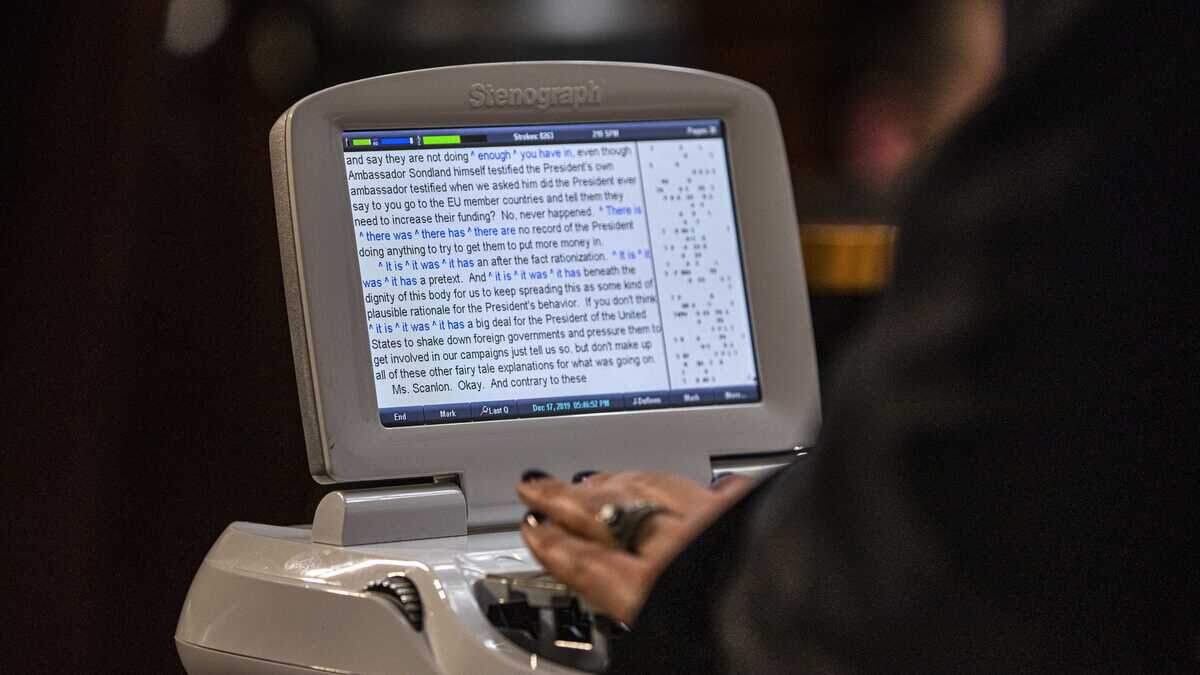
The California Supreme Court on Monday ordered trial courts to provide a way for people who cannot afford a court reporter to create an official record of their civil cases, including through electronic recordings when a reporter is unavailable.
Read more State rejects Sac City appeal, warns it may take direct oversight of SCUSD in future
The ruling could affect millions of Californians who have gone through civil proceedings without a transcript — and potentially could not appeal a judge’s decision because there was no record of what happened in court.
The decision effectively overturns a state law that banned electronic records in all but a few types of cases, opening the door to recordings as California faces a severe shortage of court reporters.
The unusual ruling marks the second time this year that the state’s highest court has responded to what is known as an original petition, meaning that there was no prior case being appealed. Instead, lawyers for a nonprofit that represents victims of domestic abuse asked the court to intervene directly, saying the situation was endangering clients, who could not produce a record of their cases and were therefore unable to appeal them or even double-check a judge’s order.
“This ruling is important because without a verbatim record it’s often impossible to seek appellate review of trial court decisions, making justice a one-shot deal when no court reporter is available,” said David A. Carrillo, executive director of Berkeley Law’s California Constitution Center. “Expanding access to electronic recording is a long-needed option for the many, perhaps even most, Californians who otherwise could not afford to create the record that’s necessary to preserve their right to appeal.”
California already requires court reporters to make official transcripts in criminal cases, where someone’s liberty is at stake. But in civil cases, the courts only provide the records when a plaintiff or defendant requests them — and can either pay or prove that they are too poor to do so.
But a severe shortage of human court reporters has led to months-long delays in proceedings, including in some, like requests for domestic violence restraining orders, that require timely responses.
As a result, about 3 million civil cases have taken place without any kind of official record being made over the past three years alone, the state’s judicial branch said on its website.
“In recent years … many courts have not employed sufficient reporters to cover all proceedings,” Chief Justice Patricia Guerrero wrote in her ruling, which was joined by all six of her colleagues. “The causes of this shortfall are complex and disputed, but its effects are not.”
Wealthy litigants can pay for their own court reporters, Guerrero wrote, but most people cannot. And the results can be severe: Because the law assumes that a trial court judge has made the correct decision, a lack of a record means that people who want to appeal decisions or orders cannot do so, she said.
“It’s a widespread problem,” said Jennafer Wagner, director of programs for the Family Violence Appellate Project, which filed the suit against Los Angeles, San Diego, Santa Clara and Contra Costa Counties. In as many as 15% of the cases she handles for survivors of domestic abuse, trafficking or elder abuse “there was just no record of what happened at trial court.”
The ruling drew mixed responses from representatives of court reporters, the shorthand-trained professionals who sit in courtrooms day in and day out to record arguments, testimony, judges’ orders and other events.
The Los Angeles County Court Reporters Association put out a press release with the headline, “California’s Supreme Court Delivers a Devastating Blow to Low-Income Litigants.”
Read more Lakers Fans Will Immediately Circle These Two Games on the 2026-27 NBA Schedule
The ruling, it said, would jeopardize low-income people who appear in court by allowing electronic recording of their cases when human court reporters were not available.
Such recordings could be inaccurate, the organization said, and would create a double-standard under which those who could afford to pay for a court reporter would obtain higher quality results.
“Litigants who retain a licensed court reporter receive a transcript certified by a trained professional who is individually accountable for its accuracy,” said Shanna Gray, the association’s president. “Others may rely on electronic recording, where many important questions about implementation, oversight, and accountability remain unresolved.”
Recent investments in training opportunities for people who want to become court reporters, as well as reciprocal licensing agreements for those coming from other states, have put more aspiring professionals in the pipeline, resulting in meaningful progress in remedying the state’s shortage, she said.
Rather than relying on recordings, superior courts should increase their hiring of human court reporters in order to comply with the order, said Scott Kronland, an attorney with Altshuler Berzon LLP who represented court reporters in the case.
“Today’s decision should increase job opportunities for court reporters,” Kronland said. “The Supreme Court ruled that superior courts must provide verbatim records to indigent civil litigants and that they must use court reporters to the extent court reporters are available.”
The question of whether to allow recording devices to make official legal transcripts has long been debated in California, where organizations representing court reporters have succeeded in staving off such changes.
Current California law allows courts to provide electronic recordings in a small number of civil cases when a human reporter is not available. But it prohibits the use of devices to make official or unofficial recordings of almost all other civil cases.
The court’s ruling on Monday changes that, saying that in the case of litigants who cannot afford to pay a human reporter, electronic recordings should be used.
It also expands the ranks of those who are considered unable to pay, noting that it is expensive to hire a court reporter. A state general services website shows the cost of a court reporter to be up to $1,600 per day, plus $13 per page for a transcript.
“Given the significant cost of hiring a private court reporter, we do not imply some absolute standard of indigency,” Guerrero wrote. “Instead, any litigant who cannot afford to pay a private reporter may apply to proceed in forma pauperis and qualify as indigent for this purpose.”
The Supreme Court is expected to issue a formal order to the state’s superior courts to comply with Monday’s ruling in 30 days.
Read more Red Sox activate C Adley Rutschman for debut vs. Jays, Dylan Cease