 By admin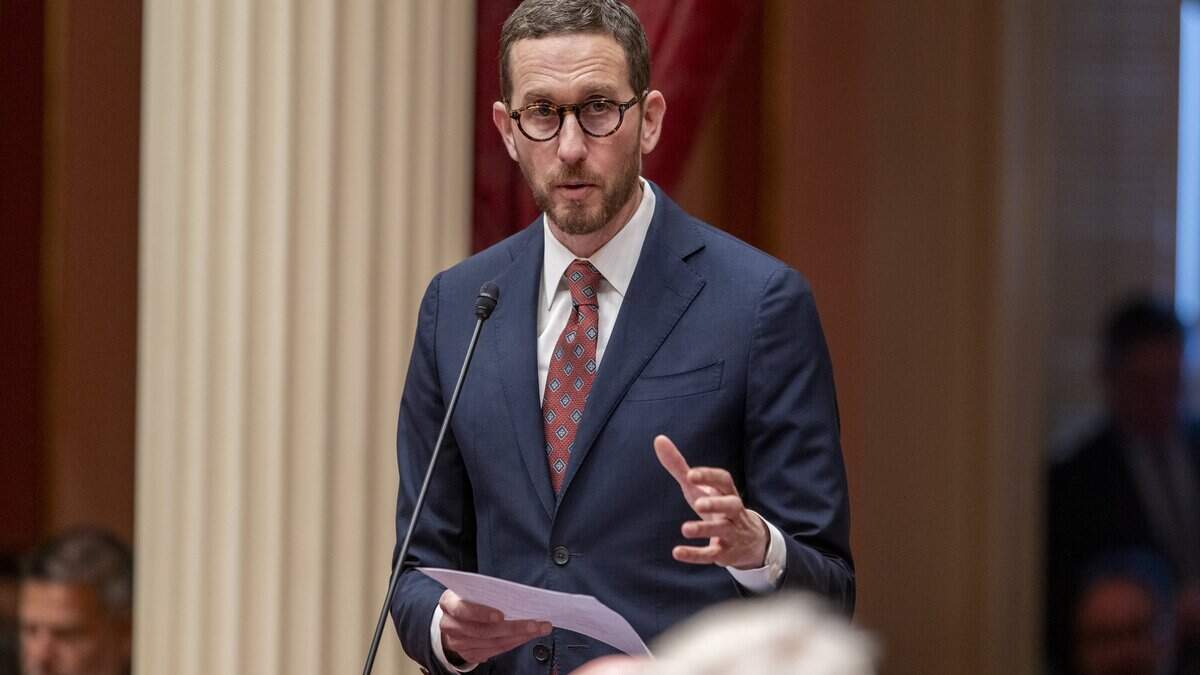
A multibillion dollar bond proposal that sought to fund scientific research amid federal funding cuts failed to meet the June deadline to secure its place as a statewide measure on the November ballot. Lawmakers resurrected the language just before the close of the legislative session this week, aiming now to present the measure to voters in the March 2028 primary election.
Read more Oak Ridge and Sutter mess with Texas, winning football openers in Lone Star State
At a news conference Friday, Sen. Scott Wiener, D-San Francisco, announced that the governor along with Senate and Assembly leadership had reached a deal on the science bond bill he authored in January. The latest amendment Thursday night shrunk the funding it would provide for science and health research from $23 billion to $7.5 billion. Now, the bill must survive the Legislature before it concludes on Aug. 31 and receive the governor’s signature to advance — steps that Wiener said he was “cautiously optimistic” about.
“This represents a major effort by California to stand up against the attack on science by the Trump administration, which is methodically tearing down federal support for scientific research, and to really triple down on California’s global leadership,” Wiener said. “This is a big win for the millions of Californians that rely on scientific advancement to cure diseases, prevent diseases, treat diseases, improve people’s health and quality of life, to protect people from wildfires, to build the next generation of agricultural innovations, to lower the cost of food, and so on and so forth.”
Senate Bill 895 is an effort to backfill federal funding cuts to research under the Trump administration through a bond program. A bond is a type of long-term borrowing to raise money for various purposes. The state obtains the money by selling bonds to investors and agrees to repay it, with interest, per a specified schedule. The proposed program would be used to finance grants and loans to fund research and construct, operate and maintain facilities for that work.
The bill — through the ballot measure — would establish the California Foundation for Science and Health Research to award grants and loans to public or private research companies, universities and organizations in the fields of biomedical, disease prevention, wildfire prevention, and climate, among others. The legislation also mandates that 10% of thefunds be set aside for a state research program modeled after the federal Defense Advanced Research Projects Agency and $1 billion be available to the University of California and California State University for construction of research facilities.
The measure has nearly 50 co-authors and strong organizational support, including from the UC, CSU and Stanford University. It is backed by UAW 4811, which represents 60,000 scientists and academic researchers at the University of California.
Read more Bill taxing private immigration detention facilities passes Legislature
Shortly after Wiener announced the deal on his bill, Nobel laureates Jennifer Doudna and Randy Schekman issued statements supporting the UC-sponsored legislation. Both UC Berkeley professors, the scientists said SB 895 was critical to California’s research infrastructure and advancement of scientific breakthroughs that improve lives and drive growth.
“California’s strength and ingenuity depends on its ability to turn bold ideas into solutions to our most pressing problems,” Schekman said. “That’s why we need to invest in research and continue building on our nation-leading enterprise at UC. SB 895 will help protect the people and discoveries that drive billions of dollars in economic activity and improve lives across our state.”
While Wiener’s science bond is clawing its way onto the March 2028 ballot, a separate but similar initiative will be voted on by Californians this November. If approved by voters, Proposition 38 will authorize $8.4 billion in state bonds for California-based public and nonprofit universities and medical research institutions to conduct immunology and immunotherapy research.
Half the funds would be allocated to a single University of California-affiliated nonprofit medical research institute and the rest for research grants to other public or nonprofit institutions. In July, CalMatters reported that the measure was written in a way that likely predetermines the single institute that will receive half the funds. That institute is the UCLA-affiliated California Institute for Immunology and Immunotherapy, whose prominent donor and co-founder is the chief backer of the proposition. At the news conference Friday, Wiener said he was not worried about Proposition 38 hurting his proposed bond’s chances.
“That ballot measure primarily funds one particular institute. It’s not a broad science policy funding measure, and so it’s just very different, and I don’t view it as a competitor,” he said.
Read more Sacramento’s top news: Newsom’s new label, Yosemite land deal and a union fight