 By admin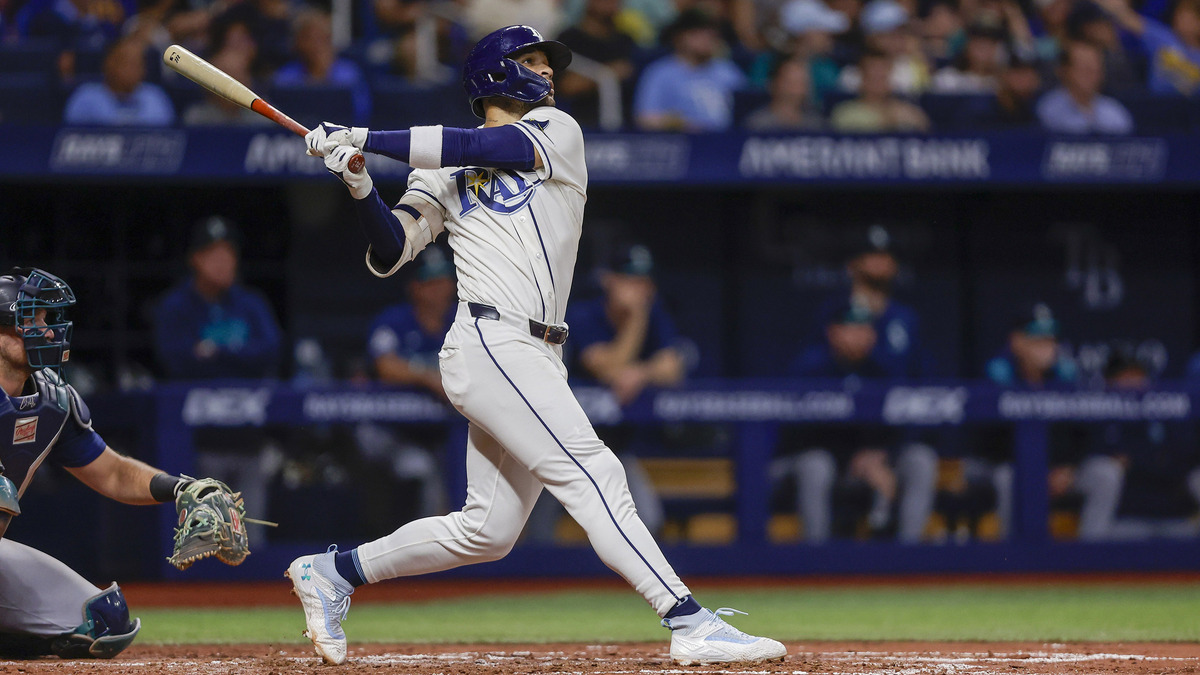
TAMPA, Fla. It was late June, and the Rays had just moved back into first place.
They were bunting, they were stealing bases, they were grabbing the attention of baseball folk not accustomed to seeing an old-school offense succeed in the 21st century.
Read more Penn State’s Matt Campbell Names What Hurt Most Against USC
Which is right around the time the Rays tweaked their formula.
Again.
Oh, they were still among the leading practitioners of small ball. They would go on to lead the league in bunt hits and sacrifice bunts, and they finished in a second-place tie in stolen bases.
But they also – quietly, shockingly, unobtrusively – became mashers.
Maybe not Yankee-level mashers. And maybe it wasn’t a stop-the-presses turnaround.
But the difference was noticeable. And important.
From opening day to June 30, the Rays were 29th in the majors in home runs. Which is what you might have assumed given the nature of their lineup. Well, from July 1 until the end of the regular season, the Rays were tied for 10th in the majors in home runs. Not what you were expecting, right?
Some of this was a conscious effort. Some was situational, and some was happenstance.
The biggest difference was lineup changes in right field, catcher and second base. In right field, Jake Fraley went on the injured list and Victor Mesa Jr. was called up. It took a little time for him to find his groove, but Mesa hit .282 with 11 home runs beginning July 1. At second base, Richie Palacios and Ben Williamson shared playing time in the first few months but Palacios pretty much took over the position around midseason. He had one home run through June 30. Beginning July 1, he hit nine more.
The most intentional change was at catcher where the Rays acquired Liam Hicks from the Marlins at the trade deadline. Not only did Hicks bring a stronger bat, but Nick Fortes hit better in the second half when he wasn’t carrying so much of the load. Rays catchers went from two homers in the first 81 games to nine homers in the next 81 games.
“It does feel like a deeper lineup,” manager Kevin Cash said. “I think you know with Hicksy coming over at the deadline – I referenced it when we acquired him – his numbers kind of mirrored Jonny Aranda’s numbers. (We) were able to add a second lefty there to hit in the four-hole. And then you take Mesa … I know there were some early struggles for him when he was getting opportunities, but then he quietly got going, and then caught fire.”
Read more Mavericks’ Kyrie Irving electrifies Macao with emotional return, glimpse at Cooper Flagg connection
None of this was overly dramatic – the Rays averaged 4.58 runs per game through June 30, and 4.50 runs per game after that – but it provided alternative scoring methods. And you could see the difference in the three-game sweep of the Yankees in the American League Division Series.
New York outhomered Tampa Bay 223-169 in the regular season, but the Rays won two of the three playoff games specifically because they hit more home runs. Aranda’s third-inning homer in Game 1 was the obvious difference in a 1-0 win, then Mesa hit a go-ahead, two-run homer in the sixth inning of Game 3.
“I think what the guys have done so incredibly well is shown the ability to adjust on the fly, and some of that is reactive,” Cash said. “(If) we’ve got a starter that’s rolling against us, or some tough matchups, for us to have the ability to shift gears and say, ‘Alright, we’re going to see if we can get a leadoff runner on, or get a guy at second base and move them over.’ Or we put pressure on the defense when you’ve got a high strikeout guy on the mound and there’s a guy at third with less than two outs. Put the pressure on the pitcher or the defense (by) dropping a bunt down.
“That’s who we are. There are some nights that we’re going to need to go out and slug with the opponent but there are some nights that we’re gonna do everything we can to just scratch and claw to get a run across the board.”
This doesn’t mean you’re likely to see a slugfest in the coming days. Pitching still dominates in the postseason and that’s reflected in the scores. So far, the magic number for winning playoff games is four runs. Teams that have scored four or more runs are 21-1 this postseason. Teams that score three runs are 2-10. Two runs? 0-5. One run? 1-4. Zero runs? 0-4.
Between their pitching and increasingly diverse offense, the Rays seem positioned to do well no matter the circumstances.
Read more Dolphins Week 5 Instant Takeaways: Miserable Day for Malik, Pass Defense
Copyright 2026 Tribune Content Agency. All Rights Reserved.