 By admin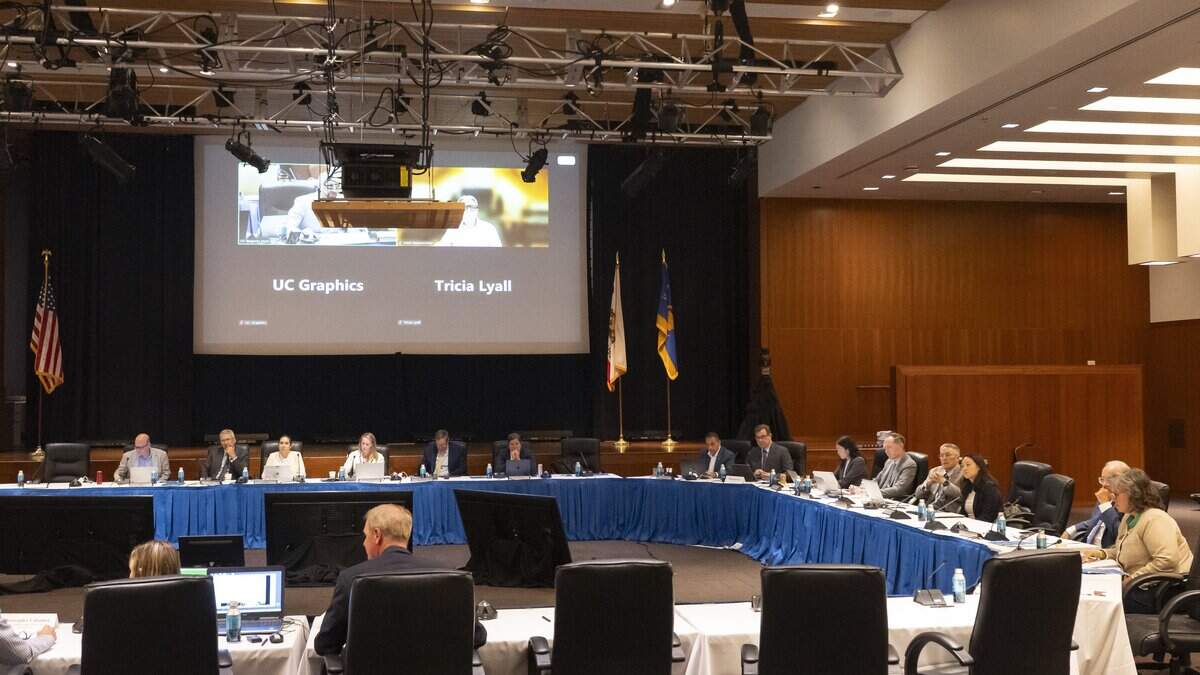
The California State University system is now deep into its second year of contracting with OpenAI to offer ChatGPT to its 470,000 students and 63,000 faculty and staff. It’s part of the system’s “AI-Empowered CSU” initiative.
Read more Humpback whale spotted in Sacramento River likely still in area, marine experts say
It says it was the first in the nation to provide systemwide access to artificial intelligence — a $13 million per year move that attracted criticism from some students and faculty over the opportunity cost, data privacy concerns and the environmental impact.
The University of California, meanwhile, is still mulling over its options.
The university, whose research helped lay the foundations of modern artificial intelligence, has so far only facilitated its individual campuses and laboratories to enter into their own technology agreements but not provided systemwide access. Now, it is considering multiple pathways including a systemwide contract with a frontier AI company like Anthropic or OpenAI, a partnership with an established provider to create an AI public cloud, and a UC-owned and governed AI Cloud of its own. In addition, the university plans to create a learning platform to teach its students, staff and faculty to use the tools it will provide.
The committee leading the UC’s AI strategy is not expected to produce specific proposals on these initiatives before October next year, officials said during the first public presentation on the university’s artificial intelligence plan at the UC Board of Regents meeting Wednesday. Priding itself as the first university system in the country that published a set of guiding principles for the internal use of AI, officials said their governance of AI was ahead of adoption and they would not “trade safety for speed.”
“I want to highlight the guiding principle for the steering committee’s work that it established at its first meeting: AI for humans and humanity,” said UC President James Milliken. “It’s important to keep this in mind as we think about how these new technologies can advance human potential, not diminish it. This seems especially urgent given this last week’s national and global debate about the threats from AI.”
After an Anthropic researcher announced last week that he was resigning over AI’s potential to wipe out humanity, fears around the technology’s risks went mainstream. Members of Congress from both parties have expressed alarm and AI company CEOs are taking note. In this context, Milliken said that the UC — with its scale and expertise as a public university — was uniquely positioned to understand the implications of AI and help mitigate its risks not just for its internal use but for policymakers and industry players more generally.
What’s on the agenda?
For its internal use, the UC is determined not to depend on a single external AI provider. In addition, officials plan to create a systemwide strategy so campuses are not left to negotiate access and absorb risk on their own. To meet these goals, the university is contemplating four initiatives to add to its existing piecemeal partnerships.
Systemwide access to AI tools:
The UC is exploring a systemwide arrangement with an AI company to provide access for research, teaching and administrative use. It would replace the current model where labs and campuses negotiate independent contracts. In 2024, UC entered into an agreement with OpenAI that allows participating UC entities to purchase approved services as needed with pre-negotiated data privacy protection clauses. That agreement does not provide services across the board to all campuses but only facilitates them. Any new arrangement will provide frontier AI tools systemwide. To control costs and ensure security, the UC plans to negotiate a non-exclusive agreement. A recommendation on those terms and costs is expected by December 2027.
Read more Humpback whale spotted in Sacramento River likely still in area, marine experts say
UC-controlled AI Cloud:
The UC is looking into creating its own AI infrastructure or computing capacity so it does not have to depend entirely on outside providers for capacity, pricing and security. This potential AI Cloud will be owned and controlled directly by the UC system and used to meet future baseline needs while frontier AI tools are used for specialized work. To scope this out, officials will start by taking stock of existing computing capacity across UC campuses and labs.
Does creating an independent AI Cloud mean the UC is planning to build a data center? Not necessarily, said UC Chief Information Officer Van Williams, since the UC already has a “large number of data centers across different campuses.” UC San Diego, for example, just unveiled a 2,900 square foot on-site data center in June. The goal, rather, is to see how existing infrastructure can be leveraged to provide access to all campuses.
Still, it’s not out of question. In a document from Sept. 16, officials noted that the UC must guard against locating any such facility of its own in lower-income neighborhoods as has been a pattern in data center expansion nationwide. Following initial research, Williams is expected to present a size and funding proposal for the Sovereign AI Cloud to the UC president by October 2027.
Systemwide public cloud:
While the UC-controlled AI Cloud is being built, the UC is looking into partnering with an established cloud provider to create a platform that can provide computing power across campuses. Terms, size and timing have not yet been determined.
AI learning platform:
The UC system is looking to create a shared library of AI content with curated courses for different members of the university community. This learning platform will teach students, staff and faculty how to use the AI tools the university plans to equip them with. For this initiative, officials have yet to determine what platform the UC will use, who will own it and when it will become available.
These systemwide AI initiatives, officials said, are meant to supplement existing partnerships with companies like Amazon and Google which are already supporting cloud infrastructure, relevant research and workforce development at UC campuses. In addition to the UC’s heavy investment in AI research, both through partnerships with companies and the government, the system is also rolling out new degrees in AI, including a graduate program at UC Berkeley and undergraduate majors at UC Merced and UC San Diego.
As it fleshes out its initiatives further, the UC AI steering committee is simultaneously planning a conference series between December and October next year to share its work with the public. The first event, focused on AI for health and longevity, will be hosted by UC San Francisco and UC Berkeley this December. The other four conferences will address learning and work, discovery and innovation, public good, and protecting humanity. Each UC campus will co-host one of these AI conferences.
Read more Proposition 5 could change California’s recall elections. Here is our endorsement | Opinion