 By admin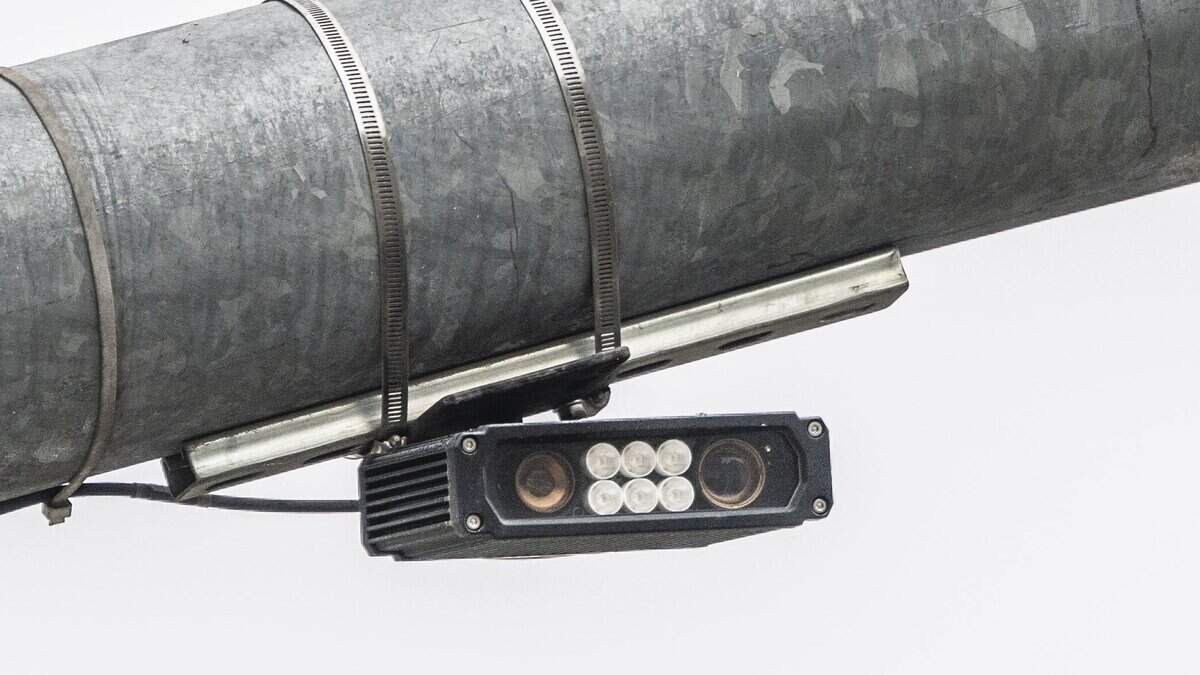
License plate reading technology has been the subject of scrutiny locally and nationally as concerns about civilian privacy and using sensitive location-based data for immigration enforcement escalate.
Read more California gas prices fall but remain high for end of summer. What you’ll pay
The concern isn’t unfounded. Law enforcement agencies across California — a sanctuary state — have routinely violated state law by sharing information from automated license plate readers, also known as ALPRs, with federal agencies including ICE and U.S. Customs and Border Protection.
Proponents of the technology say that capturing plate numbers in real time is an invaluable resource in fighting crime — aiding investigations into kidnapping, finding stolen vehicles and capturing murder suspects. ALPRs have been adopted by at least 5,000 state, local and federal law enforcement agencies nationwide.
Those unconvinced by ALPRs’ benefit for society are ramping up efforts to get cities to discontinue their use of the technology. A Sacramento-area coalition is participating in anti-surveillance DeFlock’s National Week of Action Against ALPRs, including canvassing efforts, the launch of a county-wide petition and several banner drops across the region.
While the Sacramento County Sheriff’s Department and neighboring cities have faced concentrated opposition to the use of ALPRs, the city of Sacramento has not seen the same opposition — likely because the vendors it uses are more obscure.
Elk Grove, Woodland and Roseville use cameras supplied by Flock Safety, the nation’s most ubiquitous ALPR provider and, in turn, its most controversial. The tech company operates 120,000 cameras in every state but Alaska and has been the subject of heightened controversy as stories of inaccuracy and misuse proliferated in recent months.
The city of Sacramento does not contract with Flock, but that doesn’t mean the city isn’t reading your plates.
What license plate reading technology does Sacramento use?
The Sacramento Police Department uses two types of ALPRs: fixed and mobile. There are 180 fixed Motorola ALPRs throughout the city, according to a police spokesperson. A July class action lawsuit filed by two UC Merced students against Motorola alleges that the company’s ALPRs violate California privacy law.
There is no published map of the fixed cameras’ locations, but anti-LPR advocacy group DeFlock Me maintains a crowdsourced, independently unverified map that purports to show camera locations and orientations.
Axon cameras, which are fixed to every one of the department’s patrol cars, are also equipped with ALPR technology.
The city contracts with Axon Fusus, a platform that integrates live video, device tracking, alerts and incident management into a single map-based interface, according to its website. A police spokesperson said that scans from the Motorola cameras populate in Axon’s software.
The police department did not make an officer available for an interview, but answered a question about the efficacy of the department’s ALPR use via email.
“LPR technology has enhanced the department’s ability to address and solve crimes more efficiently, accurately, and effectively,” a spokesperson wrote. “This technology has proven valuable in investigating a wide range of offenses, from thefts and robberies to violent crimes, including shootings and homicides.
DeFlock camera map
The department also operates a Public Safety Camera Network, which is composed of police department-owned cameras and ALPRs, plus privately owned cameras from home and business owners who opt into the network.
The city’s Public Works department also uses ALPRs for parking enforcement purposes through a company called Genetec, but city spokesperson Gabby Miller said that the data is stored separately on city servers and that police must specifically request data from parking ALPRs.
Read more Gilbert Arenas named his best Summer League team of all time: “I got dragged through that court”
The department is looking to purchase eight Skydio X10 drones equipped with ALPR tech as a part of a drone as a first responder pilot program. Data from these drones can also be integrated into the Axon Fusus real-time platform.
How is ALPR data used in Sacramento?
According to the department’s , police can use ALPRs to locate stolen vehicles; canvas areas surrounding crime scenes to record the plates of potential witnesses, victims or suspects; and for “other approved uses that have been reviewed and documented by a sergeant or an ALPR administrator.”
All ALPR data is retained by the department for a minimum of 90 days and a maximum of two years, complying with the city’s record management policy. It is purged after that retention period unless it is evidence in a court case.
LPR data can be shared with any agency in Motorola’s Law Enforcement Archival Reporting Network, a searchable database that aggregates billions of historical ALPR records from both law enforcement and private entities. However, the data cannot be shared with private entities, out-of-state law enforcement agencies or federal agencies. The policy also explicitly prohibits sharing ALPR data to assist in immigration enforcement or to pursue people seeking gender-affirming care.
A police spokesperson said via email that all ALPR searches must comply with state and federal policies that protect criminal justice data.
What are ALPRs and why are people pushing back?
Motorola ALPRs, like those offered by Flock, automatically capture license plate characters, vehicle descriptions (including make, model, color, damage and bumper stickers) and GPS location information. The data is integrated into a software platform that allows officers to run real-time alerts and be instantly notified when a scanned plate matches a database of stolen cars, missing persons or suspects.
Police agencies and ALPR vendors have boasted a number of success stories. Earlier this month, Galt Police said that Flock cameras helped them track down a man accused of kidnapping a woman within five minutes.
But ALPRs have been the subject of a number of recent controversies, locally and nationally. A Business Insider investigation found that Roseville Flock cameras misread plates in 71% of its alerts. An advocacy group in Elk Grove found that 97% of the searches made of residents’ vehicle travel data were made by agencies other than the Elk Grove Police Department. A Washington Post investigation found that at least 50 law enforcement officers used ALPRs inappropriately, including to stalk ex-partners.
Days after the Post’s investigation, Flock Safety announced a number of additional mandatory safeguards for customers, including a new auditing system and shortened data retention periods. The company encouraged competitors to follow suit.
ALPR data retention was briefly discussed at a recent contentious City Council meeting in which Sacramento activists rallied against the city’s immigration ordinance. Organizer Moiz Mir pushed the council to adopt a shortened data retention policy, which he said was part of an earlier draft of the plan but ultimately dropped.
Activists have also repeatedly disrupted council meetings because of the city’s renewal of an agreement with a federal fusion center. Police have rebuked their concerns that local surveillance data could be shared with federal agencies for immigration enforcement purposes.
Giselle Garcia is the Program Director at activist nonprofit NorCal Resist, which recently hosted an information seminar about ALPRs alongside the local DeFlock coalition. She noted the history of the use of similar technology at the U.S. border and said she is skeptical of the narratives used by law enforcement now to market the technology to the public.
“When we think ‘well, I have done nothing wrong, I have nothing to fear’ — we have to remember the period that we’re living in now, where the government often weaponizes data to create false narratives and, unfortunately, false charges against people,” she said. “Remember that the thing that you value the most today can become a threat to an administration tomorrow, and that can be the next thing that is being policed.”
Read more Athletics place LF Tyler Soderstrom (hip) on 10-day IL