 By admin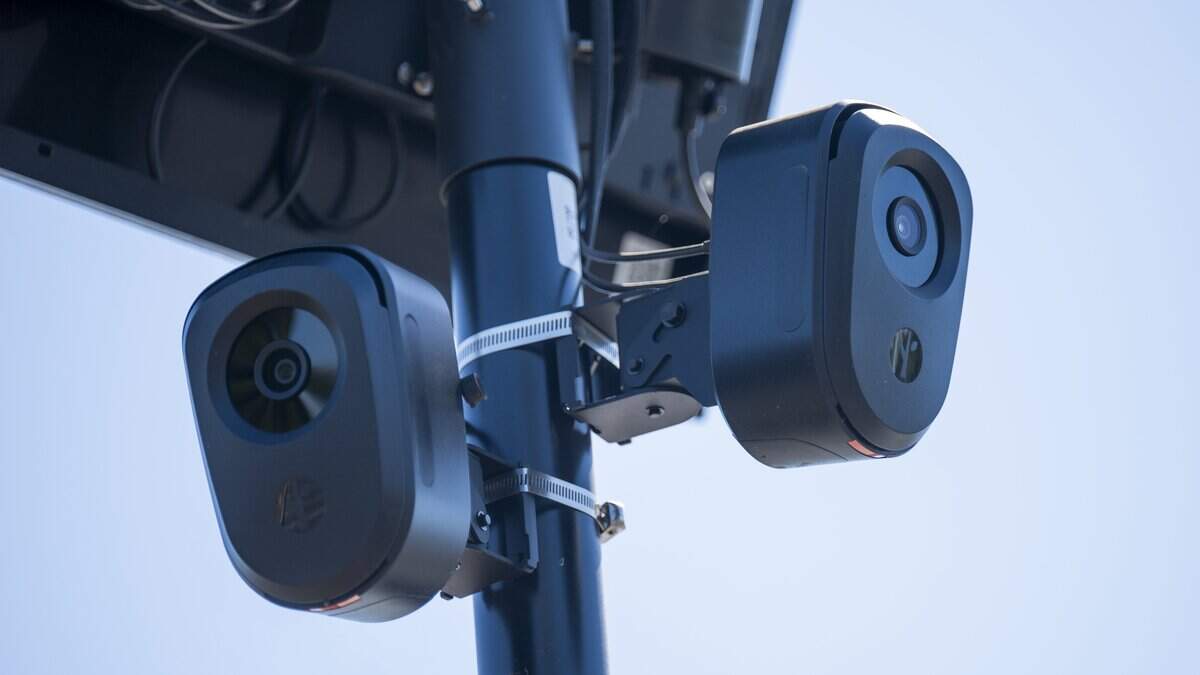
ISSUE | LICENSE PLATE SURVEILLANCE: Folsom is discontinuing its use of automated license plate readers made by Flock Safety but plans to continue using similar technology from other companies. The decision comes amid concerns about surveillance, privacy and how data collected by the cameras can be shared.
Read more ‘We still have no answers.’ Attorneys, family of Nolan Wells decry grand jury report
Incumbent Mike Kozlowski is facing two challengers in Folsom’s City Council District 1 race: retired city employee Paul Kerfeld and Chad Vander Veen, a business development manager at a government technology consulting firm.
Here’s how the three candidates differ over whether and how Folsom should use automated license plate readers:
Mike Kozlowski, incumbent
At a candidate forum hosted Sept. 14 by the League of Women Voters, Kozlowski said he supported the decision to discontinue the use of Flock cameras following a review by Folsom’s police chief.
But Kozlowski said his concerns about Flock cameras stemmed specifically from the risk that data could be shared with unauthorized parties.
“The attention that Flock has gotten itself has put everybody off,” Kozlowski said after the forum. “There’s just no reason for us to take unnecessary risks.”
He said he supported the use of other license plate readers in the city.
“It is one of the most important tools we have for solving property crimes, because if somebody is found leaving a site, we can usually narrow down who it is and where they are, and locate them.”
“In something like 70% of our detective cases,” he said, “we end up leaning on that technology.”
Kozlowski said the city will continue using license plate readers made by other companies, including Motorola, while prioritizing data security.
“The Motorola system particularly has excellent controls that the city gets to set on who that information gets shared with, and how people get access to it from the police department itself,” said Kozlowski.
Paul Kerfeld, challenger
At the forum, Kerfeld said he wanted police to have access to the cameras and described them as a low-cost tool that allows local police to collaborate with other agencies.
“Flock cameras do not need a salary, health benefits, or a pension,” he said. “It’s a way to help law enforcement not only in Folsom but region-wide, county-wide, into El Dorado County.”
Folsom residents are already recorded by technologies like Ring cameras every day, he said.
“I’m on camera about every door I come to,” he said. “Big brother has been watching us every time.”
He said anyone who misused data obtained through the cameras should be “imprisoned,” and said people who were not breaking the law should not be concerned about the surveillance.
“When there is a crime committed, we want to know where these people are, and we want to get them off the streets,” he said. “If you’re doing something wrong, you probably do have a problem.”
Read more Raw beef, pork and goat meat sold in California named in national recall
Chad Vander Veen, challenger
Vander Veen said during the candidates’ forum that he opposed automated license plate readers, including Flock cameras and other technology used by the city with similar functions.
He cited privacy concerns and, in an interview, said he believes the cameras violate the Fourth Amendment’s protection against unreasonable searches and seizures.
“I appreciate what the police do. It’s a hard job. But just because it’s a hard job doesn’t mean you should be able to violate our enforcement and the rights,” he said during the forum.
In an interview, he said police should be able to use targeted license plate readers while searching for a specific person as part of an investigation.
But he criticized the continued use of other “passive ALPRs” at the candidate forum.
“Just because you’re driving down the street, that doesn’t mean your vehicle license plate should be searched,” he said. “Just because you’re going to the grocery store doesn’t mean you should be entered into a database.”
Why it matters
Folsom’s decision comes as other Sacramento-area communities debate the use of automated license plate readers.
The Grass Valley Police Department indefinitely suspended its use of Flock cameras last week after complaints from residents. Auburn recently hosted a community town hall focused on automated license plate recognition technology.
The cameras have also been the target of vandalism: two were damaged in Folsom last month, and at least 12 of Lincoln’s flock cameras have been damaged since the start of the year.
An audit by a local activist group of ALPRs reported that at least 290 agencies without data-sharing agreements, as well as out-of-state, federal and nongovernmental entities, had searched the Elk Grove’s Flock data since 2021.
Kozlowski said residents’ concerns prompted Folsom to discontinue its use of Flock cameras.
The city first contracted with Flock in March 2023, signing a $76,400 contract for 12 Flock cameras, access to the company’s AI-powered advanced search software and extended data storage for two years, according to a copy of the contract provided to The Sacramento Bee by the activist group Deflock Sac Metro. The agreement included a two-year renewal term with an annual recurring total of $36,100.
Folsom will continue using automated license plate readers from other companies, Kozlowski said, including cameras made by Motorola.
The city has used ALPRs , according to a 2020 Folsom Police Department staff report. The city currently has 27 cameras made by Motorola in use, Councilmember Sarah Aquino said immediately following the candidate forum.
Read more What to know about Proposition 39, California’s voter ID measure