 By admin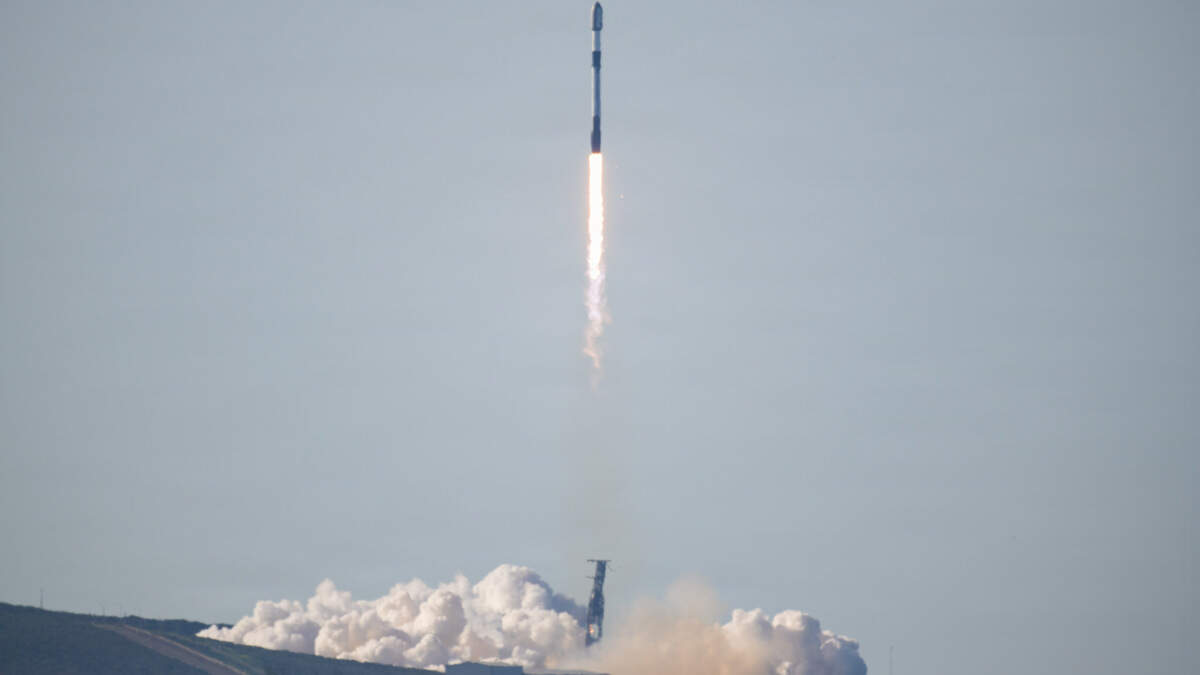
Bradley Wilkinson has been chasing rocket launches out of Vandenberg Space Force Base for 12 years.
Read more Forest Service kidnapping dredges up legacy of violence toward federal land employees
The administrator of Facebook group Vandenberg Rocket Launches livestreams on YouTube for people from California, Texas and Utah, amassing over 181,700 members over the course of 10 years.
“I hit ‘go live’ on that phone, and I’m in a different world,” Wilkinson told The Tribune. “I’m a different person. I don’t look at myself the same, because I’m so passionate about the rocket launches.”
He’s not alone.
It seems these days everyone on the Central Coast is wanting a part in the latest “space boom” — from Vandenberg seeking to grow its launch capabilities in the coming years to Paso Robles’ quest to add a spaceport and local groups pushing initiatives aimed at bolstering the growing aerospace workforce.
Jennifer Green-Lanchoney, chief of Space Launch Delta 30 Public Affairs at Vandenberg, credits the obsession with space and launches from Vandenberg with the “absolute human condition of exploration.”
“I think we’ve had an obsession with space since the first manned mission,” she told The Tribune. “We can see that in human history. Humans explore and this is no different, that new frontier. … It’s not knowing exactly what you’re going to see, and we can’t get there unless we have a huge rocket ship.”
And here on the Central Coast, officials are ready to spend millions to capitalize on that urge to reach for the stars.
Sally Buffalo Taylor is the vice president of communications and external affairs at REACH, a regional economic action coalition that launched its initiative Space Vandenberg in August 2025 with a $9.5 million state grant that will propel Vandenberg to grow and create high-quality jobs and encourage “innovation and bring new investment to the region.”
“Certainly global demand for space launches is rising incredibly right across the globe, and Vandenberg is really well-positioned in a few ways to host some of that growth,” Taylor told The Tribune.
Vandenberg launches have jumped in recent years — and more are coming
The Central Coast is already a prime location for launches — specifically communication satellite, weather satellite and scientific missions set for polar orbits, which then don’t have to fly over populated areas.
“We have launched quite a few scientific missions for NASA and NOAA, doing a lot of research on ocean levels and ocean temperature, as well as looking out into space from that orbital plane,” Green-Lanchoney said. “We don’t launch over land at all.”
Vandenberg is currently one of only two high-capacity spaceports for the United States, Green-Lanchoney said.
The other is Cape Canaveral Space Force Station in Florida — but the two powerhouses likely won’t be alone for much longer.
“Probably we will expand, because space launch is evolving to be very much like air travel,” she said. “It’s just getting a commodity to space in the right orbit.”
Meanwhile, launch intensity has definitely gone up at Vandenberg.
Vandenberg had 66 launch missions in 2025, with 51 in the first half of 2026 alone, according to a rocket launch database.
Liftoffs have increased as the base expanded its facilities to launch more frequently and is set to build a new 62,000 square-foot hangar to double its launch missions.
The base also demolished the historic structures at its Space Launch Complex-6, including the Mobile Service Tower, Fixed Umbilical Tower and Tail Service Masts on June 16.
That infrastructure supported the Athena and Delta IV launch operations and the Space Shuttle programs, according to a news release from Vandenberg Space Force Base.
Though it was hard for some to see the historic structures be demolished, they were cleared to “support next-generation launch capabilities,” Green-Lanchoney said.
“It has this six-decade legacy, where it was emotional for some people to watch those towers fall, because some people spent their whole careers working there,” she said. “It was something that had to happen, because progress only happens when you move forward.”
With the new developments, the Space Force base’s new launch cadence is expected to reach up to 100 a year, according to the Department of the Air Force’s final environmental impact statement and record of decision.
SLO County city wants to launch spacecraft from its airport
Vandenberg is not the only place on the Central Coast aiming to expand its space efforts.
The city of Paso Robles is in the final stretch in applying for a Federal Aviation Administration Commercial Spaceport License for spacecraft to take off and land from its municipal airport.
The city is pursuing the license part of its goal to advance its Spaceport and Technology Corridor initiative to create an economic hub for aerospace engineering in Paso Robles, partnering with Cal Poly, Cuesta College and K-12 career technical education programs.
“There’s a great focus on space here on the Central Coast,” Paso Robles economic development manager Paul Sloan told The Tribune. “There are a lot of opportunities to attract businesses, create jobs — but a major focus of our spaceport initiative, which sets us apart from all the other commercial spaceports, is our focus on education and workforce development.”
Read more El Dorado Hills leaders demand changes to controversial lighting district assessments
The job market is kind to space technology, where top jobs like welders, machinists and maintenance technicians are in high demand, especially on the Central Coast.
So the city of Paso Robles is trying to attract those higher-paying “head-of-household jobs” for residents to live and work in the county, Sloan said.
“It’s really important to note that 90% of the economic impact that takes place at spaceports has nothing to do with launches — it all has to do with research and development, testing, advanced manufacturing, payload processing and things like that,” Sloan said. “In that regard, we can be a test facility, doing research, prepping things, even as a support for the big launches down at Vandenberg.”
As for potential future launches at the airport, they would be in the form of “horizontal launches,” Sloan said, where “space planes” take off and land just like regular airplanes, delivering small satellite systems to space.
The Paso Robles Municipal Airport already has a testing zone in a remote part of the airport where local aerospace engineering firms experiment with their propulsion systems and look to expand and hire.
The city’s final spaceport license application proposal was due to the FAA on Aug. 3.
The city’s license is set to be approved in the beginning of 2028, Sloan told The Tribune, and would make the city the second regional spaceport on the West Coast.
How does SLO County help residents get jobs in the space industry?
As Paso Robles is seeking to attract more high-paying jobs, the rest of the county is also preparing for a potential boom in aerospace-related jobs.
With the rise in demand for hands-on skills to get rockets and space planes up in the air, SLO Partners connects residents with local businesses through a seven-week bootcamp.
The Modern Manufacturing Bootcamp has been in place for over five years, but it is now more relevant than ever, SLO Partners senior director Paula Mathias Fryer told The Tribune.
“All of that adds up to more jobs, more technology, and they need people here,” she said. “The best-case solution for us is local people, because it’s such a beautiful place to live, and we want our kids that have gone to school here to be able to work here and afford to live here — because it’s not an inexpensive place to live. So these are really creating some great jobs for people.”
The bootcamp provides hands-on training to expand careers in advanced manufacturing and aerospace with local companies including ESAero, Rantec Power Systems, Edge Autonomy and Trust Automation.
Participants build and fly a drone, wire a remote-controlled car and learn 3-D printing fundamentals over the course of the bootcamp, which costs $399 for the seven-week session.
“Some people think, ‘Oh, I have to have an engineering degree to get into this field. I have to be, literally, a rocket scientist,’” Mathias Fryer said. “But there are different levels of getting into the field, and the beautiful thing about it is — and why it’s so great for our community — is that you can start early. You can start as a technician and work your way up. So you can always just keep learning and improving after you get into it.”
She added: “What we do is really help people to get into the field.”
Though the most-recent bootcamp concluded this month, the next round is expected to start Sept. 14. People interested in signing up can do so at slopartners.org/modern-manufacturing.
It’s important to note, SLO Partners does not promise a job upon completion of the program, but the hands-on training provides an entryway into industries like aerospace, with monetary benefits once a job is secured.
Paul Piette, director of business relations for SLO Partners, told The Tribune that the organization tracks wage differences for attendees before they enter the bootcamp and a year after — and they see a major difference.
“What we’re seeing in the average wage increase after our bootcamp is $10,000,” Piette said. “I think that’s an important thing because it’s almost $1,000 a month or $800 a month, and we know that rent is $5 million a month here in San Luis.”
Central Coast city is known for ‘wine and weed,’ but that’s about to change
If someone spends a week in Lompoc, they will see a rocket launch, Green-Lanchoney said.
For Lompoc resident Wilkinson, he has an index card at home filled with names of people he met from over 11 different countries visiting the United States.
A constant stop on their trips? The rocket launches.
Wilkinson — who also helps manage 805.life, a website about all things Central Coast — said beyond inspiring out-of-town visitors, the rocket launches also provide hope for small-town kids dreaming of bigger things.
“In Lompoc, we’re known for wine and weed; that’s about it,” Wilkinson said. “Our kids have nothing to look forward to. The kids literally look up in the air, and this is what we need to start pushing for the kids, is something different. Look at the rocket going in the sky — you too could work there.”
This story was originally published August 9, 2026 at 5:00 AM with the headline “From Vandenberg to Paso Robles, Central Coast is at the center of a new space boom.”
Read more Player wins ‘incredible’ six-figure slot machine jackpot at Sacramento-area casino