 By admin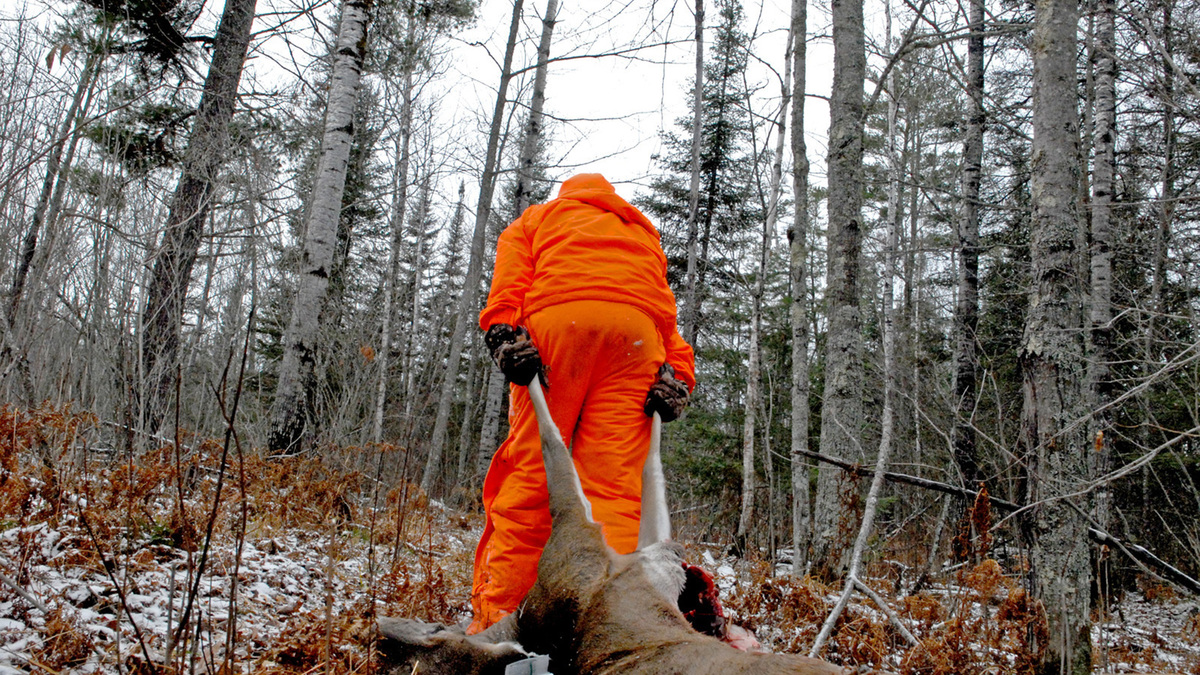
MINNEAPOLIS – For the first time since Minnesota found chronic wasting disease in one of its wild deer in 2010, the state is changing how it monitors the fatal neurological condition.
Read more John Romano: If only the Buccaneers had some stars on defense. Hey, wait …
The new plan by the Department of Natural Resources effectively started last weekend, the beginning of the archery hunting season.
The shift comes as Minnesota is finding more CWD in its wild deer than ever before. But with large swaths of the state rarely tested, biologists still don’t know how far it has spread.
Until now, the agency has only responded to known hot spots and tested intensively in order to monitor the spread of the disease. The new plan is taking the testing statewide in a methodical approach that has the goal of producing a more complete picture of the disease’s footprint.
The agency has divided the state into four areas. Each year for the next four years, it will focus primarily on one of the quadrants. This year, the southwest part of the state will be in the spotlight.
“We’re really trying to identify those areas where we had a lack of surveillance,” said Patrick Hagen, the DNR’s statewide disease response coordinator. “We have a big block in the southwest corner, and we wanted to get that done right away.”
Even though the total number of positive CWD cases has been rising in Minnesota for years, biologists don’t actually know if the trend is statewide.
For more than 15 years, the DNR has been maxing out its manpower to intensively test for CWD in areas where the disease was already known to exist.
In several of those areas in the southeast corner of the state, wildlife officials last year declared the neurological disorder “endemic,” meaning at least 5% of wild whitetail deer are believed to be infected, and that the likelihood of eradication is remote.
In those areas, the agency has shifted to managing the disease, with a liberal five-deer limit and additional hunting seasons. The goal is to keep deer numbers low, reducing the chances that infected animals will disperse and carry CWD into new areas.
While pockets of the southeast quadrant will be addressed using a management strategy – since there’s less benefit to widespread testing in an area designated as endemic – the rest of the state will see more testing in coming years to track the possible spread, Hagen said.
“There’s a difference between surveillance and management,” he said. “This new testing plan is surveillance to see where the disease is.”
While officials are confident that CWD has reached the 5% threshold in some areas, there are also examples in other areas of the disease dissipating or being successfully contained.
In many of these spots, several years of mandatory testing following a positive test – often prompted by a hunter who saw a deer behaving strangely – found no positive results.
But that only covers a fraction of the state. Testing data reveals blind spots, areas where little surveillance has been done. They include the southwest corner, a strip up the center of the state, and a block in the northeast part of the state.
The new plan aims to have covered it all after four years, with the quadrants rotating in a clockwise manner; next year, the northwest quadrant will be the focus.
Hagen said it’s important to keep the CWD’s prevalence in perspective, at least based on what scientists know today.
“CWD is still rare in Minnesota,” he said. “Last year, we had the highest number, so we’re on an upward trajectory. But even in the southeast, it’s at most around 1 percent of the wild deer population.
“Still, we have more CWD on the landscape than we’ve ever had.”
The more-than 400,000 deer hunters who will be taking to the woods and fields this fall serve among the state’s greatest wildlife surveillance network. Biologists rely on hunters who kill deer to submit samples of lymph nodes needed to test for CWD.
There is no current way to test a live animal for CWD, which is always fatal to the deer, has no cure or treatment, and can spread from animal to animal and from contaminated environments to deer and elk. No human is known to have been infected with CWD, but many hunters are wary of eating CWD-tainted venison or serving it to their family.
The hunting surveillance program will kick into full gear in early November, when the firearms season starts and the bulk of deer are killed. On Nov. 7 and 8 – opening weekend – CWD testing will be mandatory for all deer at least 1 year old killed in the southwest quadrant, which covers a portion of the state generally south of Fergus Falls and Staples and generally west of Little Falls, Norwood Young America and St. Peter.
For most hunters in that area, the requirement will be new. Information is on the agency’s CWD web page.
Testing will not be required anywhere else in the state. That’s also a change.
But knowing that some hunters will want their deer tested anyway, the DNR plans to accommodate anyone who submits a sample, regardless of when or where the deer was killed. Free kits are available, and many taxidermists offer the service as well.
The new testing regimen is also prompting changes to how deer carcasses can be transported and disposed of, and the DNR is urging hunters to be familiar with the changes before venturing afield.
Read more Air Jordan 1 ‘Bred’: Prices and Where to Buy
Copyright 2026 Tribune Content Agency. All Rights Reserved.
This story was originally published September 23, 2026 at 2:41 AM.