 By admin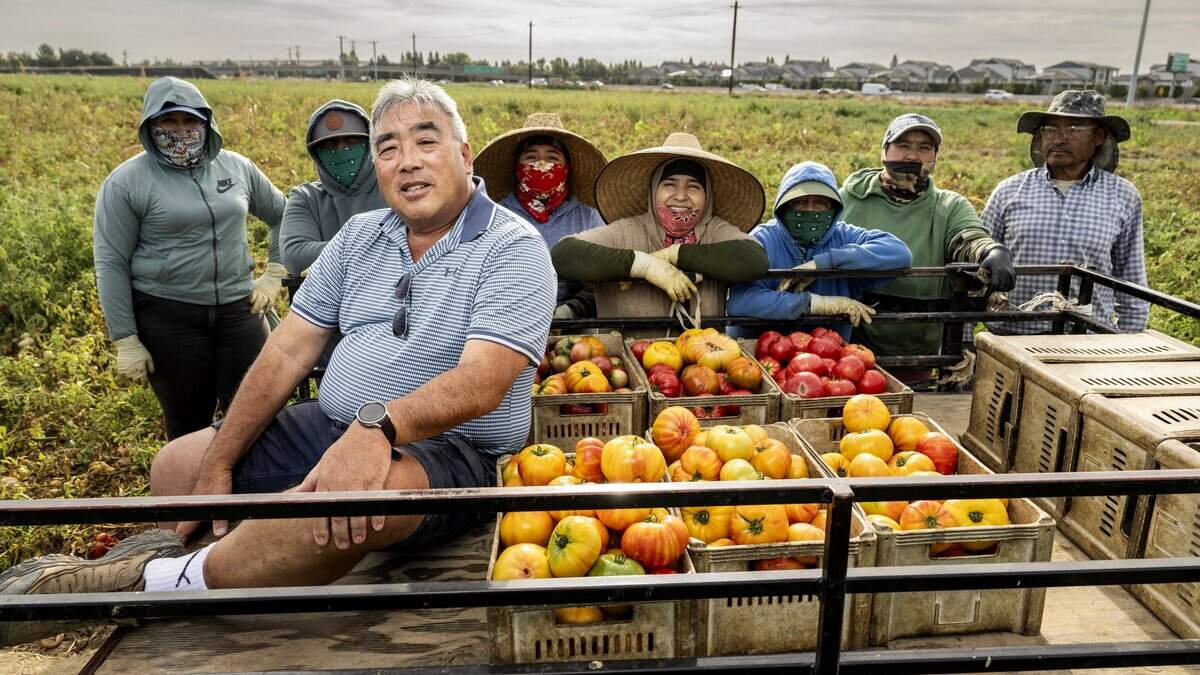
On one recent August morning, Ray Yeung stood next to a field of tomatoes.
An irrigation channel bounded one side of the field, where both a snowy egret and a great egret stood. They seemed unbothered by the joggers striding past out of the large nearby housing development. A freeway roared on the other side.
Read more Wings & Wheels returns to Lincoln airport with planes, cars and hot air balloons
Yeung doesn’t own the land. Instead, he rents it to grow his famous heirloom tomatoes, which often show up, under his name, on the menus of Sacramento’s best restaurants.
“This is all supposed to be houses,” he said, pointing over the tomato-laden plants. “It’s all slated for development.”
“This is progress, I guess,” he continued. “And I’m at the end of my career anyway.”
Yeung’s family has deep roots in the area. His father, a native of China, got his start in the Sacramento area in the 1950s by working in Delta pear orchards.
His father eventually got a loan to start his own farm in Yolo County, and the Yeungs haven’t stopped farming since. “Because once you start farming, it’s kind of in your blood,” Yeung said. In 1983, he started working alongside his father. “We did a lot of wheat and corn, and we did a lot of canning tomatoes,” he said.
In the early 2000s, he asked Joan Venegas at Greenheart Farms, a wholesale transplant producer, for some “eating tomatoes” to plant, instead of the usual canning type.
Greenheart sent them the seedlings, and Yeung planted them. A few months later, Yeung was confronted with what he called “ugly-looking tomatoes.”
“I said, ‘What the heck are these?’” Yeung remembered. Then, he took them over to Jim Boyce of Produce Express.
Produce Express, as it happens, sells local fruits and vegetables to restaurants. Boyce, Yeung said, was thrilled to see the lumpy yellow tomatoes that he had grown.
“He said, ‘Those are Marvel Stripes. You grow those for me, and I’ll take every last one you can get.’” The following year, Yeung grew 20 acres of Marvel Stripes. Now, he grows more than 20 different kinds of heirloom tomatoes. Restaurants, he said, like to see different colors on the plates.
Read more Gavin Newsom to travel to Deep South on campaign, voting rights tour
Nearby, a worker packed a box of tomatoes beneath a sunshade. “We call them ‘true vine ripe’ right on the box,” Yeung said. “They have the most flavor.”
Yeung still grows commercial tomatoes for processing, and the way he grows the precious heirlooms isn’t too far off. Both are harvested at peak ripeness, unlike many grocery store tomatoes that are picked green to extend their shelf life.
Tomatoes that are soon to be processed can be picked ripe, as can heirloom tomatoes that will be served at restaurants within a few days. Yeung uses the same growing techniques for both kinds. “They have to undergo some stress,” he said. So Yeung limits the amount of water his tomatoes get. “By cutting off the water, it releases the sugars,” he said. “And we give ‘em less fertilizer too.”
Tomatoes, he concluded, are just like people. “If you’re spoiled, you’re not going to turn out very good.”
Once you start looking, you’ll see Ray Yeung tomatoes name-dropped on menus at restaurants around the city: in the gazpacho at Mulvaney’s B&L, served with burrata as a salad at Paragary’s, and even featured on the menu of the upcoming Tower Bridge dinner, Sacramento’s biggest gala.
Chef Joe Pruner, whose Italian restaurant Bocce is slated to open on Aug. 28, will be using Yeung tomatoes as an accompaniment to adobo-roasted quail and crispy garlic rice at the event. In the local chef community, he said, there’s a lot of love for “Uncle Ray’s” tomatoes.
“He’s definitely one of the guys out there who cares about what he’s growing,” Pruner said. His particular favorites are Yeung’s Green Zebra tomatoes, the Brandywines, and the glorious red-gold Pineapples.
“Ray Yeung tomatoes are the next best thing to growing them yourself,” he added.
You won’t find Yeung’s tomatoes in many grocery stores, though. “People start touching them and stuff, and they ruin them,” Yeung said. However, he added, he does sell tomatoes to some local stores, such as Ikeda’s, Taylor’s Market, and Oto’s.
Looking back on his career as a farmer, Yeung feels lucky to have started growing heirloom tomatoes right at a moment when people began thinking about the origins and history of their food. Farm-to-fork, he said, “brings the idea of farming to the general public.”
He doesn’t see the movement stopping anytime soon, either. And even after he stops farming, he thinks someone will pick up where he left off. “There’ll be some younger person we teach how to do this,” he said, looking over his tomatoes.
Read more 300+ rodent droppings force one Sacramento hotel kitchen to close. What else?
This story was originally published August 28, 2026 at 6:00 AM.