 By admin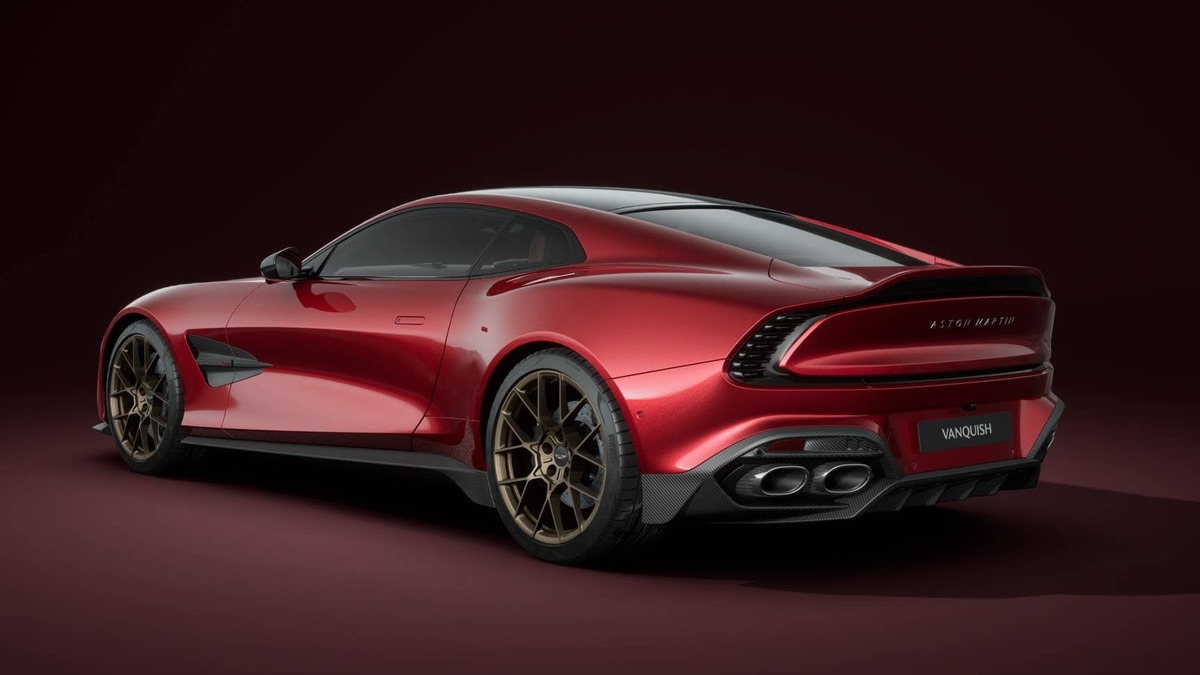
Auto manufacturers generally look a few years into the future when designing their latest models, partly to gauge changing consumer tastes, and partly to account for upcoming regulatory changes. In recent years, the latter of these two factors has caused major upheavals in product lines and design directions. Emissions laws are constantly being revised, scraped, or reinstated, causing massive losses for companies that have invested heavily in EV tech, or forcing them to delay introduction of EV models as demand dries up.
Read more Italian general launches far-right party, threatening Meloni’s election hopes
Are we all going to drive EVs in five years? Can gas engines be clean enough to last a few more generations? Can manuals still be sold in decent numbers? While we don’t know the answers, it looks like auto manufacturers are just as clueless. And that’s why we’ve had so many final edition models and claims of ‘this will never happen again’ from so many auto makers. We picked five of the most blatant lies that we have been fed in the past few years.
V12s Are No Longer Viable To Produce
The pinnacle of engineering excellence has always been the V12 engine. It is perfectly balanced, unbelievably smooth, and has traditionally been the engine configuration of choice for top luxury and sports car manufacturers. With downsizing and turbocharging being touted as the main methods to maintain power levels while lowering fuel consumption (a debatable point), V12s were said to be outdated dinosaurs.
Yet as of writing, manufacturers like Rolls Royce, Aston Martin, Pagani and GMA all still use V12 engines. And while everyone assumed that Lamborghini’s screaming naturally aspirated V12 would be put to rest when the Aventador ended production, they were only partially correct. What really happened was that Lamborghini designed a completely new V12 and then added hybrid power to it to make it even more insane.
This Will Be The Last Naturally Aspirated Porsche
Porsche’s range has been one of the most difficult to decipher, as there are so many limited-edition models, and special editions out there. Models like the 911 R made us think that the days of naturally aspirated manual Porsches were numbered, but as it turns out there has been a seemingly endless supply of them ever since. The iconic naturally aspirated 4.0-liter flat-six has been constantly refined and updated over the years and is still available in the GT3, GT3 RS and special edition vehicles like the GT3-based S/C convertible.
The 718 Cayman and Boxster were also destined to become pure EVs, but they stayed in production for way longer than intended, and now Porsche has said that the new generation will once again have gas engines, with the 4.0-liter flat-six a distinct possibility.
Manuals Are Going Away Forever
This one has been a mantra of auto manufacturers for decades. The claimed lack of buyer interest, lower efficiency, and slower acceleration a manual offers compared to a modern automatic have all been cited as reasons to stop offering these transmissions altogether. And yet, there are still over a dozen manufacturers offering a stick shift to this day.
Notable models include the Mazda Miata MX-5, Ford Mustang GT, Cadillac CT4-V, Acura Integra, BMW M2, Subaru BRZ, and the Jeep Wrangler. Porsche has also made a big deal of the Carrera T manual, and the GT3 is also still available with a manual shifter as well. While they certainly aren’t as popular for daily drivers as a decent automatic transmission, manuals will always be a fan favorite when it comes to performance cars, sports cars, and even some serious off-road vehicles.
Read more British forces intercept Russian shadow fleet tanker in the Channel
V8s Are Dead
This one has possibly caused the most outrage amongst car fans in the US. Stellantis found out just how dedicated its fan base was to the good old V8 when it attempted to discontinue its Hemi offerings for the 2025 Ram trucks. That didn’t last long, as fans revolted and threatened to buy rival products. The best news is that even the new Dodge Charger is getting a V8 again.
GM was on a quest to shift its lineup to EVs and downsized four-cylinder powerplants, but it has recently invested close to $1 billion to build and develop new V8s for its trucks and performance cars.
Mercedes-Benz learned this the hard way, when it replaced the twin-turbo V8 in its C63 with a four-cylinder hybrid, and perhaps Toyota will also suffer from its decision to move to V6s in its range-topping trucks and SUVs.
Rear-Wheel Drive Sports Cars Are Dead
Front-wheel drive is popular across many automotive segments, it is cheaper to design a vehicle where all the important bits are over one axle. All-wheel drive is also really popular thanks to the added traction benefits in poor weather. Many new models use electric motors to power the rear wheels when needed, aiding efficiency and reducing the need for a mechanical connection from the front of the car.
Rear-wheel drive is trickier to control in slippery conditions and requires a long driveshaft to run through the middle of the car in front-engined vehicles. Yet despite this, many sports cars, most of BMW’s and Mercedes’ offerings as well as EVs like the Lucid Air and Hyundai Ioniq 6 are still available with RWD.
The reason? It provides a better handling balance, improves steering feel, and provides superior traction compared to a FWD car. It may never be the mainstream choice, but claims of its imminent demise are greatly exaggerated.
Read more Update: Lemon Fire grows to 273 acres in Los Angeles County, now 47% contained
Copyright 2026 The Arena Group, Inc. All Rights Reserved.
This story was originally published June 14, 2026 at 7:32 AM.