 By admin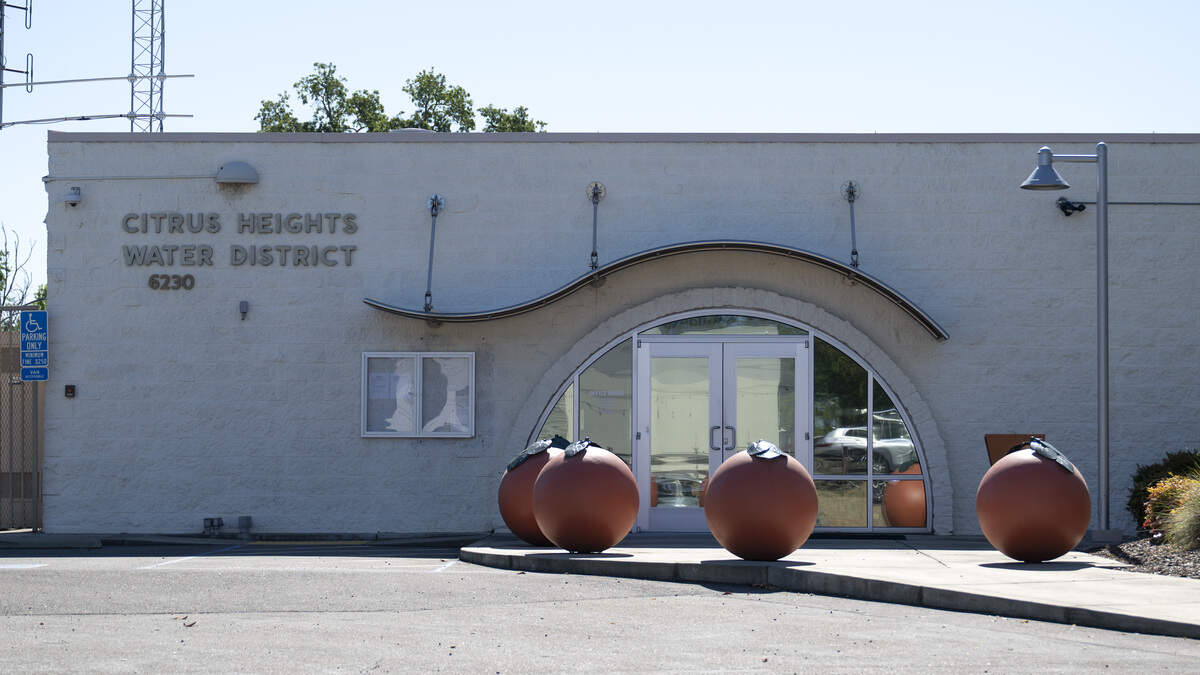
Directors of a capital water district don’t often consider filing public records requests for its neighbor, let alone one of its wholesale customers. However, in late May, directors of the San Juan Water District considered it a reasonable next step.
Read more Can my California neighbor put their trash in my garbage can? What state law says
Ted Costa, San Juan’s board president, proposed the request in response to a recent inquiry from the Citrus Heights Water District. Costa said a previous request from CHWD required extensive staff time and resulted in San Juan producing about 2,200 pages of records.
“We actually emptied the printers for these folks — everything — and now last month we got another request for the very same information that we gave them before,” Costa said May 28 at a board meeting.
The records dispute may seem unusual, but it reflects a much larger disagreement among the partnering agencies, including Sacramento Suburban Water District. The agencies are at odds over access to pre-1914 surface water, one of California’s most valuable water supplies.
At the center of the dispute is how neighboring districts balance their water portfolios, protect future supplies and determine who gets access to water that can be especially valuable during drought years.
Citrus Heights Water District sued San Juan in late April, alleging the district violated the California Environmental Quality Act, or CEQA, by repeatedly approving one-year agreements to sell pre-1914 surface water to Suburban — the water supplier to homes and businesses in North Highlands and Arden Arcade — without conducting a broader environmental review.
The three districts are expected to meet this week to discuss a possible settlement.
“When is this going to stop?” San Juan Director George Machado said at the board meeting. “I mean they threatened to sue us, then they are suing us now.”
The need for surface water
Sacramento Suburban Water District relied entirely on groundwater before the early 1990s. General Manager Dan York said groundwater levels were declining by about 2 feet per year, creating long-term concerns about supply reliability.
“If it had continued, basically there would have been no groundwater,” York said.
To diversify its water portfolio, Suburban pursued access to additional surface water supplies, including water from the Placer County Water Agency. However, that supply is only available when Folsom Lake reaches a threshold of 1.6 million acre-feet in a given year.
Because lake levels can be difficult to predict, the district considers backup options. That led to one-time agreements with San Juan for pre-1914 surface water in 2022, 2023 and 2025. Another agreement was approved in 2026 as part of state voluntary agreements.
The frequency of those agreements prompted concerns from CHWD and ultimately led to the lawsuit filed in April.
Environmental concerns arise
In its lawsuit, CHWD officials argues San Juan improperly treated the agreements as separate annual actions rather than a single ongoing project requiring environmental review under CEQA. The agreements received exemptions because existing facilities could accommodate the transfers.
“We want the San Juan Water District to manage its water portfolio with a long-term regional perspective, and that long-term perspective includes looking at these water transfers as a multi-year project,” CHWD President Caryl Sheehan said.
Before the most recent agreement between San Juan and Suburban, CHWD worked with a consultant to assess the situation and expressed concerns ahead of the deal, which was approved in March.
By not studying the deals’ cumulative consequences, the consultant’s report states, environmental factors affecting water temperatures, aquatic habitats and wildlife were not properly considered.
Read more California Democrats set up budget fight with Gavin Newsom over homeless funding
“When you have repeated actions such as the movement of this water out of where it is … impacts can be greater than the sum of the water moved,” Sheehan said.
To back this concern, a letter drafted by CHWD cites the 1989 case City of Santee v. County of San Diego, in which the court ruled a temporary jail expansion had to be evaluated for its long-term, cumulative environmental impact.
San Juan disputes the environmental concerns.
Transfers from San Juan to Suburban averaged about 400 acre-feet a month — about 130 million gallons — according to San Juan GM Adam Larsen, who said the district transferred more than 1,000 acre-feet a month to Suburban no more than three times in the past six years.
“This small amount of water has zero impact on the Bureau of Reclamation’s operations of Folsom Dam and Reservoir, nor are there any potentially significant environmental impacts resulting from the sales,” Larsen wrote in a statement.
» Folsom news in your inbox: Get our free Folsom email newsletter here
Access to the ‘most valuable’ water
Environmental planning was not the only factor in play. Citrus Heights Water District officials also raised concerns about the availability of pre-1914 surface water.
The water in question is what CHWD’s Sheehan described as “the most valuable” type of water. Pre-1914 surface water has fewer restrictions than other water sources, making it ideal during droughts because it is not limited by factors, such as the variations in supply over the course of a year.
San Juan can only use about 28,400 acre-feet of pre-1914 water a year, according to Larsen, a limit the district reached in 2020 and 2025. Suburban is expected to receive 4,800 acre-feet this year, according to a San Juan budget presentation. Last year, the district was allocated about 7,400 acre-feet.
The value of the supply is part of Citrus Height’s concern, according to Sheehan, who said the district wants to make sure the water is available when needed. Meanwhile, York said Suburban does not have priority access to the water.
“San Juan has got to make sure they (Citrus Heights) have the water first, not us,” York said.
Without supplies from San Juan, Sheehan said CHWD would have to resort to groundwater, which could affect the customer experience. It could also affect wells and change the mineral composition of the water.
“The groundwater tastes a little different than the surface water and so that’s one thing customers notice,” Sheehan said.
York, Suburban’s GM, questioned those concerns, saying his agency switches between groundwater and surface water. While surface water is often softer than groundwater, he said many customers do not notice a difference. The two water districts use the same American River watershed.
Although Sacramento’s suburban water districts have disputes from time to time, San Juan officials appeared optimistic a resolution could be reached.
At the board meeting, San Juan’s Costa said he spoke with directors from CHWD about the lawsuit and told his fellow board members he believes a settlement is in the works.
As a result, Costa and his colleagues tabled their proposed records request. However, San Juan may move forward with the filing depending on the outcome of Thursday’s settlement meeting.
“I’ll take them at their word and I’ll wait on this thing, but if they don’t, I’d like to request the information,” Costa said.
Read more Carolina Hurricanes stifle Vegas to capture first Stanley Cup since 2006