 By admin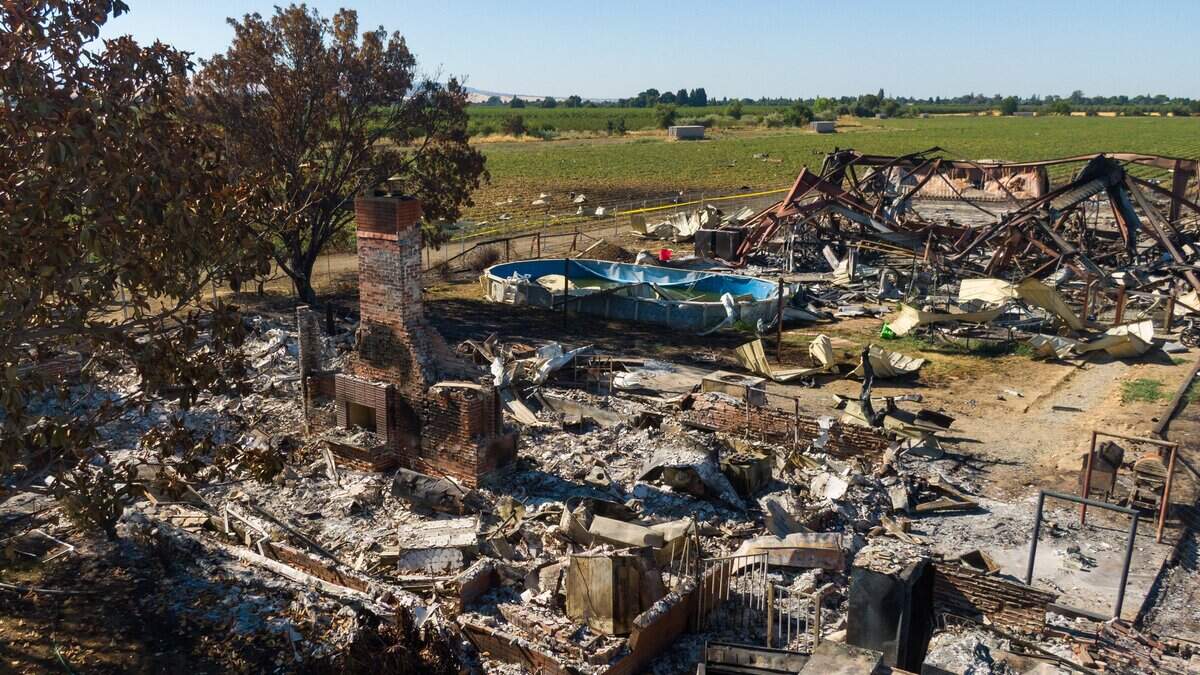
A bill tightening fireworks regulations passed the first of two key Assembly committees on Monday, bringing it closer to closing regulatory gaps that allowed an Esparto compound that exploded last year to warehouse fireworks without local permits or required safety features.
Read more Who is Jennifer Siebel Newsom? First Partner and target of Newsom DOJ investigations
Senate Bill 828, introduced by state Sen. Christopher Cabaldon, D-West Sacramento, who represents Esparto, seeks to close key regulatory loopholes that contributed to the lax oversight of the property where seven people were killed on July 1, 2025.
The bill passed unanimously in the state Senate in January. While lawmakers raised administrative questions during Monday’s Assembly Emergency Management Committee hearing, the committee approved the bill, 6-0, and sent it to the Assembly’s Local Government Committee. That committee will consider outstanding enforcement and procedural questions, including how small jurisdictions can best enforce fireworks regulations and how hobby rocketry should be regulated.
The bill would require people seeking state fireworks licenses to submit local permits as part of their applications. Current law does not require Cal Fire to check local permits, which led the agency to approve licenses that listed the Esparto property as a fireworks storage site for years.
The bill would also bar anyone convicted of certain violent crimes from obtaining fireworks licenses. The change would bring state policy in line with federal law, which already includes those restrictions.
Kenneth Chee, the CEO of Devastating Pyrotechnics, the company at the center of the Esparto case, was ineligible to obtain a federal explosives permit because of a decades-old criminal conviction. Chee’s criminal record did not disqualify him from obtaining state licenses. Devastating Pyrotechnics’ federal permit was obtained by Gary Chan Jr., who now faces dozens of felony charges along with Chee, including seven counts of second-degree murder.
State licensing and local permitting have historically operated as separate systems, meaning Cal Fire could issue licenses without confirming local approval.
Fireworks enforcement is made difficult by bad actors who engage in “shady dealings,” Cabaldon said. “And our capacity at the state level and the local level to catch it is not up to snuff.”
Read more Yolo judge bars defendants, lawyers from public comments in Esparto fireworks case
The bill is designed to ensure oversight agencies share information with each other. Siloed information may have contributed to missed opportunities to regulate the Esparto fireworks site, including a record-breaking seizure weeks before the deadly explosion, when fireworks bound for Esparto were discovered in Commerce, near Los Angeles.
SB 828 would require fireworks importers to notify local governments when they bring in shipments of fireworks. Import records show the Esparto compound brought in significant quantities of both consumer and display-grade fireworks for years. The records also show the company imported precursor chemicals used to manufacture fireworks, even though it was not licensed to manufacture fireworks.
The bill would require licensees to allow any local fire chief, fire marshal or fire prevention officer to inspect sites in their jurisdiction and require corrections if violations are found. It also authorizes local agencies to charge fees for processing permits, inspecting facilities and covering other administrative costs associated with the stricter regulations.
Under current law, 65% of money from fireworks fines and seizures must go to the Office of the State Fire Marshal’s Fireworks Enforcement and Disposal Fund. But that requirement has not been effectively implemented or enforced, said Dennis Revell, a spokesperson for TNT Fireworks, one of the largest sellers of “Safe & Sane” fireworks in the state.
The only opposition came from James Eadie, a licensed pyrotechnic operator, who said hobby rocket users could have difficulty complying with the bill because many local governments do not have permitting processes for storing small quantities of rocket motors. He said license holders could be penalized for failing to submit permits that some jurisdictions do not issue.
Cabaldon said he would work with the Office of the State Fire Marshal to clarify those provisions before the bill advances. Committee Chair Rhodesia Ransom, D-Tracy, said the Local Government Committee was expected to continue refining the measure and would also work with State Fire Marshal Daniel Berlant to address the hobby rocketry concerns.
A task force of state and local public safety officials released a slate of recommendations in January to improve fireworks law enforcement. Those recommendations include several of the changes proposed in Senate Bill 828.
Read more Boba, kebabs and airport restaurants: Business openings in Sacramento County