 By admin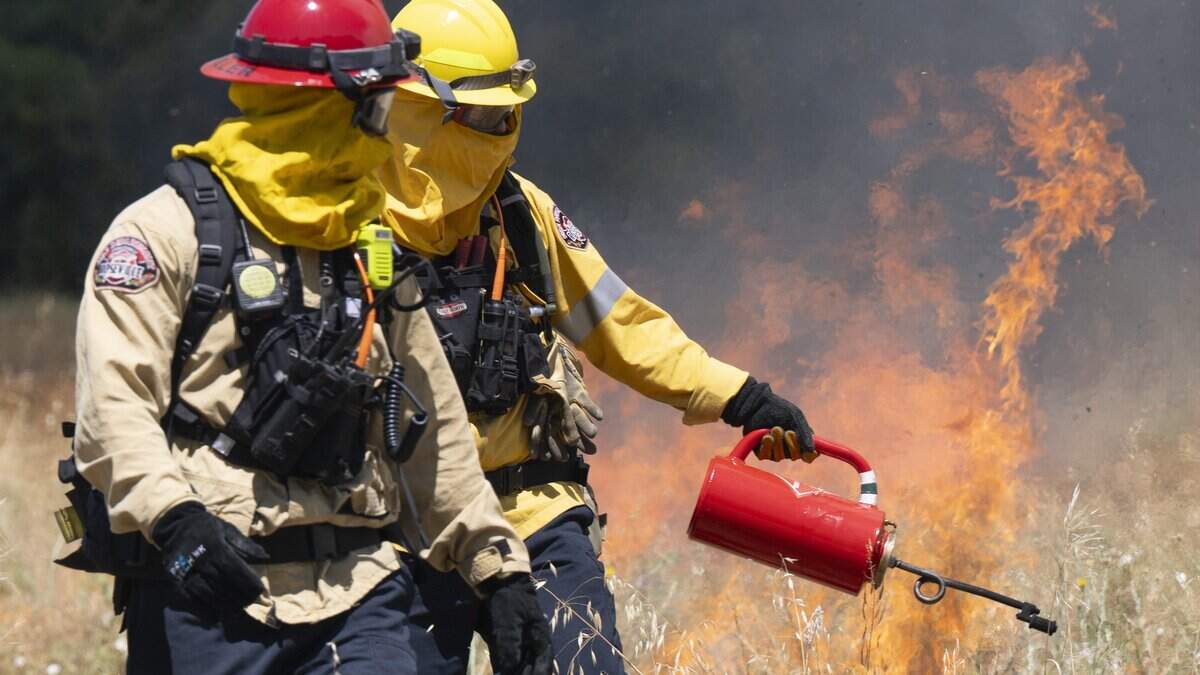
Flames crept across a Rio Linda meadow Tuesday as firefighters from three agencies intentionally set fire to 35 acres of dry grass — not to battle a wildfire, but to prevent one.
Read more Former CapRadio GM returning to court for embezzlement case. See how he spent the money
The prescribed burn, conducted by the Sacramento Metropolitan Fire District in collaboration with the West Sacramento and Roseville fire departments, served both as a training exercise for firefighters and as an effort to reduce wildfire fuels and target invasive plants along the Dry Creek Parkway.
“There’s everybody from 20- or 25-year veterans as well as brand-new probationary firefighters who just graduated from the academy a month or two ago,” said Battalion Chief Chris Vestal, a wildland program manager for Metro Fire.
The burn covered approximately 35 acres, split into 10-acre and 25-acre sections divided by Q Street between 16th and 18th streets.
The operation started around 11 a.m. on the north side of Q Street and spread across the field, sending large plumes of white smoke into the air. The wind blew opposite the direction of the flames, causing the fire to spread slowly, said Zach Skalak, a natural resource specialist with Sacramento County Regional Parks, who was there to ensure the operation went smoothly.
The smoke and heat caused some cyclists and pedestrians to stop and ask firefighters whether the blaze was planned or out of control. Crews told them the burn was intentional and that the parkway had been closed for the duration of the operation.
By approximately 12:30 p.m., crews began burning the section of the parkway south of Q Street.
Many of the fuels in the parkway are invasive grasses, including yellow starthistle and other weeds, which become highly flammable and dry out early in the wildfire season, Skalak said.
Read more Don’t call it a B&B: Enjoy micro-local gourmet meals at this Yuba County farmstay
“We want to burn that off and reduce the number of those seeds that are entering the soil so that it, over time, is controlling that population,” he said.
Skalak said prescribed burns kill invasive seeds while stimulating the seeds of native plants, which have adapted to survive fire. Other methods of controlling invasive species, such as herbicides or grazing, do not destroy invasive seeds the way fire does.
“In the coming months at the next rain, and as the native species of vegetation return, it’s more colorful, and it’s healthier,” said Vestal.
Vestal also said prescribed burns provide firefighters with valuable live-fire training while allowing multiple agencies to practice working together in the field.
“Live fire that we get through these VMP burns is really the best way to do that,” he said, referring to burns performed by the vegetation management program burns performed by fire agencies.
Planning for Tuesday’s burn began in February, Vestal said. Preparations included visiting burn sites, incorporating the exercise into training plans and coordinating with agencies including emergency medical services and Metro Fire’s structural firefighting teams.
Vestal said nothing unexpected occurred during the burn because crews had planned for contingencies.
Read more Sacramento area celebrates Juneteenth with festivals, music and more this week
By 1:15 p.m., the burn was complete.
This story was originally published June 17, 2026 at 6:30 AM.