 By admin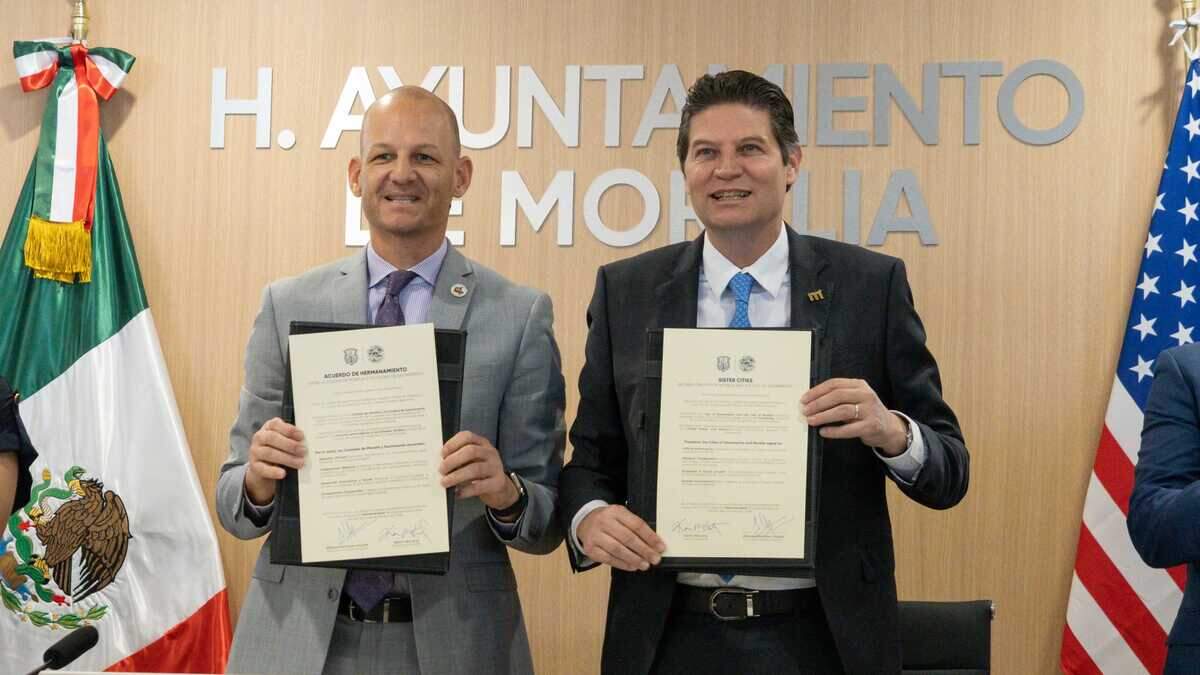
When Sacramento officially recognizes and celebrates Morelia, Mexico, as its newest sister city Thursday, the city will add another chapter to a program that has quietly shaped the capital city’s international relationships for more than six decades.
Read more SEIU-UHW, Hospital Association strike truce to keep dueling measures off ballot
At a special meeting, the Sacramento City Council is expected to adopt a resolution formally establishing the relationship. A city staff report says the partnership will promote “tourism, economic development, education, workforce development, cultural exchange, and community engagement” between the two capital cities.
The agreement with the capital of the Mexican state of Michoacán gives Sacramento 12 official sister cities stretching from Asia to Europe, Latin America and the Middle East.
Most sister city relationships are largely symbolic and volunteer-driven, but many have produced student exchanges, cultural festivals, business delegations and humanitarian partnerships. In Morelia’s case, city leaders say the relationship builds on existing direct airline service, tourism and longstanding family ties between Michoacán and Sacramento.
McCarty traveled to Morelia in February to sign the initial agreement with Mayor Alfonso Martínez Alcázar, beginning the formal process that concludes with Thursday’s City Council vote.
The city of nearly 850,000 residents is a UNESCO World Heritage site known for its pink-stone historic center, Indigenous Purépecha heritage, international film and music festivals and its proximity to the Monarch Butterfly Biosphere Reserve.
Over the years, the city’s sister-city relationships have reflected everything from post-World War II diplomacy to the capital region’s changing immigrant communities — and, in some cases, some of the most divisive international issues of the day.
Drawing on years of Sacramento Bee reporting, here’s how the city’s global network has evolved.
It started with a postwar idea
Sacramento’s first sister city partnership came in 1961 with Manila and Pasay City in the Philippines.
The relationship grew out of the Sister Cities International movement, launched during the Eisenhower administration to encourage cultural exchanges between ordinary citizens after World War II.
Over the next three decades, Sacramento steadily expanded the program, adding Matsuyama, Japan; Jinan, China; Hamilton, New Zealand; Liestal, Switzerland; Chisinau, Moldova; and Yongsan-gu, South Korea.
Many of those partnerships focused on student exchanges, cultural visits and educational programs. Sacramento’s long-running relationship with Jinan, for example, has included youth ambassador exchanges for decades.
More recent partnerships reflect Sacramento’s communities
Sacramento’s newer sister cities increasingly mirror the people who live here.
Morelia becomes the city’s second sister city in Mexico after Mexicali, which joined the program in 2013.
City officials say roughly 300,000 Sacramento-area residents trace their heritage to Morelia and the Mexican state of Michoacán. The partnership also follows the launch of direct Volaris flights between Sacramento and Morelia last year, which leaders have said strengthen family, tourism and business ties.
Other relationships also grew from years of community connections before becoming official.
Sacramento volunteers began traveling to San Juan de Oriente, Nicaragua, in the late 1980s, organizing humanitarian projects and educational exchanges nearly two decades before the city formally recognized it as a sister city in 2006.
Read more In eco-friendly California, lawmakers still cling to wider highways, bill shows
Not every sister city has been without controversy
Most sister city votes attract little attention.
That wasn’t the case in 2009, when Sacramento voted to make Bethlehem, Palestine, a sister city.
The City Council approved the partnership after agreeing to also pursue a sister city in Israel. Three years later, the council unanimously approved Ashkelon following an emotional public hearing that drew more than 250 people to City Hall.
Supporters described the program as an opportunity for cultural exchange and dialogue. Opponents argued the city should not partner with a municipality they associated with Israeli policies toward Palestinians.
Council members ultimately said the purpose of the sister city program was to build relationships between communities, not to settle international political disputes.
Ukraine became newest international partnership
The city’s international relationships took on new meaning in 2023 after Russia invaded Ukraine.
Sacramento established a sister city relationship with Sumy, a northeastern Ukrainian city about 30 miles from the Russian border that became one of the first targets of the invasion.
At the announcement, Ukrainian Consul General Dmytro Kushneruk said Sumy “was one of the first cities to be attacked and sieged by Russian forces,” but “even though it was sieged, it was never captured.”
City leaders said the partnership reflected Sacramento’s large Ukrainian community while creating opportunities for humanitarian support, cultural exchange and future reconstruction efforts.
Morelia is the latest chapter
Thursday’s ceremony marks the final step in a process that actually began months ago.
Sacramento Mayor Kevin McCarty and Morelia Mayor Alfonso Martínez Alcázar signed the initial agreement in February during a ceremony in Mexico. The City Council’s vote formally establishes the partnership, making Morelia Sacramento’s newest sister city.
What are the sister cities?
The 12 official sister cities, according to the city:
- Manila/Pasay City, Philippines (1961/2006)
- Matsuyama, Japan (1981)
- Jinan, China (1984)
- Hamilton, New Zealand (1988)
- Liestal, Switzerland (1989)
- Chisinau, Moldova (1989)
- Yongsan-gu, Korea (1997)
- San Juan de Oriente, Nicaragua (2006)
- Bethlehem (2009)
- Askelon, Israel (2012)
- Mexicali, Mexico (2013)
- Morelia, Mexico (2026)
Visit them without leaving town
Sacramento’s international partnerships aren’t just reflected in council resolutions and ceremonial visits. They’re also rooted in a small public garden in South Natomas.
The Sister Cities Friendship Garden, also known as the Sister City Grove, sits behind the South Natomas Library and next to the South Natomas Community Center at 2921 Truxel Road.
The garden features trees chosen to represent several of Sacramento’s sister cities, including an olive tree for Bethlehem, Palestine; a European oak for Chisinau, Moldova; a Canary Island pine for Hamilton, New Zealand; a linden for Liestal, Switzerland; a camphor tree for Manila/Pasay City, Philippines; a madrone for San Juan de Oriente, Nicaragua; and a Rose of Sharon for Yongsan-gu, South Korea.
Together, the trees serve as a living reminder that Sacramento’s sister city program extends beyond official ceremonies and diplomatic visits, celebrating the cultural and community ties that have connected the capital with cities around the world for more than 60 years.
This report was produced with the assistance of a proprietary tool powered by artificial intelligence based on our own originally reported, written and published content. Before publishing, journalists reviewed this content in compliance with McClatchy Media’s AI policy.
Read more Lack of city support led to failure of Sacramento police watchdog, grand jury says
This story was originally published June 25, 2026 at 12:40 PM.