 By admin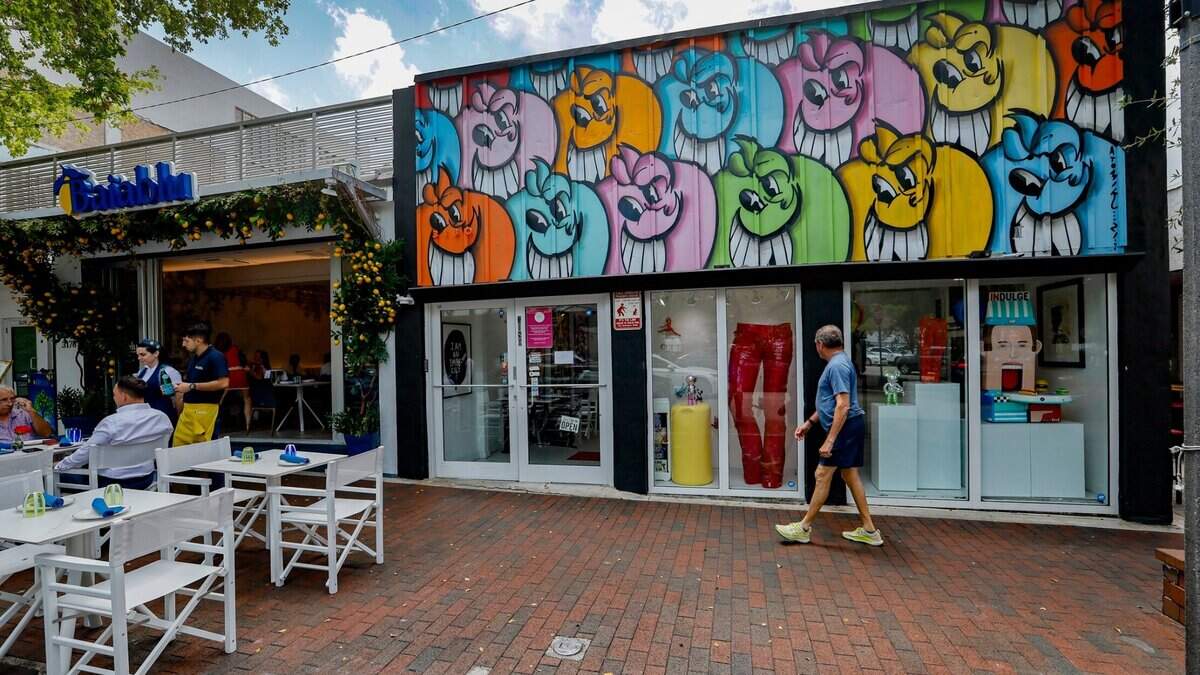
A former Miami art gallery owner who admitted selling counterfeit Andy Warhol artworks was sentenced to nearly four years in federal prison after failing to appear for his original sentencing hearing, prompting concerns from his attorney that he might have suffered a medical emergency or attempted to take his own life.
Read more Will Isaias match Helene? National Weather Service forecasters address concerns.
Leslie Howard Roberts, the former owner of Miami Fine Art Gallery in Coconut Grove, appeared before U.S. District Judge Roy K. Altman on Oct. 2 and received a 46-month prison sentence after pleading guilty to conspiracy to commit wire fraud in a scheme involving approximately $2.58 million in fraudulent art sales.
According to a Sept. 25 report by Law360, Roberts’ attorney, Jason Wandner, told the judge that his client had last contacted him from an Uber on his way to the Miami federal courthouse. Roberts never arrived, and subsequent attempts to reach him were unsuccessful. Wandner, citing his client’s heart condition, raised the possibility that Roberts had suffered a medical emergency or attempted to take his own life because of the prospect of being taken into custody.
“I think the concept of him being remanded was weighing heavily on him,” Wandner said.
Roberts appeared in court a week later, but the circumstances surrounding his earlier absence remain unclear. The official entry for the Oct. 2 hearing states that Altman addressed a pretrial petition and warrant issued in the case. Both documents are sealed.
Altman ordered Roberts remanded to federal custody and directed that his passport be surrendered to his attorney. The judge also recommended that the Bureau of Prisons place Roberts in a Florida facility capable of addressing his medical needs.
The 46-month sentence was at the low end of the advisory federal sentencing range of 46 to 57 months. Roberts had sought a sentence below that range, arguing that his cooperation with investigators had helped uncover what his attorney described as potentially the largest art-related fraud network in U.S. history.
Prosecutors, however, disclosed at the earlier hearing that investigators had recently uncovered evidence suggesting Roberts had engaged in additional art fraud while his criminal case was pending.
Counterfeit Warhol artworks
The criminal case centered on a scheme in which Roberts used Miami Fine Art Gallery to sell counterfeit artworks presented to customers as authentic pieces by Andy Warhol.
According to the April 2025 indictment, Roberts told buyers that he had obtained genuine Warhol artworks directly from the New York-based Andy Warhol Foundation for the Visual Arts.
Prosecutors said Roberts relied on forged authentication documents, fabricated identification numbers purportedly issued by the foundation and fake stamps placed on the backs of artworks to make the pieces appear authentic.
The scheme also involved Carlos Miguel Rodriguez Melendez, who prosecutors said falsely represented himself as an employee of a New York-based auction company to authenticate the counterfeit Warhol artworks for prospective buyers.
Rodriguez Melendez pleaded guilty in June 2025 and subsequently received a sentence of one year of probation.
Roberts pleaded guilty on June 10, 2026, to conspiracy to commit wire fraud. As part of his plea, he acknowledged obtaining $2,581,465 from the sale of forged artworks. The remaining charges against him were dismissed at the government’s request.
The court also imposed a forfeiture money judgment for that amount.
In an Oct. 4 filing, Assistant U.S. Attorney Nicole Grosnoff said the forfeiture judgment became final when Roberts was sentenced and that no additional order was necessary because it involved a monetary judgment rather than the forfeiture of specific property.
Claims of extensive cooperation
Before sentencing, Wandner urged Altman to impose a sentence below the advisory guidelines, arguing that his client’s assistance to investigators had been unusually valuable.
In a Sept. 24 sentencing memorandum, Wandner said Roberts began cooperating with federal authorities immediately after his arrest and continued providing assistance for more than a year. The attorney claimed Roberts’ information enabled investigators to execute search warrants and seize a substantial quantity of counterfeit artwork connected to a much larger fraud operation.
“His extraordinary efforts for more than a year have led to law enforcement busting up what appears to be the biggest art related fraud network in U.S. history,” Wandner wrote.
Read more Black bear spotted wandering around Morro Rock
The defense acknowledged, however, that the seizures had not yet resulted in additional indictments or convictions.
Wandner argued that Roberts’ assistance justified a reduction in his sentence even though prosecutors had not filed a formal motion seeking one. According to the defense memorandum, the government had indicated that it would seek a reduction under Rule 35 of the Federal Rules of Criminal Procedure once Roberts’ cooperation reached the appropriate stage.
Such a motion can allow prosecutors to request a sentence reduction after sentencing based on a defendant’s assistance to investigators. The filing did not establish when that might happen, and the available sentencing records do not indicate that prosecutors have submitted such a request.
Wandner also said Roberts had been helping victims pursuing civil litigation against other people whom they believed were involved in the underlying art fraud.
The attorney argued that Roberts’ personal history and medical problems warranted leniency. In his filing, Wandner recounted that Roberts was 12 years old when his mother killed his father, an experience the attorney said left lasting psychological scars. The defense said psychologist Andrew Klein would address the effects of that trauma, although the available records do not establish whether he testified.
Despite those arguments, Altman imposed a sentence within the advisory guidelines rather than the shorter prison term requested by the defense.
A missed court appearance
The Sept. 25 hearing had been scheduled for 3:30 p.m. According to Law360, Wandner told Altman that Roberts had indicated he would arrive in an Uber at 3:18 p.m., but he never reached the courthouse. His cellphone subsequently appeared to be turned off.
After waiting more than an hour, Altman rescheduled the sentencing for the following week.
Assistant U.S. Attorney Daniel Rosenfeld confirmed that prosecutors had intended to seek Roberts’ immediate detention after sentencing. Rosenfeld also said investigators had uncovered evidence in the preceding 48 hours suggesting Roberts had committed additional art fraud during the previous two or three months.
The prosecutor’s statements did not establish that Roberts had committed new offenses, and the available court documents do not indicate whether additional charges have been filed in connection with those suspicions.
Civil lawsuits and restitution
The criminal prosecution has also been accompanied by civil litigation involving art collectors who claim they suffered substantial financial losses from counterfeit artworks.
Collectors Judy and Richard Perlman filed a lawsuit claiming they lost approximately $6.7 million in transactions involving Roberts. According to Law360, the Perlmans reached a settlement with Roberts in January and later filed another lawsuit against individuals they claimed had helped supply the counterfeit Warhol paintings.
Those civil claims are separate from the $2,581,465 criminal forfeiture judgment, which represents proceeds traceable to the conspiracy. The forfeiture amount does not establish the total losses suffered by victims or the amount they will ultimately receive through restitution.
Altman deferred the restitution determination until Jan. 20, 2027. The judgment imposes no criminal fine, although Roberts must pay a mandatory $100 assessment.
Roberts will also serve three years of supervised release after completing his prison sentence, subject to financial and professional restrictions.
He must provide federal probation officials with access to his personal and business financial information, obtain permission before taking on new debt and secure court approval before becoming self-employed. He is also prohibited from associating with Rodriguez Melendez and from participating in a related business during supervised release.
This story was originally published October 8, 2026 at 9:27 AM with the headline “Miami art dealer gets nearly four years in prison for selling fake Warhols.”
Read more These social media stars are facing defamation lawsuits from friends of Nolan Wells