 By admin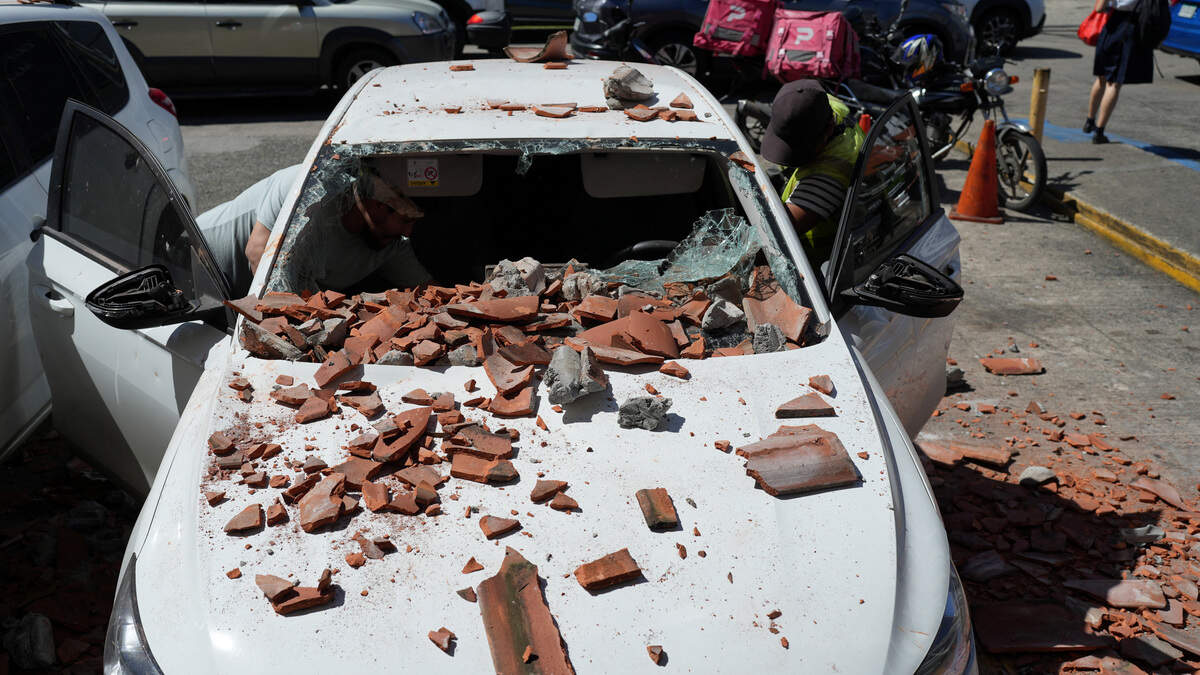
A powerful magnitude 7.7 earthquake struck Panama on Friday afternoon, collapsing houses, shops and other structures in communities near its epicenter, injuring residents and triggering tsunami warnings across parts of Latin America, as frightened residents poured into the streets of Panama City and massive traffic jams brought much of the capital to a standstill.
Read more West Sacramento creates homelessness department as unhoused population rises
Panamanian authorities reported extensive damage to buildings, roads and public infrastructure across several provinces, along with power outages, disruptions to water supplies and dozens of aftershocks. No deaths had been confirmed as of Friday afternoon, although emergency officials warned that assessments were continuing and communications with some affected communities remained difficult.
The earthquake struck at 12:56 p.m. local time, 1:56 p.m. Eastern, with its epicenter approximately 7.5 miles west-southwest of Pitaloza Arriba, on the Azuero Peninsula, according to the U.S. Geological Survey. The agency reported a magnitude of 7.7, while Panamanian authorities measured the earthquake at 7.2.
Television footage from towns near the epicenter showed collapsed houses, damaged storefronts and other destroyed structures, providing the first visual evidence of destruction in communities where preliminary USGS models had warned of severe shaking.
The provinces of Coclé, Veraguas and Los Santos were among the hardest hit, according to Malitzie Rivera, deputy director general of Panama’s National Civil Protection System.
Rivera said emergency officials had received reports of damage to government buildings, commercial properties, churches, roads and other infrastructure. Several churches sustained damage to their domes, while a hotel in Coclé and fire stations in Los Santos were also affected.
She confirmed that some residents had suffered minor injuries and were receiving treatment at hospitals and other medical facilities, but said authorities had not received reports of deaths.
“We have no fatalities at this time, only people with minor injuries who have been receiving treatment at medical centers,” Rivera said during a televised briefing.
Firefighters, Red Cross personnel and security forces were being deployed to inspect damaged structures and assist affected communities.
Capital brought to standstill
In Panama City, approximately 125 miles from the epicenter, the earthquake sent frightened residents rushing out of buildings and gathering in streets and open spaces.
Although television coverage suggested the capital had escaped the widespread structural destruction visible in communities closer to the epicenter, the earthquake caused major disruptions to daily life.
Traffic became severely congested as thousands of residents attempted to drive home, leaving major roads gridlocked.
Government Minister Dinoska Montalvo said part of the congestion was caused by safety inspections of the Centenario Bridge, one of the capital’s major transportation arteries.
Montalvo said authorities had restricted a lane while engineers assessed the structure, emphasizing that public safety had to take precedence over traffic flow.
“We cannot risk anyone’s life,” she said, noting that the bridge carries a large volume of vehicles.
The minister urged residents to avoid potentially damaged structures while emergency teams inspected affected areas.
“The important thing in a situation like this is to remain calm,” Montalvo said.
She assured the public that government agencies, firefighters and civil protection personnel were mobilizing throughout the country. The government would respond wherever problems had been reported, she said, including schools and health centers.
Damage to essential services
Beyond the destruction of buildings, authorities expressed concern about damage to infrastructure that could disrupt essential services.
Rivera said nearly all of the country’s water treatment plants had reported some degree of infrastructure damage, although the full extent remained under evaluation.
She said a water treatment facility in Chiriquí was operating at only 20% of its normal capacity.
Power outages compounded the difficulties. Parts of Los Santos and Veraguas lost electricity for more than 30 minutes, disrupting communications and the operation of essential services.
Rivera warned that continued electricity problems could interfere with water treatment operations and delay the restoration of supplies.
Emergency officials also reported damaged roads, fallen utility poles and problems reaching communities where electricity and internet connections had been interrupted.
Those disruptions raised concerns that additional damage and injuries might not yet have been reported.
Read more Sky River Casino: Union prevails in one lawsuit, awaits resolution in another
Authorities urged residents to notify emergency services about affected buildings, blocked roads and other problems as communications were restored.
Tsunami threats across region
The U.S. State Department warned Friday of potential tsunami threats across nine Latin American countries following the powerful earthquake, urging Americans along affected coastlines to move to higher ground and avoid damaged structures.
In an alert posted on X, the department’s TravelGov account said the U.S. Tsunami Warning System had identified potential threats for Panama, Costa Rica, El Salvador, Peru, Mexico, Guatemala, Nicaragua, Colombia and Ecuador.
“Strong and unusual currents and unpredictable surges may occur along the shore,” the department warned.
The advisory also cautioned that aftershocks capable of causing additional damage could follow the earthquake. Americans in the affected areas were advised to stay away from the coast, avoid entering damaged buildings and prepare for possible interruptions to electricity and communications.
The warning did not indicate that destructive tsunami waves had reached all nine countries. It urged residents to monitor local emergency broadcasts and follow instructions from authorities as conditions developed.
Coastal areas monitored
Panamanian authorities were also monitoring unusual conditions along parts of the Pacific coast following reports that the sea had receded several meters in some coastal areas.
Rivera said officials had received reports of the retreating shoreline in Chiriquí and Veraguas and were coordinating surveillance with Panama’s maritime authorities and security agencies.
She said a Pacific tsunami monitoring center had indicated that waves measuring between approximately one to three feet could occur.
Officials were also monitoring conditions on islands including Toque, where damage to homes had been reported, and Isla Caña, where changes in sea level were being observed.
Rivera urged coastal residents to remain alert to changes in sea level, identify routes to higher ground and report unusual conditions to emergency authorities.
Montalvo also advised residents to stay away from the sea and rivers while emergency officials continued their assessments.
Dozens of aftershocks
Rivera said authorities had recorded more than 47 aftershocks following the initial earthquake and warned that additional tremors were expected.
She said the building where officials were conducting their emergency operations had been evacuated repeatedly because of the continuing shaking.
The deputy director urged schools, businesses, government offices and residential buildings to review evacuation procedures and identify safe gathering areas.
She also cautioned against rumors and emphasized that earthquakes cannot be predicted with the same advance warning available for certain weather events.
The USGS’s preliminary shaking models estimated that approximately 36,000 people lived in areas exposed to severe shaking, 537,000 in areas exposed to very strong shaking and 731,000 in areas exposed to strong shaking.
Near the epicenter, the agency estimated an intensity of VIII, classified as severe on the Modified Mercalli Intensity Scale, which measures how strongly the ground shakes at individual locations.
Communities including Macaracas, Ocú, Las Tablas, Chitré and Santiago were estimated to have experienced intensity VII, or very strong shaking, capable of damaging buildings, particularly those with vulnerable construction.
The USGS’s earlier automated assessment also assigned a red alert for potential economic losses and a yellow alert for possible fatalities. Those projections were generated before comprehensive damage reports became available and should not be interpreted as confirmed losses.
The extent of the destruction remained uncertain Friday as emergency crews continued inspecting buildings, roads, water facilities and other infrastructure.
For Panamanian authorities, the immediate priorities were reaching communities near the epicenter, treating the injured, restoring essential services and determining whether additional damage had occurred in areas still struggling with disrupted communications.
This story was originally published October 9, 2026 at 12:35 PM with the headline “Panama rocked by massive earthquake; widespread damage reported, tsunamis feared.”
Read more Teen’s newborn found dead on California roadside. Here’s what the sheriff says happened