 By admin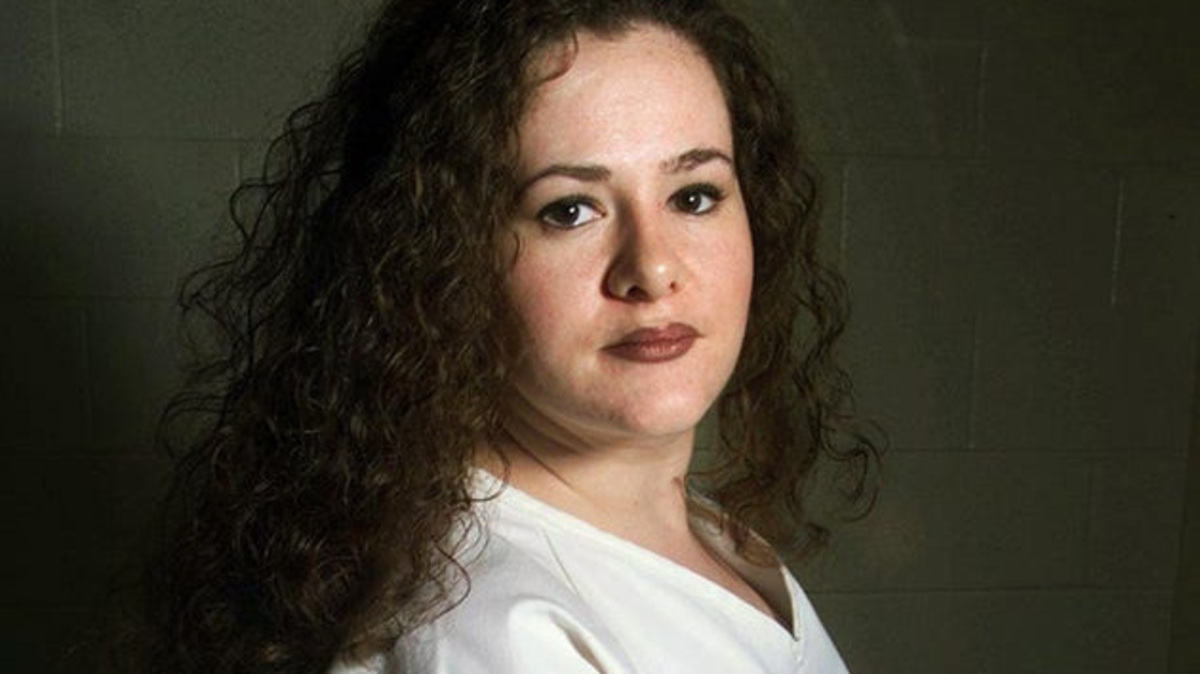
When it comes to executing death row inmates, pentobarbital is the drug of choice for more than a dozen states and the federal government.
Read more Fire destroys French capital’s ‘Enfants Rouges’ covered food market
It has been used to kill more than 100 murderers in the U.S. for more than 15 years. So how did Christa Pike survive her execution in Tennessee after a doctor injected her with two doses of pentobarbital on Sept. 30?
The explanation that makes the most sense is that the pentobarbital never made it to Pike’s veins, say Pike’s attorneys and death penalty experts. Rather, they think Pike’s executioners either missed her veins altogether or pierced all the way through them, sending the drugs into her body tissue instead of her bloodstream.
That would point to human error as the culprit.
Though pentobarbital is a common execution drug, the people who inject the poison into inmates are different in every state. And though they can carry “M.D.” after their names, their skills and experience vary wildly.
“Good doctors don’t want to be involved in executions,” said Columbia Law School’s Bernard Harcourt, who represented Doyle Lee Hamm, an Alabama inmate who survived a botched lethal injection in 2018. “They take the hippocratic oath,” which dictates that medical professionals must “do no harm.”
“The result is that you get folks who aren’t very good at this,” Harcourt said. “You’ve got people who are not really qualified … doing this under extremely stressful conditions in the middle of the night. And that’s just a recipe for disaster.”
As an investigation into what happened in Tennessee remains ongoing and Pike’s attorneys fight to save her from a potential second execution, USA TODAY is looking deeper at the use of pentobarbital and the doctor who administered it to Pike.
What is pentobarbital?
Pentobarbital is a sedative used in animal euthanasia and assisted suicides. In smaller doses, it can treat seizures, insomnia, anxiety, and can be used as a preanesthetic or sedative.
The Schedule II controlled substance affects a person’s brain, respiratory system, cardiovascular system, consciousness and motor functioning.
In executions, the drug typically is delivered to an inmate’s veins through an IV line. The drug is supposed to flow through the bloodstream and enter the heart before causing a coma and death.
How has pentobarbital been used in executions?
Ohio became the first state to use pentobarbital as the sole execution drug in 2011, when executioners lethally injected it into death row inmate Johnnie Roy Baston. The execution happened without incident and Baston was pronounced dead 13 minutes after the pentobarbital began coursing through his veins, according to archived news reports.
More states would come to adopt the use of pentobarbital as other lethal drugs became harder to obtain. Now 14 states use it in as the sole drug in some or all of their executions, including Arizona, Kentucky, Missouri, Oklahoma, and Texas, according to the nonprofit Death Penalty Information Center.
It’s also the drug of choice for the federal government. During President Donald Trump’s first term, the government used pentobarbital in an execution spree of one female and 12 male death row inmates between July 2020 and January 2021, just before President Joe Biden took office. The executions outnumbered any presidency since Franklin D. Roosevelt’s.
The last time pentobarbital was used effectively in an execution came a week after Pike’s botch in Tennessee. On Oct. 7, Texas executed Jamaal Howard for the 2000 murder of a mother of three named Vickie Swartout just northeast of Houston. Howard was executed without incident.
Who injected Christa Pike with pentobarbital?
Dr. Mark Fowler oversaw Pike’s execution, according to reporting by NBC News and WSMV-TV.
Fowler has publicly identified himself as the doctor who botched the execution of Tennessee death row inmate Tony Carruthers in May. While Fowler established a primary IV line in that execution, he failed to establish a second IV line required under the state’s execution protocol. He also unsuccessfully tried to place a central line.
After Carruthers spent more than an hour strapped down waiting to die, the state abandoned the execution and the governor granted him a rare one-year reprieve. In a lawsuit filed in July, his family said that they believe Carruthers suffered a brain stroke and that the entire right side of his body was left paralyzed.
Fowler had not placed a central line in at least 13 years, according to his deposition in litigation over Tennessee’s execution procedures. Fowler testified that he had placed about a dozen central lines during his career and had no current hospital privileges.
“I am qualified,” Fowler said during a tense exchange with Carruthers’ attorney inside the death chamber, according to the Nashville Banner. USA TODAY has been unable to find contact information for Fowler.
Read more Skies over Saudi capital Riyadh largely empty after deadly Houthi strikes on airport
Fowler told NBC News in June that he participates in executions to lessen the suffering of the prisoners being put to death.
“Every attempt was made to minimize the defendant’s discomfort in the case at hand,” he said. “No one wants Carruthers to suffer.”
Following Carruthers’ botched execution, Lee’s office ignored USA TODAY’s request for comment about whether the state was doing anything to avoid another failed execution. The Tennessee Department of Corrections also did not respond to USA TODAY’s questions about whether it would continue to use Fowler in future executions and if so, why.
Fowler went on to carry out a successful execution in Tennessee in August, about six weeks before botching Pike’s.
With Pike’s execution, Fowler had an especially difficult task. Nearly 10 months before the execution date, her attorneys warned the state that he would have a hard time gaining access to her veins and properly delivering a fatal dose of pentobarbital. That’s because they said she has unusually small veins and a blood condition known as thrombocytosis.
State officials dismissed those concerns, arguing in the Tennessee Supreme Court that her “alleged medical conditions do not warrant a stay.” The courts agreed.
Pentobarbital has faced legal challenges
Defense attorneys have been fighting the use of pentobarbital for years and Pike’s botched execution will only bolster their efforts. Previous fights have centered on whether pentobarbital causes inmates too much pain to be constitutional.
In a case that went to the Supreme Court, defense attorneys argued that pentobarbital can cause pulmonary edema in inmates, making them feel as if they’re drowning or asphyxiating and causing “extreme pain, terror, and panic.” The attorneys were challenging the federal government’s use of pentobarbital.
The U.S. Attorney General’s Office argued that if pulmonary edema occurs in inmates, it happens after they have died or otherwise can’t feel the pain.
In a 5-4 decision in 2020, the Supreme Court ruled that pentobarbital had become “a mainstay of state executions” and cleared the way for the government to use the drug. In a dissenting opinion, Justice Sonia Sotomayor said the court was “setting a dangerous precedent” by accepting the government’s “artificial claim of urgency.”
As a result, she said “there will be no meaningful judicial review of the grave, fact-heavy challenges” being brought by death row inmates.
In another 5-4 decision, the Supreme Court upheld Oklahoma’s use of the execution drug midazolam in 2015. In that case, Associate Justice Samuel Alito wrote that “the elimination of essentially all risk of pain would effectively outlaw the death penalty altogether.”
“While most humans wish to die a painless death, many do not have that good fortune,” he wrote for the majority.
Sotomayor, who wrote the principal dissent at the time, said that the ruling “leaves petitioners exposed to what may well be the chemical equivalent of being burned at the stake.”
Contributing: Madeline Mitchell and Janet Loehrke, USA TODAY, Richard Wolf, formerly of USA TODAY, and Kelly Puente, Nashville Tennessean
Amanda Lee Myers is a senior crime and courts reporter who covers the death penalty, cold case investigations and breaking news for USA TODAY. Follow her on X at @amandaleeusat
This article originally appeared on USA TODAY: Pentobarbital is common execution drug. So why was Christa Pike’s execution botched?
Read more Productivity gains from AI could help offset Asia’s ageing population problem, IMF says
Reporting by Amanda Lee Myers, USA TODAY / USA TODAY
USA TODAY Network via Reuters Connect
Copyright Reuters or USA Today Network via Reuters Connect
This story was originally published October 12, 2026 at 2:05 AM.