 By admin
AI-generated summary reviewed by our newsroom.
Read our AI Policy.
- Top angler earned $153,570 in 2026 from the Columbia-Snake pikeminnow bounty.
- The bounty pays up to $10 per pikeminnow turned in, with special tags worth up to $500.
- Anglers turned in 134,819 pikeminnow in 2026, meeting the program’s goals.
Richland, Wash.
One angler fishing the Columbia and Snake rivers during the warmest months of 2026 reeled in $153,570 — money earned in a Washington state and Oregon bounty program.
Read more Sikh religious sign vandalized 4 times in Granite Bay. Sheriff seeks suspect
That brings his total take from the Northern Pikeminnow Sport-Reward Fishery Program to about $477,140 in the past three years for a total of about 15 months spent catching pikeminnow from his boat.
It may be recreational fishing, but he’s worked hard at it.
“He’s not casual about angling by any means,” said Eric Winther, the bounty program manager with the Washington state Department of Fish and Wildlife.
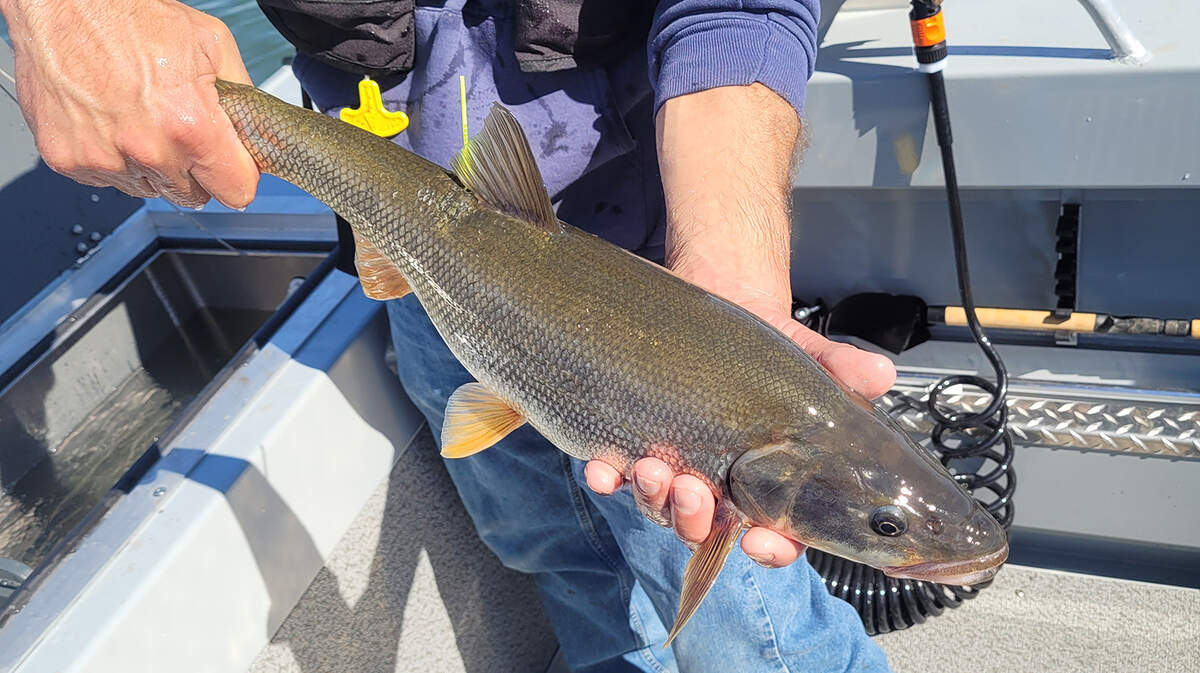
Northern pikeminnow are native to the Northwest, but they are voracious eaters of juvenile salmon and steelhead, eating millions in the Columbia River system each year.
To offset the impact of hydroelectric dams on salmon in the Columbia and Snake rivers, the Bonneville Power Association covers the cost of bounties for pikeminnow.
Anglers can earn $6 each for the first 25 pikeminnow they turn in during the season, then $8 for each fish up to 200 and $10 for each fish after that.
They can get more if they are lucky enough to catch fish that are tagged for rewards, with those with internal microchip tags worth $200 and those with external tags worth $500.
Batmobile of pikeminnow fishing
Winther has called the top angler for the last three years in the reward program “the Michael Jordan of pikeminnow fishing.”
Washington state Fish and Wildlife Department does not release the names of the top earners, but says this year’s top earner holds the record for most money earned in a season, just over $164,000 in the 2024 season.
He’s a pipefitter by trade and has used the skills from his profession to modify his boat to be the “Batmobile” for pikeminnow fishing, Winther said.
“He’s always tinkering on his boat,” Winther said.
He has a live well rigged up on his boat, uses electric trolling motors and has installed solar panels and generators to supply power, including to his night lighting.
He also invests in good quality equipment, including his fish finder, motors, rods and reels.
But his remarkable catch depends on more than equipment.
Pikeminnow are easy to catch, but hard to find consistently, Winther said. They congregate in areas where they can intercept salmon smolts.
The top earner for the past three years has been fishing for pikeminnow for 25 years and keeping meticulous records on variables like the water temperature, water level, wind and barometric pressure.
His boat is equipped to allow him to fish through the night if he finds a spot with lots of pikeminnow, and that’s what he does, Winther said. Sunrise, sunset and night are often the best fishing times.
But anglers don’t have to put in the effort the top earner does to make money in the bounty program.
Read more Rescuers follow snowy footprints to find missing teen hiker near Lake Tahoe
Those who use a boat will want one that’s safe for rivers the size of the Columbia or Snake with high sideboards, allowing anglers to stand without tipping the boat over. A 17-foot-boat is a good average size, Winther said.,
And there are also anglers who just fish from the shore when the pikeminnow are active in particular spots for several weeks before the pikeminnow move on in search of more smolts.
The from May to September most years for most of the Columbia and Snake rivers. But it usually starts a few weeks earlier in the Tri-Cities area in Eastern Washington, where pikeminnow show up when salmon smolts are plentiful there early in the spring.
In September the pikeminnow fishing is good from the shore just below the Bonneville Dam on the lower Columbia River in western Washington and Oregon.
20% of larger pikeminnow caught
The average daily catch for anglers who register for the bounty program is 11 to 12 pikeminnow, Winther said.
The top 20 anglers in 2026 caught an average of about 3,290 pikeminnow each, and earned an average of almost $33,000 each.
The total bounty program catch this year was 134,819 pikeminnow, down from recent years, including 150,388 in 2025.
But it still met the program’s goals with an estimated 20% of the largest pikeminnow removed from the river system. Rewards are given only for pikeminnow over 9 inches.
The low catch likely was due to less than ideal conditions four or five years ago, when many of those caught in 2026 would have been juveniles.
The goal is not to eradicate native northern pikeminnow, but to remove some of the larger, predator-sized northern pikeminnow each year. That helps shift the population toward smaller pikeminnow, which consume fewer salmon and steelhead smolts.
Since the sport-reward program began in 1991, more than 5.8 million northern pikeminnow have been caught and turned in for a bounty. The pikeminnow population has been reduced by about 40%.
If you’d like to try bounty fishing, you’ll need a fishing license and to register daily for the program, which can be done online or as early as the night before at catch stations. Pikeminnow must be turned in fresh to the catch station indicated at registration, such as the one at Columbia Point Park in Richland.
Fish must be caught on the mainstem of the Columbia River up to Priest Rapids Dam in Eastern Washington and the Snake River from its confluence with the Columbia River up to Hells Canyon Dam on the Oregon and Idaho border. That water represents the migration corridor of juvenile salmon.
Tutorials on catching pikeminnow are posted at pikeminnow.org/resources/how-to/. You also can get one-on-one advice at the pikeminnow reward program booth and workshops at annual outdoor shows around the state.
Read more Fantasy 5 players win more than $600,000 in California. See where tickets sold
The Tri-Cities Sportsmen Show will be Jan. 29-31 at the HAPO Center in Pasco.