 By admin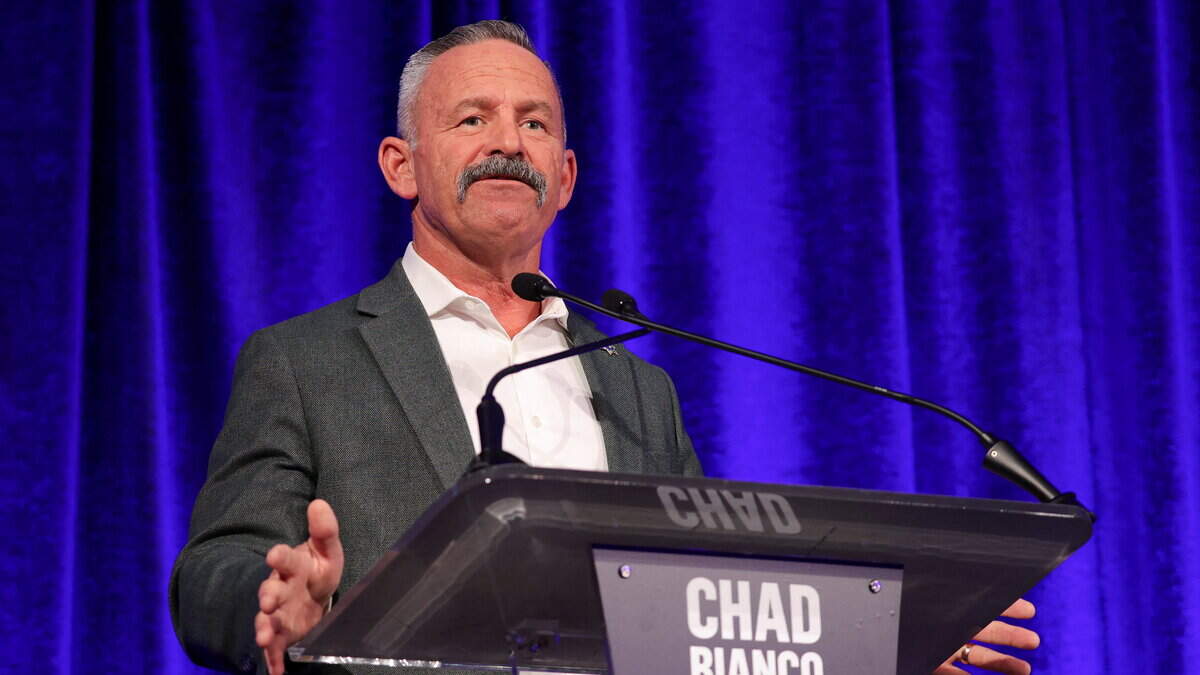
A Riverside County sheriff who seized 650,000 ballots cast in last year’s state redistricting election was within his rights to do so, his lawyer argued on Monday, telling clearly skeptical members of the California Supreme Court that election law banning the removal and handling of ballots from the control of elections officials should not apply.
Read more Democratic lawmakers to push Solano County shipyard in new California Forever bid
In oral arguments in two cases over Sheriff Chad Bianco’s decision to take the ballots over the objections of local officials and Attorney General Rob Bonta, lawyer Bradley W. Hertz also urged the judges to disregard language in the California Constitution that gives the state’s top law enforcement officer “direct supervision” over sheriffs and district attorneys.
Bianco, who at the time was running as a Republican for governor, took control of about 1,000 boxes of ballots from the Riverside County Registrar of Voters in March, after a citizens group claimed that the county had overcounted the number of votes cast by 46,000. Elections officials said the claim was inaccurate, but Bianco went to a judge who had been a political ally and persuaded him to issue sealed warrants authorizing the search and seizure of the ballots.
Two lawsuits swiftly followed: one by the UCLA Voting Rights Project on behalf of four Riverside County voters and another by Bonta, who contested Bianco’s decision to ignore his order to pause the investigation. Democrat Xavier Becerra, who along with Republican Steve Hilton, bested Bianco in California’s June primary, is listed as an attorney on the voting rights case.
The circumstances were extraordinary, California Solicitor General Samuel Harbourt, arguing on behalf of Bonta, told the seven justices. Bianco’s actions prompted the attorney general to invoke his power to oversee local sheriffs, only to have the Riverside County lawman ignore his wishes, he said.
“The attorney general learned that a sheriff was proceeding to seize ballots in contravention of the elections code, that he was filing an application for search warrants without furnishing probable cause of a crime, that he was making allegations about purported improprieties in an election that had already been publicly explained,” Harbourt said.
What is at stake?
The attorney general is asking the court to reaffirm his authority over elected sheriffs, Harbourt said. The UCLA Voting Rights Project petitioners want the justices to order Bianco to return the ballots and make clear that state law prevents local registrars of voters from handing them over even when presented with a warrant from a judge.
If ballots must be reviewed as part of a criminal case, access can only be granted by a grand jury or the local county board of supervisors, and then they can only be seen in strictly controlled circumstances, the group’s lawyers told the court.
Both lawsuits characterized Bianco’s seizure as a political stunt. The sheriff sat, wearing his uniform, in the San Francisco courtroom where the justices heard arguments, but did not participate.
Hertz said Bianco was legitimately trying to investigate whether the alleged overcount of votes was evidence of a crime, possibly meant to influence the election. Even though the state elections code bars the removal of ballots from the custody of elections officials, the penal code allows for the seizure of evidence he said.
The number of votes questioned by the citizens group was not large enough to affect the outcome of the election last November in Riverside County, where voters approved a plan to redraw the state’s congressional districts in a way likely to benefit Democrats in advance of the 2026 midterm elections. But Hertz said it was the perfect “test case” to search for possible wrongdoing to stop possible bad actors from influencing an election in the future.
Parsing the letter of the law
Neither the state law governing the handling of election ballots, nor the constitutional and statutory provisions regarding the attorney general’s powers over a local sheriff were meant to apply in Bianco’s situation, Hertz said.
Read more Sacramento top stories: Newsom’s $7.5M home, 49ers owner arrested and more
Election law, for example, spells out the circumstances under which ballots can be examined, even during a criminal prosecution.
It says, “in no event shall the package or its contents be taken from the custody of the elections official.”
But Hertz said that Bianco’s actions were part of an investigation, and had not yet led to a formal prosecution. Because the law uses the word “prosecution” and not “investigation,” the sheriff was not bound by it, he said.
It would be absurd, Hertz added under questioning from the justices, if the phrase “in no event” were interpreted to mean “never, ever.”
Hertz also argued that the California Constitution’s language giving the attorney general “direct supervision” over district attorneys and sheriffs did not apply to all aspects of the jobs they do.
Instead, he told the justices that the law only offers the attorney general an advisory role. If Bonta wanted to stop Bianco or another sheriff from contravening his wishes, he would have to go to court, Hertz said.
The judges react
His arguments prompted questions — and apparent skepticism — from several justices.
“Why would there be a statute that restricts the handling of ballots during a criminal prosecution, but not for purposes of a criminal investigation?” asked Justice Leondra Kruger. “Why would the legislature write a statute that works that way?”
Justice Kelli M. Evans pointed to what she said was clear language in the elections code about how ballots should be handled.
“I’m just not following your argument,” she said.
Asked by the justices to explain the apparent discrepancy in the number of ballots cast that prompted Bianco’s investigation in the first place, Art Tinoco, an attorney for Riverside County Registrar of Voters, said it came from an informal ballot count conducted as part of now-abandoned pilot program. The program, initiated at the request of local voters, involved hand-counting the number of ballots received in the mail. But over the two years that the county tried it, the results were inaccurate, he said.
The justices, who have already gathered numerous written briefs in the two cases, are expected to rule within the next 90 days.
Read more Monica Jimenez champions community, care for rare neurodevelopmental disorder