 By admin
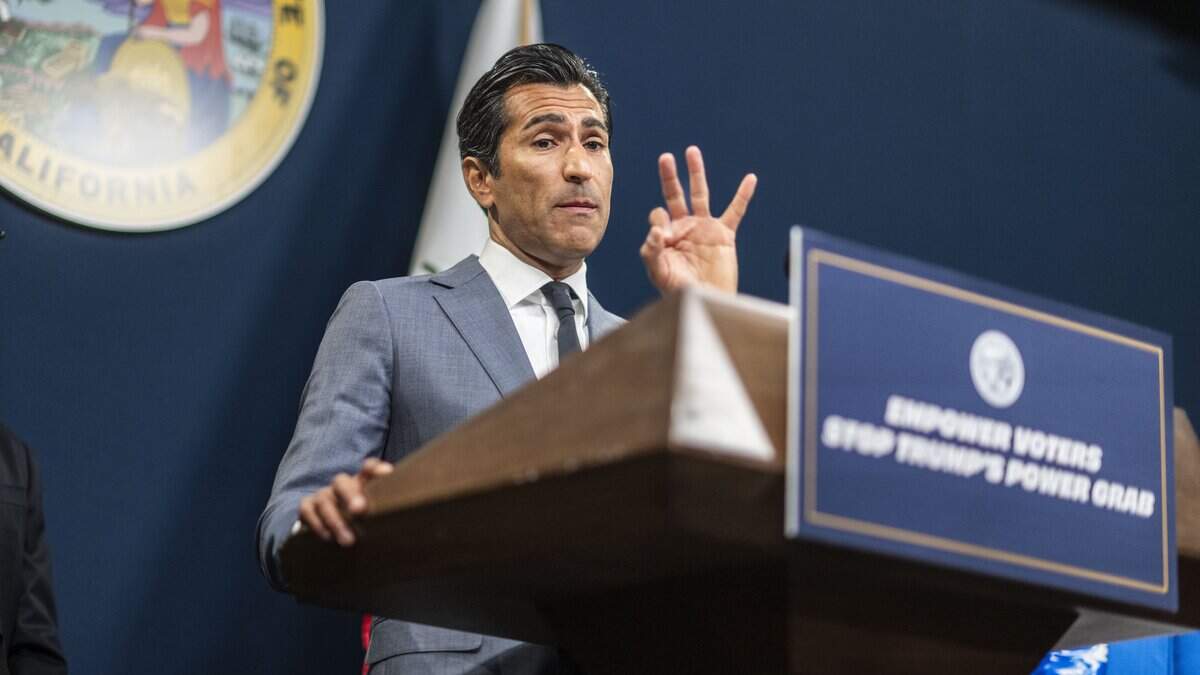
After the 2024 election, Democrats were on their backfoot after losing two Assembly seats to Republicans Josh Hoover, R-Folsom, and Leticia Castillo, R-Riverside; watching immigration agents storm Los Angeles; and seeing their support among Latinos and young men wane.
Read more Deputy wounded, suspect killed after gunfire erupts during sheriff’s call in Antelope
“Democrats were basically in a group therapy session, trying to make sense of what had happened in Trump’s return to office, and that showed in legislative districts as well,” said Steve O’Mara, chief of staff to Assembly Speaker Robert Rivas, D-Hollister. “The Assembly Republican caucus was selling a program around Sacramento, suggesting they were going to pick up five seats.”
Now, Rivas will return to the Assembly in January leading the party’s largest-ever supermajority margin at 68 seats, after investing more than $20 million to flip eight seats, including a surprise victory that unseated the Republican minority leader. It will also be the first time the chamber achieved gender parity.
Assembly Democrats began their effort to retake the two lost seats and expand their reach 18 months ago in a campaign known internally as “Route 66,” referring to the number of seats the caucus wanted to capture.
The first priority was to maintain incumbents’ seats, followed by exploring opportunities for other seats to flip, as voters soured on Republicans due to the rising cost of living and Iran war, according to strategists Julie Mahoney and Cristina Garcia, a former Assemblymember, who led the effort along with O’Mara and Rivas.
“Then it was, ‘We are going to make Republicans work and defend all over the state and we’re not going to hand them anything. We’re going to make them really have to work to hold their seats,’” Mahoney said.
The caucus also looked to recruit candidates who both “matched their district and matched the moment,” Rivas said, as polling showed voters wanted people who could speak to their concerns with authenticity and gravitas.
“We have candidates who were elected, but we also have candidates who were never elected, but have been community leaders in other ways, and have real life experience that we got to highlight that that voters could resonate with and relate with,” Garcia said.
She ticked off winners like Chris Kluwe, the former Minnesota Vikings punter who won retiring Republican Assemblymember Diane Dixon’s Newport Beach district, and Ida Obeso-Martinez, the Imperial Valley nurse who knocked off Assemblymember Jeff Gonzalez, R-Indio.
Read more New York firm seeks to build a 14-megawatt data center southeast of Sacramento
There were doubts as late as August, when internal polling showed they were on target to capture 66 seats, which O’Mara initially dismissed as “bulls—” because it was so high.
“Then the cycle started to move on, we started to see that Trump, his approval rating was just plummeting more and more and more,” Garcia said. “And then most of the Republican incumbents were under 50% or just underwater, and it really opened up some key opportunities for us to maximize.”
Since election night, state Republican Party chair Corrin Rankin said she would not run for reelection in February. Outgoing Republican Sen. Tony Strickland, who lost his Huntington Beach seat to Democratic challenger Chris Duncan, has launched a campaign for chair.
Rivas said his caucus would immediately tackle affordability when the Legislature returns to session in January, as voters made clear it was their top issue.
One Democratic consultant granted anonymity to talk openly said it was almost inevitable that Republicans would seek to claw back the seats they lost in ruby red districts like Dixon’s, which Republicans previously held for more than 30 years.
“Do you know how much money it’s going to cost to protect Chris Kluwe? Like, that is a seat that you could spend the entire caucus budget trying to defend in that seat,” the consultant said. “So there is going to be some retrenchment in some of these seats just because there won’t be enough money to protect all of the incumbents you have.”
Assemblymember Carl DeMaio, R-San Diego, said he would continue to hammer a narrative that both parties were corrupt via his Reform California organization, which he has pushed as a grassroots alternative to the state party apparatus.
“Nothing is going to change in terms of the overall approach that reform has, which is: We believe we have a corrupt political system,” he said. “But it is predicated on the notion that we stay the course in having better candidates who are principled fighters who are running aggressive campaigns. You have to have all those things and a good environment to be able to flip these seats.”
Read more California-only bagel chain opens new Sacramento-area shop, more planned