 By admin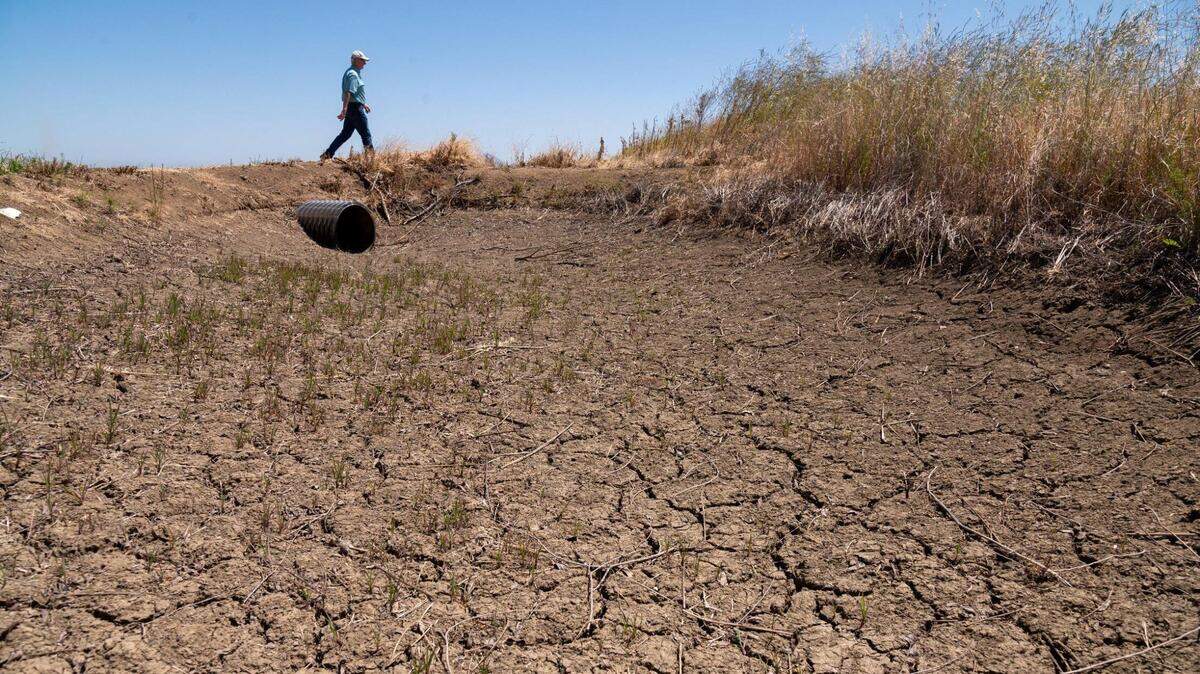
A new study shows heavy groundwater pumping during California’s 2020 to 2022 drought caused the ground in the Sacramento Valley to sink faster than expected, reducing the aquifer’s ability to hold water.
Read more What are the rules for driving with dogs in California? We asked the CHP
Published last week in the Proceedings of the National Academy of Sciences, the study found the damage to the aquifer is irreversible. One of the study’s authors, Kristel Chanard, estimated the lost groundwater storage capacity is roughly equivalent to San Francisco’s annual water consumption.
“There is still water, but it’s a big loss,” she said.
The resulting lost groundwater storage capacity is significant, Chanard said, because groundwater provides a buffer during dry periods. Groundwater provides nearly 30% of the region’s water supply, and more during dry years, according to the NCWA.
Land subsidence occurs when large amounts of groundwater are withdrawn from rocks, according to the U.S. Geological Survey. The rocks compact because the water is partly responsible for holding up the ground.
Chanard and her colleagues used high-resolution satellite measurements to track ground deformation and groundwater levels in the Sacramento Valley from 2016 to 2022. They found the land initially exhibited elastic deformation, allowing it to rebound. During the 2020 to 2022 drought, however, subsidence exceeded the normal rate by up to roughly one foot per year.
Chanard said the aquifer reached a tipping point in 2021, when the compaction abruptly transitioned to irreversible. She compared the aquifer to a sponge: squeeze out the water, and it compresses; soak it again, and it usually springs back. Once damage becomes irreversible, she explained, that flexibility is lost, and refilling the aquifer won’t restore its lost groundwater storage capacity.
The study’s author attributed this change to increased groundwater pumping during the drought, which the Northern California Water Association the worst in the region’s recorded history.
“By losing this aquifer storage capacity through compaction, we actually change how much water we can store underground, and so how much we can be resilient to future long drought episodes,” Chanard said.
NCWA President David Guy called the study a “warning sign” for water management officials in the region.
“We know that we have some work to do,” he said. “We want to make sure that we try to address the subsidence before it gets any worse.”
Read more Sacramento Valley land sank during drought pumping, study says. Why it matters
According to Guy, heavy groundwater pumping occurred during the 2020 to 2022 drought because the west side of the Sacramento Valley had little surface water. In 2022, he said, water suppliers on the Sacramento River received between 0 to 18% of their supplies, when their contract calls for 75% of supplies in critically dry years.
But Guy noted the study does not capture improvements in groundwater levels after 2023.
“Obviously this is very serious,” he said of the study, “but also that is … a really rough snapshot in time for the Sacramento Valley.”
Guy suggested the 2020 to 2022 drought was a “fluke,” and said he believes the likelihood of another one like it is “pretty remote.” But Chanard believes the event is part of a pattern. Climate forecasts, she explained, suggest California will experience increasingly severe and frequent droughts.
“We know … that this is going to continue, so making sure that we understand how this impacts our groundwater storage capacity and our aquifer resources is very important,” she said.
Chanard and Guy pointed to two main ways to prevent future damage to the aquifer: groundwater recharge, which means redirecting excess surface water to fill and replenish aquifers, and demand management, which means limiting groundwater pumping.
Jordon Navarrot, deputy manager at Reclamation District No. 108 in Yolo and Colusa counties, said that he and other water management officials are working with local residents to implement these types of solutions. The goal, he said, is to achieve a sustainable balance between groundwater extraction and replenishment.
According to Navarrot, the primary approach of his district is in-lieu groundwater recharge, a practice where excess surface water is supplied to users instead of pumping groundwater. He added that many growers have annexed their land to the district for surface water services in a move away from groundwater reliance.
“In all of the troubled areas in the Sacramento Valley, there’s real work being done to combat subsidence and adapt to sustainably balanced groundwater withdrawals with recharge,” he said. “I think we’re on the right track.”
Read more California Young Democrats, key party committee back billionaire wealth tax
This story was originally published August 2, 2026 at 7:00 AM.