 By admin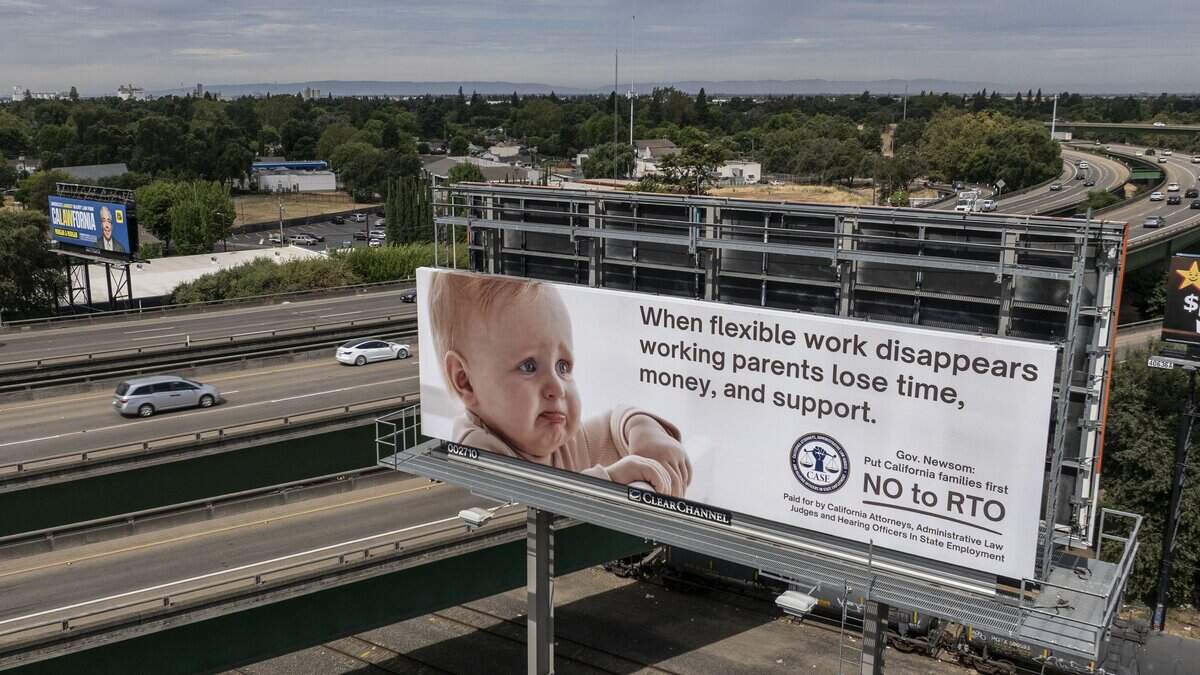
The California lawmaker who spearheaded the Legislature’s efforts to combat Gov. Gavin Newsom’s return-to-office mandate has vowed to “empower” state workers, bringing forth questions about possible avenues to reintegrate flexible telework policies after Newsom vetoed the bill last week.
Read more Jet lost off SLO County coast was once an airshow star known as Miss Demeanour
Newsom opposed Assembly Bill 1729, which would have encouraged state agencies to allow telework but not require it, because he wants in-person collaboration. He also said exemptions are considered for those who cannot work in person.
“While I fundamentally believe in-person collaboration is an essential part of a productive and effective workplace, the state’s existing telework policy includes a process for departments to consider exemptions on a case-by-case nature,” Newsom said in his veto message.
In an interview Wednesday with The Sacramento Bee, the bill’s author, Assemblymember Alex Lee, D-San Jose, said he was disappointed by the veto but wasn’t surprised. Newsom was the one who mandated state employees on July 1 to work in-person four days a week.
There are two potential avenues Lee might take to get AB 1729 into law — a veto override or reintroducing the bill next year. However, these hypothetical scenarios would only be pursued if unions don’t find a solution before then.
This veto override scenario would require a special session be called because the legislative session has ended, and the Legislature has 60 days from Newsom’s veto to override it.
However, special sessions are not a regular occurrence. Newsom called a special session in 2024 for state Department of Justice funding and 2022 to discuss the oil industry. Should a special session be called and a veto override is brought to the table, it’d require two-thirds approval in both legislative chambers. The bill passed that threshold when it was approved by the Assembly and state Senate last month.
Veto overrides are rarer than special sessions. The last veto override was in 1979, according to previous Sacramento Bee reporting, but history wouldn’t necessarily sway Lee from taking action if the opportunity were presented.
“When you start going into the realm of the extraordinary, there’s always extra interaction with people over that, so I think that’s part of the conversation too,” Lee said of the veto override scenario. “I do hope that one day we will see veto overrides again.”
The bill was considered a last-ditch effort to support state workers who want the option to work from home. Lee said the process should take place between the governor’s administration and labor unions, but there wasn’t a clear path toward a solution, ultimately prompting AB 1729.
Lee still maintains the bill is a last resort — putting unions in the spotlight for the time being.
Read more SUV crashes into Cameron Park hair salon. 1 evaluated for injuries, Cal Fire says
SEIU Local 1000, the state’s largest union with about 100,000 members, is currently in negotiations. Telework is among its top priorities as negotiators ask for an option to telework as desired. For those who cannot work from home, the union proposed various benefits including a $500 “high-crime worksite” and $25 daily commuting stipends.
Similarly, the union representing state-employed lawyers is asking for the California DOJ’s telework policy to be implemented unilaterally across state agencies for its members, putting it on managers to determine such policies.
Lee said he’s watching the SEIU Local 1000 negotiations because there’s a strike threat.
“A large amount of state workers are probably about to go on strike, so I’m hoping that the labor process itself will lend us the result we want,” Lee said.
» The State Worker newsletter: The news state workers need to know
SEIU Local 1000 members are in the process of voting on a strike authorization and the results won’t be released until early October. Authorizing a strike doesn’t necessarily mean one will happen.
Should unions struggle to obtain their desired telework policies in the short-term, Lee said conversations could change with a new governor. Newsom is leaving office, opening the door for a new approach to negotiations.
“I’m hopeful that the next governor, whoever it is, is much more amenable to treating our civil servants like they are the backbone of the entire state government,” he said.
Neither gubernatorial candidate has committed to supporting a telework policy. Democrat Xavier Becerra previously said remote work is an important factor for the 21st century workplace but didn’t advocate for a specific rule. Republican Steve Hilton said he’d need to hear more about the issue before making a decision.
The upcoming election is a primary strategy for some unions, including the Professional Engineers in California Government, which is also eyeing legislation similar to AB 1729.
“There are no guarantees, but the path forward is perhaps turning the page on this administration and move to the next administration,” said PECG Executive Director Ted Toppin.
Read more Rep. Kiley demands Sacramento TV station stop airing ‘Duck’ ad tying him to Trump
This story was originally published September 23, 2026 at 5:00 PM.