 By admin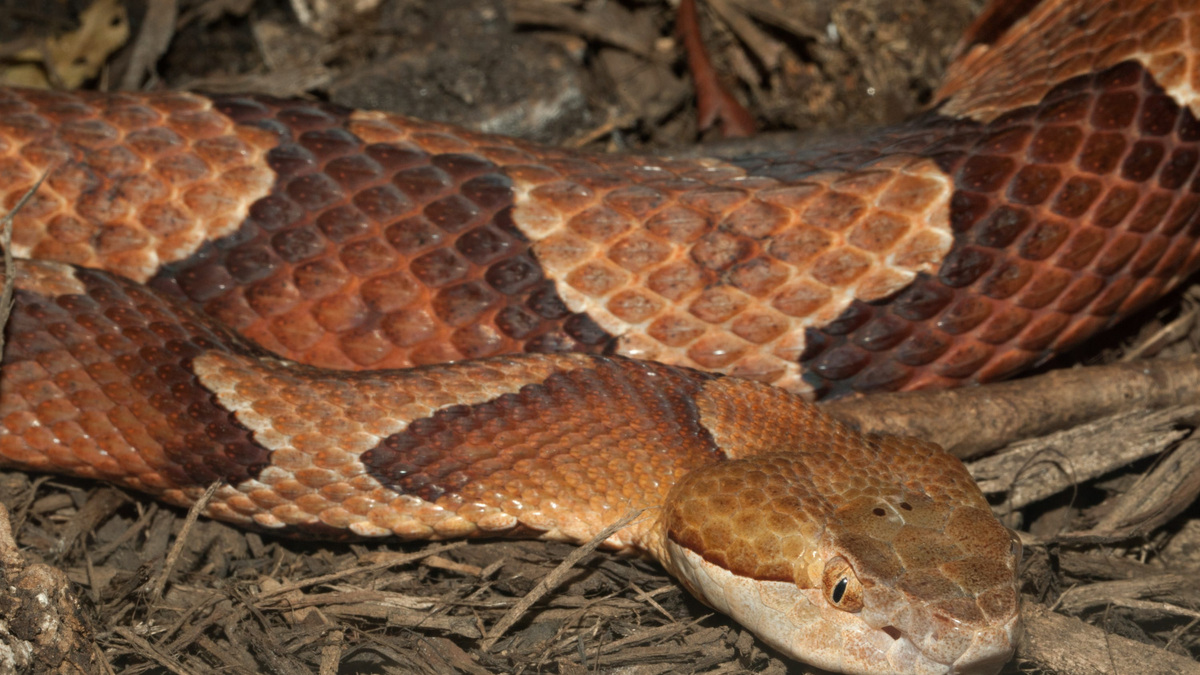
Texas has a diverse animal and insect population throughout, and it is home to more than 100 species of snake – some venomous, but many are not.
Read more Prosecutors present case against man accused of killing Charlie Kirk
This means that people are far more likely to encounter a non-venomous snake, but it’s not impossible; the Texas Parks and Wildlife Department reported one to three deaths from snake bites each year from 1991 to 2000.
In North America, there are four groups of venomous snakes, with Texas being home to all four: rattlesnakes, copperheads and cottonmouths – also called pit vipers – and coral snakes.
Whether you are walking your dog, hiking through a state park or just enjoying the great outdoors, here is a look at which snakes are poisonous in Texas, where they are located and how to identify them.
What is a pit viper?
Copperheads, cottonmouths and rattlesnakes are also referred to as pit vipers.
According to Texas Parks and Wildlife, pit vipers are venomous snakes with an opening on each side of the head, between the eye and the nostril.
Texas copperheads locations, identifiers
Locations:
- Eastern one-third of the state – southern copperhead (about 20-30 inches long).
- Central and western Texas – broadbanded copperhead (about two feet long).
- Southern Trans-Pecos – Trans-Pecos copperhead (about 20-30 inches long).
Identifiers: Copperheads have chestnut or reddish-brown crossbands on a lighter-colored body.
Texas cottonmouth locations, identifiers
Nickname: water snakes or water moccasins
Locations: Found over the eastern half of the state in swamps and sluggish waterways, coastal marshes, rivers, ponds and streams.
Identifiers: Cottonmouths can be dark brown, olive-brown, olive-green or almost solid black and have wide, dark bands that are more distinct in some individuals than in others. Juvenile snakes are more brilliantly marked.
Texas rattlesnakes locations, identifiers
There are 10 species of rattlesnake in Texas. Here’s a breakdown of them.
Western massasauga: It is light gray with brown oval blotches along the middle of the back and smaller blotches along each side. It is two feet in length and found throughout the middle of the state in grasslands, marshy and swampy areas.
Desert massasauga: It is lighter in color than the western massasauga, smaller and more slender. Found in the Trans-Pecos, western Panhandle and the lower Rio Grande Valley.
Western pygmy rattlesnake: It has a gray or light brown body color with dark blotches down the back, often with a light orange stripe. Found throughout the Pineywoods, with scattered populations in the Post Oak Savannah and Cross Timbers.
Western diamondback: It has brown, diamond-shaped markings along the middle of the back and alternating black and white rings on the tail. Averages around four feet in length but can reach seven feet. This is the most widespread venomous snake in Texas, found in all but the easternmost part of the state.
Read more Wildfire in southern France forces 10,000 people from their homes
Timber rattlesnake (Canebreak rattlesnake): A large, heavy-bodied snake averaging 4.5 feet. Brown or tan with wide, dark crossbands and a black tail. Found in the eastern third of the state in wooded areas in wet bottomlands.
Mottled rock rattlesnake: Has a light cream or pink background with widely spaced dark crossbands and mottled areas between them. Small and slender, with an average length of about two feet, it is found in the mountainous areas of West Texas.
Banded rock rattlesnake: Similar to the mottled rock rattlesnake, but darker greenish-gray in color. Found only in the extreme western tip of Texas.
Blacktail rattlesnake: It is gray to olive-green in color with dark blotches along the back and a black tail. Averaging 3.5 feet in length, it is found from Central Texas throughout most of West Texas, in bushes and on rocky ledges.
Mojave rattlesnake: Similar to the western diamondback in markings, but smaller and more slender and found only in West Texas.
Prairie rattlesnake: It is a slender rattler, greenish or grayish, with rounded blotches down the middle of its back. The average length is about three feet, and it is found in the grassy plains of the western third of the state.
Texas coral snake locations, identifiers
About: Inspired the popular identification rhyme – “Red on black, a friend of Jack; red on yellow, kill a fellow.”
Locations: Found in the southeastern half of Texas in woodlands, canyons and coastal plains.
Identifiers: Its distinctive pattern is a broad black ring, a narrow yellow ring and a broad red ring, with the red rings always bordered by the yellow rings.
Mateo Rosiles is the Texas Connect reporter for USA TODAY and its regional papers in Texas. Got a news tip for him? Email him at [email protected].
This article originally appeared on USA TODAY: Which snakes in Texas are venomous? What to know outdoors
Read more Congress comes back to Philly for special session at Independence Hall
Reporting by Mateo Rosiles, USA TODAY NETWORK / USA TODAY
USA TODAY Network via Reuters Connect
Copyright Reuters or USA Today Network via Reuters Connect
This story was originally published July 6, 2026 at 8:40 AM.