 By admin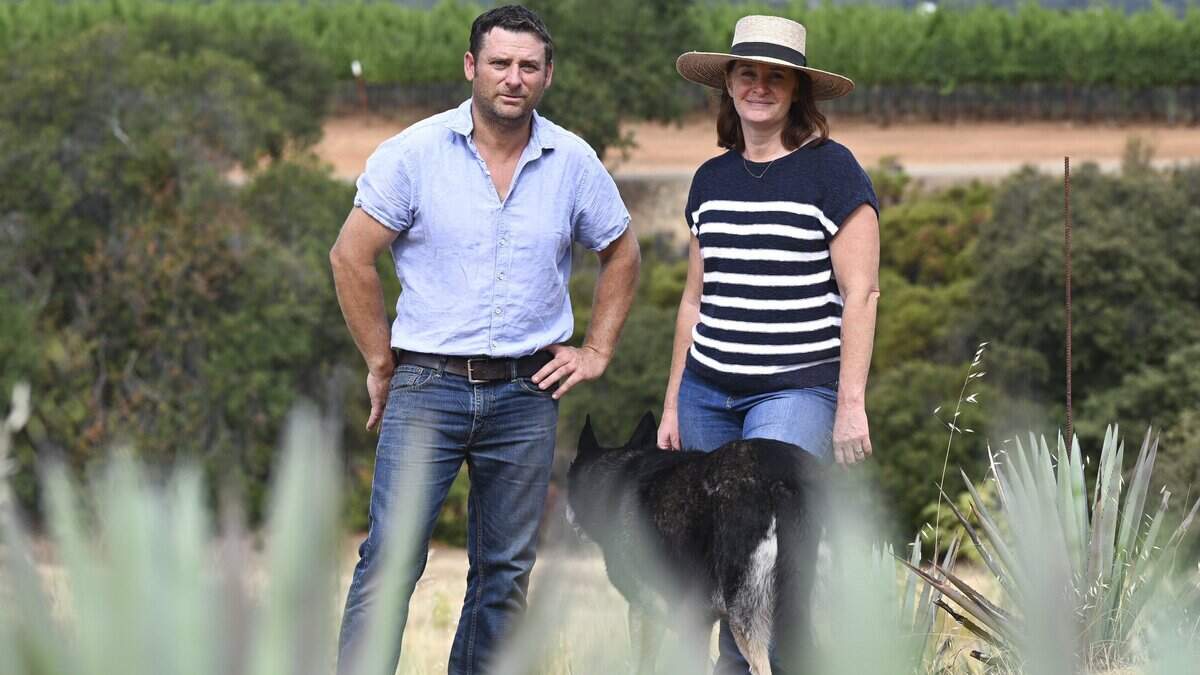
It was a Tuesday morning on Clear Lake. People congregated outside as the temperature remained mild. There were muffins and danishes, coffee and water.
Read more In California, fair election rules are losing to partisan schemes | Opinion
There were also alcoholic spirits for anyone who wanted an alternative morning boost featuring California-grown agave.
Multigenerational farmers and Californians interested in pursuing the agriculture business gathered to learn about growing agave from the University of California Cooperative Extension and its partners.
The Lake County event was billed as an agave and grape field day, with many wine grape growers in attendance.
As the California wine industry faces an oversaturated market due to a steep dropoff in consumer demand, some wine grape farmers are considering growing agave to produce what is known in the United States as “agave spirits.” The climate-resilient plant is celebrated for its minimal water usage, lower labor costs compared to other commodities and its role in Mexico’s production of tequila and mezcal, labels reserved for particular regions within the country.
Joy Merrilees began experimenting with her Lake County wine grape business a few years ago, when the grape market hit its downturn. She and her husband started a grape-based gin label.
After launching the gin product, Merrilees said they had the opportunity to expand further. She wanted something that could grow in her farm’s volcanic soil and would need less water than grapes — thus agave came into the picture.
Now she has a half acre of agave, with a few rows that are three to four years old and the rest planted this past June. In two to three years, she will have a new product: High Chaparral Agave Spirit.
While her grapes are still contracted with California winemakers — unlike many other grape growers — she and her husband are looking for the next crop to sustain them, she said.
“I think being creative and getting innovative is really important for farmers to, kind of, stay in the black,” said Merrilees, who runs Castilleja Farms in Kelseyville with her husband, which includes a 35-acre vineyard and a couple other commodities.
Merrilees is one of about 100 agave growers in California, according to the UC Davis 2025 Agave Survey. Agave is planted in 38 out of 58 counties in the state, with about 1,000 total acreage. Fresno County, the highest agricultural producing county in the state and nation, saw significant increases in agave production last year, The Fresno Bee reported.
There are at least seven agave spirit producers in the state, according to the California Agave Council, the group helping steer the expanding agricultural community.
Other wine grape growers haven’t made the jump into planting agave yet, but they have acreage in mind for it.
Ken Richter, vineyard manager for Brutocao Family Vineyards in Mendocino County’s Hopland, is honest about his interest in agave.
Read more Pedestrian, 67, identified by coroner in fatal south Sacramento hit-and-run
“I’ve been trying to keep my job — been there for 30 years — and things aren’t looking really good,” Richter said. “That’s why I’m like ‘What can we grow?’ …There’s a little bit of buzz going around agave.”
All sides of Brutocao’s business — grape growing, bulk winemaking, bottling — have seen sales dramatically decline, Richter said, leading the company to primarily focus on its own estate wine production and lay off the majority of its vineyard staff.
The company currently mothballs vines — an industry phrase for when growers reduce the labor involved in grape farming and do not pick the fruit — and has pulled out vines over the past 10 years. Richter farms around 100 acres of wine grapes and has approximately 150 acres of fallowed and mothballed land.
Richter said he grew some hay but didn’t find it suitable for the climate at the vineyard. He thinks there are about 15 acres on the property that are right for agave based on what he learned at the field day. He likes that agave doesn’t require as much labor and water as other crops.
Planting and managing wine grapes per acre can cost tens of thousands of dollars more in the first three years of the crop compared to agave over the same time period, according to research from UC Davis and University of California Agriculture and Natural Resources.
Richter plans to do more research before he presents the option to his bosses. Even if his bosses aren’t interested, he owns a small ranch that borders his company’s vineyard where he envisions planting agave.
But he worries the market will follow in the wine grape industry’s footsteps and become overproduced.
“That is going to be everybody’s fear,” Richter said. “It is an unsure market, that’s for sure.”
Michael Fowler shares Richter’s interests in and concerns about agave.
The owner of Top of Konocti in Kelseyville, Fowler has around 160 acres of farmland, most of it fallow. He still grows 30 acres of walnuts and five acres of wine grapes, both of which have seen prices fall in recent years.
It’s his third year without a grape buyer, and his budget is tighter, he said. He’s doing the bare minimum for farming on the vineyard, which was planted in 2000. He’s leaving the grapes to the birds and the bears.
Fowler said he has around 10 acres that could be used for agave. He’d plant it in increments, waiting for the agave to mature and then use its pups (sprouts at the agave’s base) to plant more. He likes that agave is drought-tolerant and wants to keep his farm diversified.
His next step is to check with nurseries to see which agave varieties are available and to weigh the risks of trying something new.
“I’m afraid that we could see the same thing happen of overplanting and overproduction and overhype and a crash,” Fowler said, referencing what happened in the wine grape industry. “But that’s not an unusual cycle. But it is pretty hard on the little guy.”
Read more Elk Grove taco bar opens delivery-only location in Newton Booth