 By admin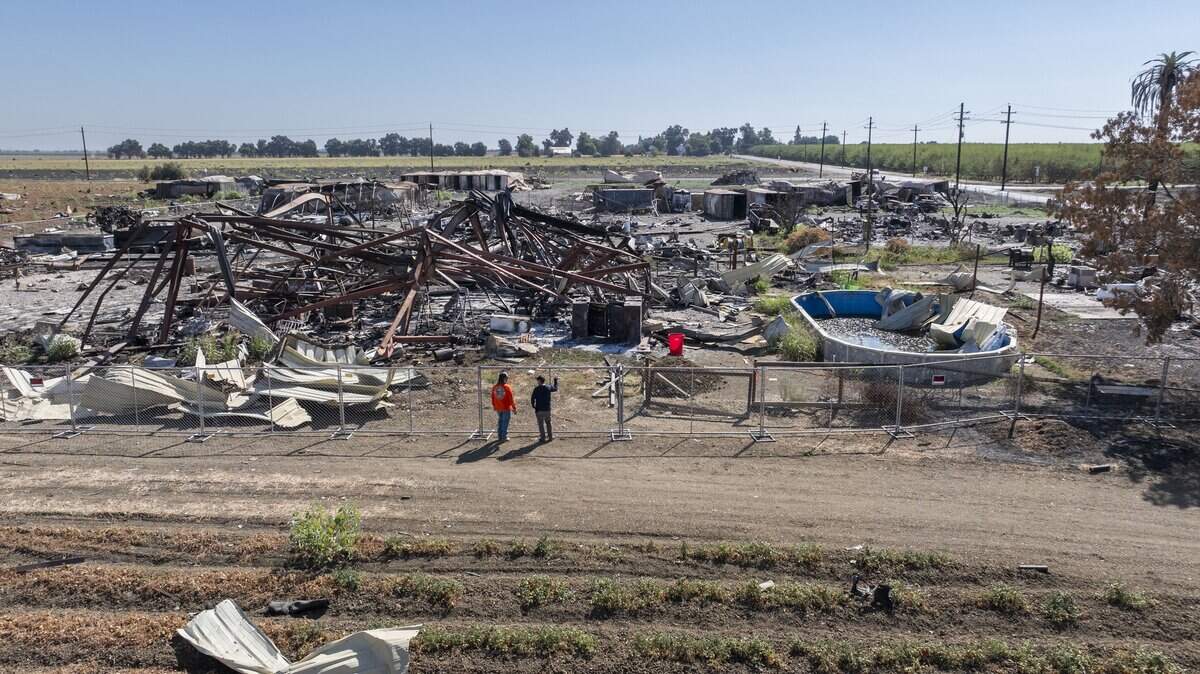
Yolo County fire chiefs say the deadly Esparto fireworks explosion last year exposed a safety risk hiding in plain sight across the county: Hundreds of agricultural buildings have been allowed to bypass many standard safety requirements and inspections, leaving firefighters with little information about what they could encounter inside.
Read more Father-son duo accused of kidnapping federal biologists in CA to face new charges
The July 1, 2025, explosion, which killed seven people and ignited the 78-acre Oakdale Fire, began in a warehouse initially permitted as “ag exempt.”
At a meeting of the Yolo County Fire District’s Sustainability Ad Hoc Committee in January, the county’s fire chiefs raised a question that had troubled them for months: Could the next accident like the Esparto explosion happen in one of their jurisdictions?
Their concerns centered on Yolo County’s agricultural-exemption permitting, which streamlines construction of buildings used for agriculture by exempting them from most safety standards and inspections.
“If you wanted to build an ag-exempt structure, you go to the county, you provide some basic schematics,” said Yolo County Fire Chiefs Association President Eric Zane. “They would say, ‘yes, we’re approving you for this ag-exempt building, and that’s the last that it’s ever discussed.”
Ag-exempt buildings pose additional risks to firefighters because officials know little about the structures or how they are used, Zane said.
“Every fire we’re doing this kind of analysis of what are we sending our firefighters into,” he said. “It just becomes a little more problematic when it’s never been inspected … it just adds another layer of hazard and danger to the firefighters that are entering these structures.”
What are ag-exempt buildings?
The explosion in Esparto last year began in a warehouse initially permitted as “ag exempt,” a designation that has existed in Yolo County for almost 60 years and is common to several other Central Valley counties.
Ag-exempt buildings are intended to store hay, grain and farm equipment but are not meant to be used for processing, packaging or other work because they don’t meet the safety standards required of homes or workplaces. The exemptions make ag-exempt buildings cheaper and easier to build. An ag-exempt building permit costs $1,500 to $2,000, while a standard permit can cost more than $8,000.
Ag-exempt applications are reviewed by county building officials and local fire districts before permits are issued, but the structures are not inspected, leaving county officials with little insight into the structures beyond building plans and a written application.
“The building division can’t check building actual size and fire separation requirements, emergency exits, structural integrity, so on and so forth,” Adam Fieseler, director of the Yolo County Community Services Department, told the board in a July 21 meeting. “And without that, it can produce some issues.”
Bad actors, big problems
If the owner of an ag-exempt structure wanted to use it for something other than its intended purpose, the county might never know — a risk the Esparto explosion made clear.
Sam and Tammy Machado, former Yolo County Sheriff’s Office employees who own the Esparto property, applied for permission to build a 4,500-square-foot ag-exempt warehouse on the property. They told county officials the warehouse would be used to store almonds, but the building was instead used to store and process fireworks, prosecutors allege.
County records show that Chief Building Official Scott Doolittle knew the property was used to store fireworks. Machado was required to obtain a building permit for the structure after a 2022 site visit by Doolittle, prompted by efforts to install more electrical capacity than an ag-exempt structure is allowed. The facility would not have been visited if not for the electrical permit application. The deadly July 1, 2025, explosion and fire started in the warehouse, a Cal-OSHA investigation determined in December.
“Some of the fears are that there may be bad players out there that understand that this is considered an ag-exempt permit, and nobody’s going to come check on them,” Zane said. “So they could potentially cut corners, or unknowingly aren’t building it to the building code because it’s on a ranch.”
But bad actors are not the only risk, Zane said. Property owners also may not understand the limitations on how ag-exempt buildings can be used.
“Maybe properties changed hands and folks don’t realize that these are only meant for ag-exempt, and now they’re being used for a different reason,” Zane said. “That’s also problematic.”
Yolo County’s 11-page ag-exempt permit application asks for owner and builder information, site plans and “an agreement to limit use to ag operations,” according to a staff presentation.
Yolo County has approved about 750 ag-exempt structures since 1980. The county has approved about 15 new ag-exempt permits annually, Fieseler said. But the county has no way of knowing how many approved structures were actually built.
At least 10 other California counties have some form of ag-exempt permitting. Other counties have procedures for permitting structures that don’t fall neatly into building code categories.
Read more Publix recalls even more fruit linked to sicknesses in an E. coli outbreak
Yuba County does not have ag-exempt permitting for buildings. The county has a narrow ag-exempt process for unusual situations, such as a request to build a barn on property without a primary building or to extend electrical service to a water well for crops or animals. Requiring a building permit for agricultural buildings means the structures are inspected annually by one of Yuba County’s nine independent fire districts and that their hazardous materials mitigation plans meet requirements.
“There are no “ag exemptions” per se, but the rules are definitely more flexible because of the intensity of use,” Jeremy Strang, deputy director of community development for Yuba County, said in an email. “Storing hay or a tractor in a building with limited human occupancy is way different than having large quantities of explosives and people working inside the building,” he said.
Dangerous uncertainty
The county has been in talks with local fire districts and the Yolo County Fire Chiefs Association about ag-exempt permitting since February. The fire chiefs suggested limiting the size of ag-exempt buildings, conducting inspections of new and existing buildings and requiring fire prevention infrastructure. They also suggested requiring property owners to submit annual paperwork affirming that the structure is still used for ag-exempt purposes.
“We definitely do have some concerns over ag-exemptions,” Zane, who serves as Woodland fire chief as well as president of the Yolo County Fire Chiefs Association, told the board.
The Fire Chiefs Association does not oppose ag-exempt permitting, Zane said. Its concerns center on the lack of inspections, which can put firefighters in unsafe situations.
“They’re the ones making split-second decisions inside buildings whose construction was never independently verified,” Zane said of district firefighters.
“Without these inspections, there’s no assurance that structural components, electrical systems or other life safety features were built as intended,” he said. “This creates uncertainty that can impact firefighter safety.”
Any costs incurred by these changes could be covered by $350,000 the county recently set aside for the Oakdale Fire response. The county will need at least six months to continue research and consult with stakeholders, including the fire chiefs and the Yolo County Farm Bureau, before making any changes, Fieseler said.
Zane agreed. “This isn’t going to be a fast process,” he said. “This is going to take some time, and I think that there’s a real interest in ensuring that there’s voluntary compliance … there will be an ordinance change. We don’t exactly know what it’s going to entail, but it should be updated to meet today’s standards and needs.”
Resurfaced recommendations
When a Yolo County civil grand jury released a critical report on the county’s oversight of the Esparto fireworks facility, it included two recommendations that would significantly change how fires are fought in Yolo County.
The grand jury found that fire districts in Yolo County “lack the ability to coordinate with other county, state and federal agencies.” It also found that before and after the explosion, the county’s separate fire districts did not adequately coordinate and cooperate, allowing problems to fall through the cracks.
To address the oversight gaps exposed by the explosion, the grand jury recommended that Yolo County create a fire warden position to run a fire prevention and inspection program in unincorporated areas of the county, ensure cooperation and communication among fire districts and act as a liaison with state and federal agencies when necessary.
The county is weighing the suggestion, but “county staff do not believe that hiring a dedicated ‘Fire Warden’ or similar position is necessary,” the county reported in its June 23 response to the grand jury. Instead, the county is considering incorporating some of these responsibilities into the director of the Office of Emergency Services position. The county reported that it would make a decision by the end of September.
The $350,000 that the county recently set aside despite its structural budget deficit could be used to fund the new position, Supervisor Angel Barajas said during a June 9 budget hearing.
Rural fire districts struggling
The grand jury found that the county’s fire districts “do not have the resources to provide fire prevention programs to their communities.” The finding is not new — Yolo County agencies have for years grappled with how best to support their rural fire departments.
The grand jury recommended that Yolo County’s Local Agency Formation Commission consider consolidating the county’s 15 rural fire districts, many of which are struggling to maintain adequate staffing due to tight budgets. Yolo LAFCO told the grand jury that they will conduct a municipal services review of fire departments this fiscal year.
In its the commission recommended that the Capay Valley, Esparto and Madison Fire Protection Districts either develop a joint operating agreement or merge into one district to ensure quality service for residents. Esparto and the Capay Valley Fire Protection Districts developed a joint operating agreement in 2023 that allowed a firefighter to split time between the two districts.
The grand jury’s recommendation suggests that it believes collaborative efforts have not been enough and consolidation should be reconsidered. LAFCO oversaw the dissolution of the Elkhorn Fire Protection District last month, redirecting calls for service to the Woodland and West Sacramento fire departments.
PBS KVIE’s news outlet, Abridged, first reported on the district’s dissolution and the years of staffing and resource problems that preceded it. As a result, the district had become heavily reliant on neighboring fire departments — such as Woodland and West Sacramento — for emergency response.
Read more CSU names Sac State President Luke Wood as tribal relations advisor