 By admin
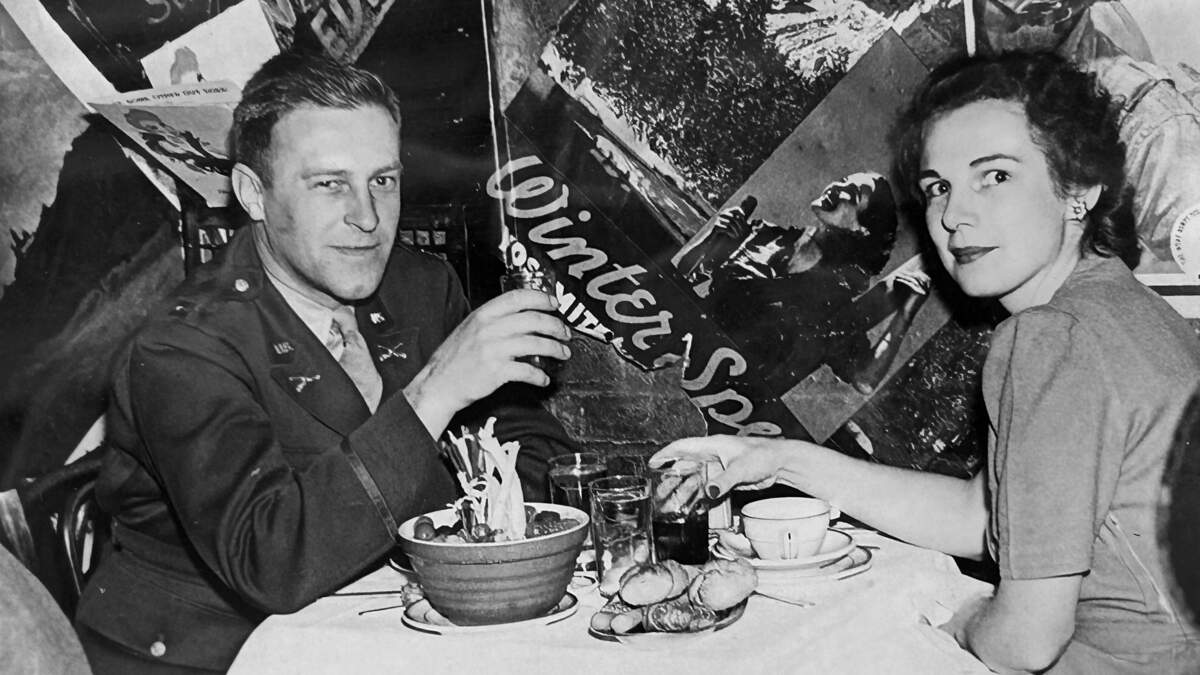
From the earliest days of their wartime romance, Dick Heidgerd Jr. penned love-struck letters to his sweetheart in Georgia, scratching out his affections on Army stationery.
Read more Plastic is falling with the snow in California. Where is it coming from?
“You have everything,” he wrote in 1942, “Beauty, vim, personality, sense and a thousand other things I could go on naming. And what a dancer!!”
The young soldier fell smitten by Margaret Ozburn after she endured all 17 innings of a baseball game on their first, blind date, and only months later they rushed to get married.
Then Heidgerd sent a telegram to his bride-to be days before their nuptials:
“Uncle Sam forcing us to cancel our plans.”
For the next three years, Heidgerd mailed romantic dispatches from the battlegrounds of World War II, postmarked from Morocco to the hedgerows of France. Margaret waited for him, teaching school, taking a government job, sending her own love notes to the front lines.
Their son Dick, a retired Raleigh attorney, never knew about this love affair by mail until four months ago, when he opened an old box and read through his mother’s collection for the first time, learning not only that his father fought at the Battle of the Bulge but that he possessed a charmer’s vocabulary.
“You silver-tongued devil,” he said. “My mother waited for him, didn’t she?”
‘A thrill to hear from you’
From Raleigh, Heidgerd described his father as a “quiet, unassuming guy with a Silver Star.”
He grew up in New York, played football and lacrosse in college until he ran out of money, then joined a cavalry division in the Army reserves one year before the war. So when he met Margaret, whom he sometimes called “Ozzie,” he was already in the Army.
Whisked off to Morocco just shy of their wedding day, he found himself whimsical at the war’s beginnings.
“Darling,” he wrote. “I think of you always. It is a thrill to hear from you so far away. … I am allowed to say I arrived safely but that is all.”
He moved through North Africa to Sicily as a captain with the Second Armored Division, directing artillery fire and air strikes from the front lines as the war and his yearning for home progressed. On marriage, he wrote Margaret, “I can kick myself in the pants for not making sure it’s done sooner.”
Read more They chose acres of quiet in Texas. Now a 199-home subdivision is going up next door
He arrived in Normandy on D-Day plus 3, fought across France and into Belgium, where he won both Bronze Star and Silver Star medals for courage under heavy fire, still managing to send Margaret a Christmas card.
“You’re in a freaking war zone,” his son said Monday. “People are dying around you, all over the place. … The love story is just incredible. I’m just really pissed off at my parents for not telling me about it.”
‘Couldn’t have been home a week’
The last letter Heidgerd sent came from Camp Lucky Strike, a sprawling tent city that popped up at the war’s end, full of soldiers and newly liberated POWs waiting to get shipped home.
The young captain told his future wife that he would make it any day, and in September 1945, he finally did.
Margaret Heidgerd had waited 34 months.
“She told me, ‘He was so good-looking in his uniform,’“ their son said. “He couldn’t have been home a week when they got married.”
The couple finally wed and stayed that way for 46 years. On their honeymoon to New York, they saw “Brigadoon” on Broadway. Then they made it to a World Series game in Detroit. Margaret saved the ticket stubs, along with everything else.
But the correspondence in her scrapbook ended with the war. They didn’t need to write anymore. They were right there.
This story was originally published November 14, 2026 at 7:54 AM with the headline “‘You silver-tongued devil’: Man reads WWII love letters his dad never told him about.”
Read more Sacramento is known as an asthma capital. What this means for peak infection season