 By admin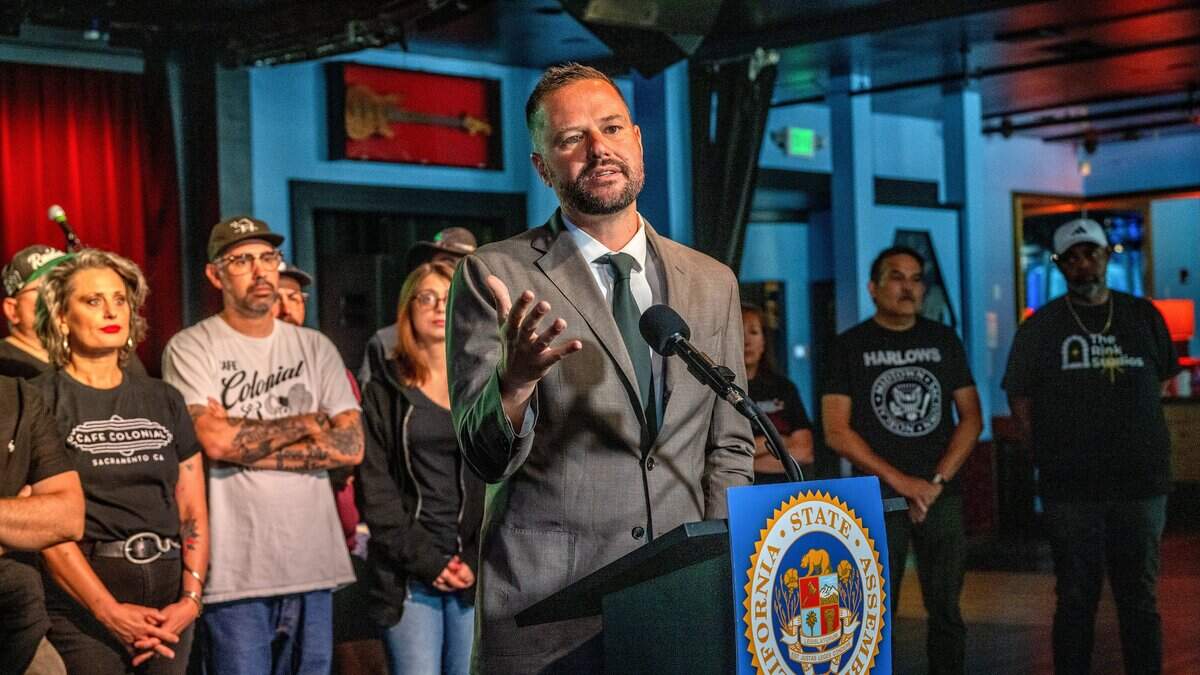
Standing under the stage lights during a Tuesday news conference at Harlow’s nightclub in Sacramento, Assemblymember Matt Haney made his pitch to curb ticket scalping.
Read more Grass Valley police halt use of Flock license plate cameras amid privacy concerns
The San Francisco Democrat and independent venue owners said ticket scalping — buying tickets for an event and reselling them at a higher price — hurts fans, artists, local economies and places like Harlow’s, a self-described “mainstay in Sacramento’s music community” that opened 40 years ago.
“If you’re a fan, you shouldn’t have to spend your rent money to go see your favorite artist,” Haney said.
The group called on legislators to “restore fairness and transparency” to the ticket marketplace by passing the California Fans First Act, or Assembly Bill 1720, which will be heard by the Senate Appropriations Committee on Thursday. Authored by Haney, the bill caps resale prices at no more than 10% above face value for live entertainment events at independently operated venues.
Haney said ticket scalping used to be “somebody standing outside and trying to make a couple extra bucks off an extra ticket,” but that is no longer the case; today, it is a “massive, multi-billion-dollar business” whose effects are felt up and down the state.
AB 1720, he said, will prevent rigged ticketing while preserving fans’ ability to resell tickets when their plans change.
“If you buy a ticket and can’t go, you could still sell it. You can get your money back,” he said. “What you can’t do is buy up hundreds of tickets just to turn around and gouge the people who actually want to go to the show.”
AB 1720 is backed by the ticket market’s dominant seller, Live Nation, which owns Ticketmaster and which a federal jury found in April illegally acted as a monopoly. Opponents claim the bill will help Live Nation stifle competitors in the resale market and raise prices, according to reporting by CalMatters.
Haney rejected these claims, saying amendments limit the bill to tickets for events at venues with capacities under 3,000. Live Nation shows are generally held at large arenas such as Golden 1 Center or Toyota Amphitheatre near Wheatland.
“I don’t know why (opponents) continue to want to talk about Live Nation when Live Nation-owned venues are not included in this bill at all,” he said. “The idea that this is somehow being done for a massive billion-dollar-plus out-of-state corporation … it’s ridiculous.”
Still, Geoff Vetter, a spokesperson for the Coalition for Ticket Fairness, wrote in a statement that efforts to restrict resale often backfire, pushing transactions into darker corners of the internet, making it harder for independent businesses to compete and leaving fans with fewer transparent options.
Read more Mother bear, 2 cubs spotted in Auburn amid other Placer County bear sightings
“AB 1720 would strengthen Ticketmaster’s monopoly and reduce consumer choice at a time when Americans along with Attorney General Bonta are calling for the opposite,” he wrote. “California lawmakers should focus on what’s driving high prices in the first place: a consolidated marketplace with too little competition and too little transparency.”
During the news conference, Haney noted that StubHub — a direct competitor of Ticketmaster within the secondary resale ticket market — spent nearly $2.6 million on lobbying from April 1 to June 30.
Harlow’s owner Jim Cornett and others described the impact of ticket scalping on their businesses.
Cornett said independent venue owners operate on narrow margins and cannot compete with huge corporations or professional ticket brokers.
“What we can do is continue giving emerging artists a stage, creating local jobs, strengthening communities and giving the audience throughout California a place to discover their next favorite performer — but only if the marketplace treats our fans fairly,” he said.
When tickets are resold at inflated prices, he said, none of the additional money supports the artist, venue, promoter or people working behind the scenes. Instead, it goes to professional scalpers who contribute nothing to the show, he said.
Chaez Boswell, owner of Sacramento creative event venue The Rink Studios, added that ticket scalping means customers spend less on food, drink and merchandise during the event.
Event attendees can be confused when buying tickets online, Boswell said, and end up spending $60 on a secondary sale ticket when the venue is still selling tickets for $30.
According to Daniel Romandia, talent buyer and marketing director at Harlow’s, the venue recently sold 200 tickets for a show within seconds, none of which were purchased by residents of Northern California. Now, he said, they are up for resale for several times their original price.
Haney said the California Fans First Act intends to address these harms: “The bill that we are fighting for, AB 1720, is for venues like Harlow’s, it’s for the artists who play here, and most importantly, it’s for the fans who keep places like this going.”
Read more Los Angeles Lakers sold to Bob Iger, Josh Kushner in $12.5 billion deal