 By admin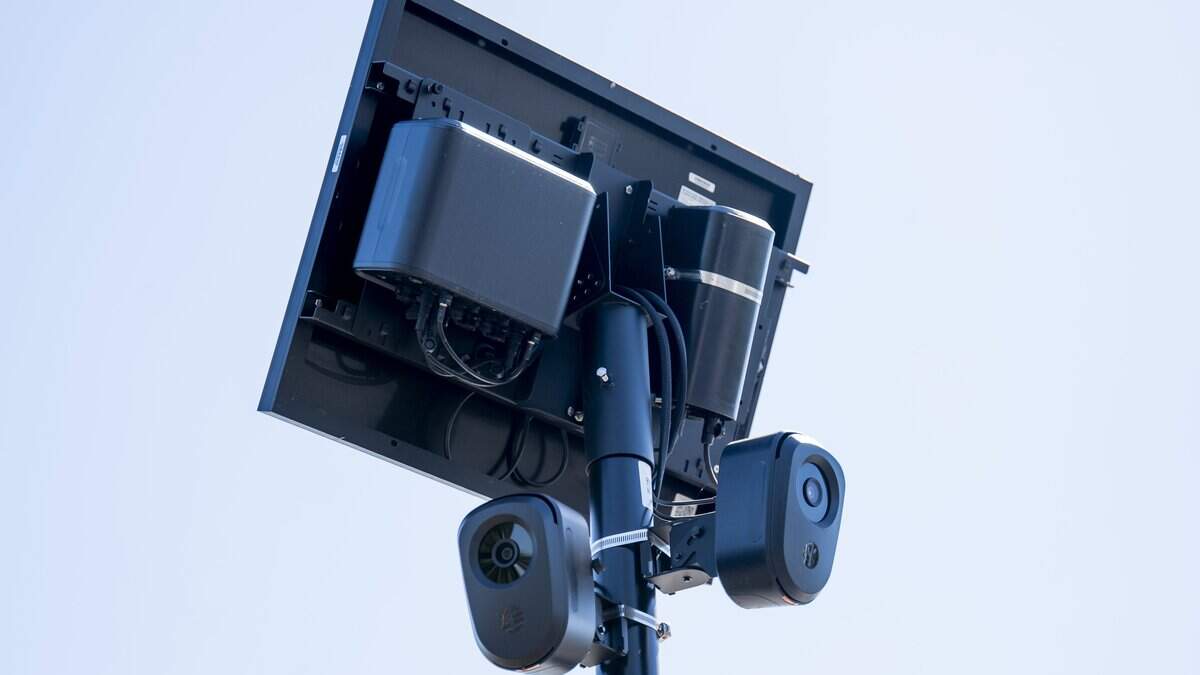
The Grass Valley Police Department indefinitely suspended its use of Flock Safety license plate cameras amid growing concerns about privacy and the rapid development of the technology.
Read more Mother bear, 2 cubs spotted in Auburn amid other Placer County bear sightings
Grass Valley Police Chief Alexander K. Gammelgard said the decision came after a 60-day review of the department’s automated license plate reader, or ALPR, program. Police also spoke with community members and examined how the technology had changed since the program began.
The department plans to remove the devices by the end of the week, according to Gammelgard.
The decision came as automated license plate readers had become a common law enforcement tool across the Sacramento region and elsewhere in Northern California, while cities, privacy advocates and state lawmakers increasingly raised questions about accuracy, data sharing and potential misuse.
Flock cameras photographed passing vehicles and used software to record information including license plate numbers, vehicle characteristics, dates, times and locations in searchable databases. Police could receive alerts when vehicles matched lists of stolen or wanted vehicles and search previously recorded images during investigations.
“The pace at which technology is advancing is outstripping many of our deeply rooted structures of governance,” Gammelgard said. He pointed to the rapid growth of artificial intelligence and machine learning as examples.
How Grass Valley used the cameras
The Grass Valley City Council unanimously approved the use of ALPR cameras in 2021. At the time, Gammelgard supported the program because he believed it could help police fight organized retail theft and solve violent crimes.
According to Gammelgard, the cameras helped police recover more than 100 stolen vehicles and make arrests. They also were used in hit-and-run and robbery investigations and to find missing or at-risk people.
Law enforcement agencies throughout the Sacramento region had similarly credited the cameras with helping investigators identify stolen vehicles, make arrests and investigate crimes. But the systems recorded vehicles regardless of whether their occupants were suspected of wrongdoing, fueling concerns about the amount of information collected and who could search it.
But the technology had changed significantly since Grass Valley adopted it.
“The system, originally only a license plate reading system, has evolved to include much more powerful computer-intelligence tools,” Gammelgard said.
The cameras also were connected to larger networks that allowed law enforcement agencies in different areas to share information, raising questions about how ALPR data was collected, stored, accessed and shared.
Those concerns had surfaced elsewhere in California. An audit by the advocacy group DeFlock Elk Grove found thousands of organizations searched Elk Grove license plate data more than 8.3 million times over five years, with most searches conducted by outside agencies. Elk Grove police said they were reviewing the audit and contended some of its conclusions lacked important context.
Accuracy also had come under scrutiny. Roseville police found that Flock misread license plates in 1,012 — or 71% — of 1,427 stolen-vehicle and felony alerts issued during 2023 and 2024, according to reporting by Business Insider.
Gammelgard said Grass Valley police were concerned about whether information could be collected or accessed without a warrant, how secure it was, how long it was retained, whether companies could use it to develop products and whether it could be shared with government agencies or private organizations.
Although the Grass Valley Police Department has policies covering many of those issues, Gammelgard said the department could not control how outside technology companies designed their systems or developed their products.
Who was searching Grass Valley’s data?
A recent police audit examining access to Grass Valley’s ALPR data found 160 searches by federal, tribal or out-of-state agencies.
Gammelgard said those searches represented a small part of the system’s overall activity.
Read more Los Angeles Lakers sold to Bob Iger, Josh Kushner in $12.5 billion deal
The audit found far more activity from California law enforcement agencies. Around March, California agencies were making hundreds of thousands of searches each month using Grass Valley’s data and other information available through the larger ALPR network.
By comparison, Grass Valley police made about 1,000 searches per month.
“One criminal investigation could account for dozens of searches as investigators hone their search,” Gammelgard said. “To the extent in-state sharing had any purpose other than SB54 compliant use, each California agency would be responsible for the data’s lawful use.”
The chief said each law enforcement agency was responsible for ensuring its use of shared data complied with state law.
Even after the review, Gammelgard said the department was left with “more questions than answers.”
Data sharing raises concerns
Grass Valley was not alone in reconsidering the technology. El Cerrito ended its Flock contract following public opposition, while California lawmakers were considering legislation that would restrict how long law enforcement agencies could retain license plate data and limit access to it.
Senate Bill 1013, introduced by Sen. Sabrina Cervantes, D-Riverside, would generally limit retention of license plate data to 30 days, with exceptions including active investigations and searches for missing people. The proposal also would restrict California agencies from contracting with companies that allow federal and out-of-state law enforcement agencies to search California license plate databases, according to CalMatters.
For Grass Valley, a major concern was that the technology was developing faster than the laws and court rulings governing its use. Lawmakers were still developing rules for emerging technology, while courts had not resolved all of the legal questions.
‘Time and information can change the calculus’
Gammelgard also raised questions about the Fourth Amendment, which protects people from unreasonable searches and seizures. As ALPR systems became more powerful, questions remained about what information could be collected, who could access it, how long it could be kept and whether it could later be used for a different purpose.
Gammelgard said suspending the program did not mean police believed they had made a mistake by starting it in 2021.
“More than one thing can be true at the same time, while time and information can change the calculus,” he said.
He said the original decision was reasonable based on the technology and information available at the time. Police also believed the cameras provided important benefits to the community.
“But things have changed since that time – rapidly,” he said.
The department said it viewed the decision as a reassessment of the technology rather than a complete rejection of it.
Police planned to continue monitoring developments involving ALPR cameras and other new law enforcement technologies. Gammelgard said police still wanted officers to have effective tools to prevent and solve crimes while ensuring the technology complied with evolving laws and privacy standards.
The suspension did not rule out a return of ALPR technology to Grass Valley under different laws, policies or vendors.
For now, however, police decided to stop using the Flock system as lawmakers, courts and law enforcement agencies continued debating the privacy and legal issues surrounding increasingly powerful surveillance and artificial intelligence technology.
Read more Mother bear, 2 cubs spotted in Auburn amid other Placer County bear sightings