 By admin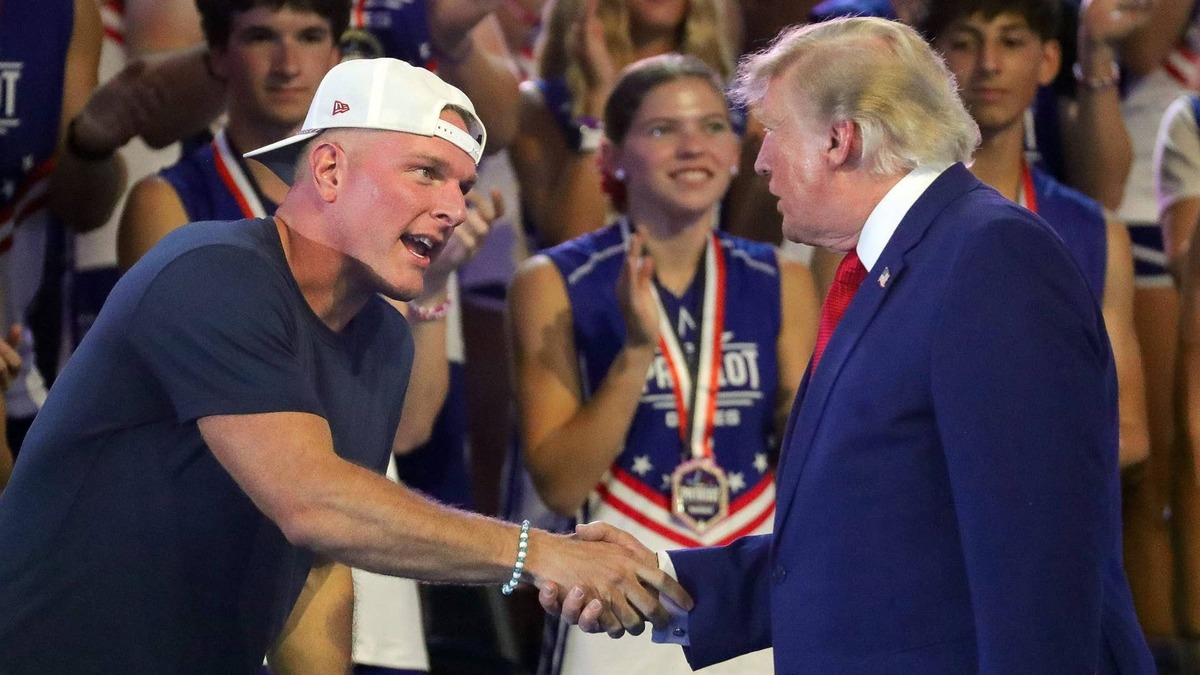
Patriotism is divisive in our divided country — it has become a cudgel and a wedge. President Donald Trump has called Supreme Court justices unpatriotic for blocking his tariff regime, and he calls members of Congress unpatriotic for voting against his legislative agenda.
Read more Ashby has a way to manage homelessness. Sacramento County lags behind | Opinion
On the flip side, Trump’s critics have called him unpatriotic because of his narcissism and corruption. Columnist Michael Tomasky recently said Trump is “a treacherous, know-nothing anti-patriot.” In February, after Trump suggested that Muslim lawmakers should be sent “back from where they came,” House Minority Leader Hakeem Jeffries said Trump was “disgraceful, unpresidential, unpatriotic and un-American.”
The term “patriot” has become tired and threadbare. That word is a banal brand name affixed to the New England football team. And at Trump’s “Patriot Games,” a high school sporting event to celebrate America’s 250th birthday, the word was woven into a logo that was more a corporate cliché than an emblem of national pride.
Patriotism has been criticized as “the last refuge of a scoundrel,” and as a façade concealing corruption. Mark Twain suggested that people adopt patriotism according to the changing whims of power.
“The resulting patriotism was a shop-worn product procured at second hand,”Twain concludes.
More importantly, in his Farewell Address, President George Washington warned against “the impostures of pretended patriotism.”
Patriotism has always been contentious. Socrates was killed for lacking proper patriotism; Brutus defended the assassination of Julius Caesar by declaring himself a Roman patriot; and the American Revolution and Civil War were conflicts about patriotism and the proper source of loyalty and allegiance.
The best form of patriotism admits its complexity. It is naïve to simply assert “my country, right or wrong.” As the writer G.K. Chesterton once opined, that is like saying “my mother, drunk or sober.” If you truly love your mother, you should help her sober up. And if your country is drunk, a true patriot would help the nation get back on the wagon.
Common decency requires that you criticize your country when it loses its way. This was what Martin Luther King Jr. suggested in explaining why he opposed the Vietnam War: “I oppose the war in Vietnam because I love America,” and “I speak out against it … with a passionate desire to see our beloved country stand as the moral example of the world.”
Read more As a Sacramento teen, Xavier Becerra had drive, smarts and a steely poker face
You should want the things you love to thrive. But what is national thriving? An inquiry into patriotic love requires a deep dive into ethics, history and critical thinking. To be properly patriotic, we must understand the difference between right and wrong, as well as the nature of loyalty and love. True love does not blindly deny the obvious. Virtuous loyalty ought to embrace justice and the truth.
Enlightened patriotism requires critical reflection on history and the issues of the day. Any honest and reasonable effort at this kind of education will admit the complexities of the past as well as the discord of the present. No country is perfect or beyond reproach. History involves both triumph and shame. And the pressing issues of the moment — immigration, economic policy, war, sex and gender — resist oversimplification.
Enlightened patriotism requires humility and hope. Wise patriotism is moderate and self-critical. It avoids bravado and braggadocio, and it looks beyond the bombast of the moment toward deep and steady truths, with an eye toward a better future.
Patriotism is useful when it helps foster communal identity and the joy of belonging. Human beings are social animals. We thrive when we belong to good political communities, and when our community is truthful and just, we live better lives.
But patriotism can become extreme and unenlightened. Partisan zealotry that is indifferent to justice is dangerous. Patriotism is debased when it is corrupted by partisans and con men who abuse it to sell their products while warping the truth and ignoring the common good.
True patriotism is not a brand, game, wedge or cudgel. Rather, it is an invitation to think about who we are, what we value and what we want to become.
Andrew Fiala is a professor of philosophy and director of The Ethics Center at Fresno State.
This story was originally published August 17, 2026 at 5:00 AM with the headline “Critical reflections on patriotism under the Trump administration | Opinion.”
Read more As a Sacramento teen, Xavier Becerra had drive, smarts and a steely poker face