 By admin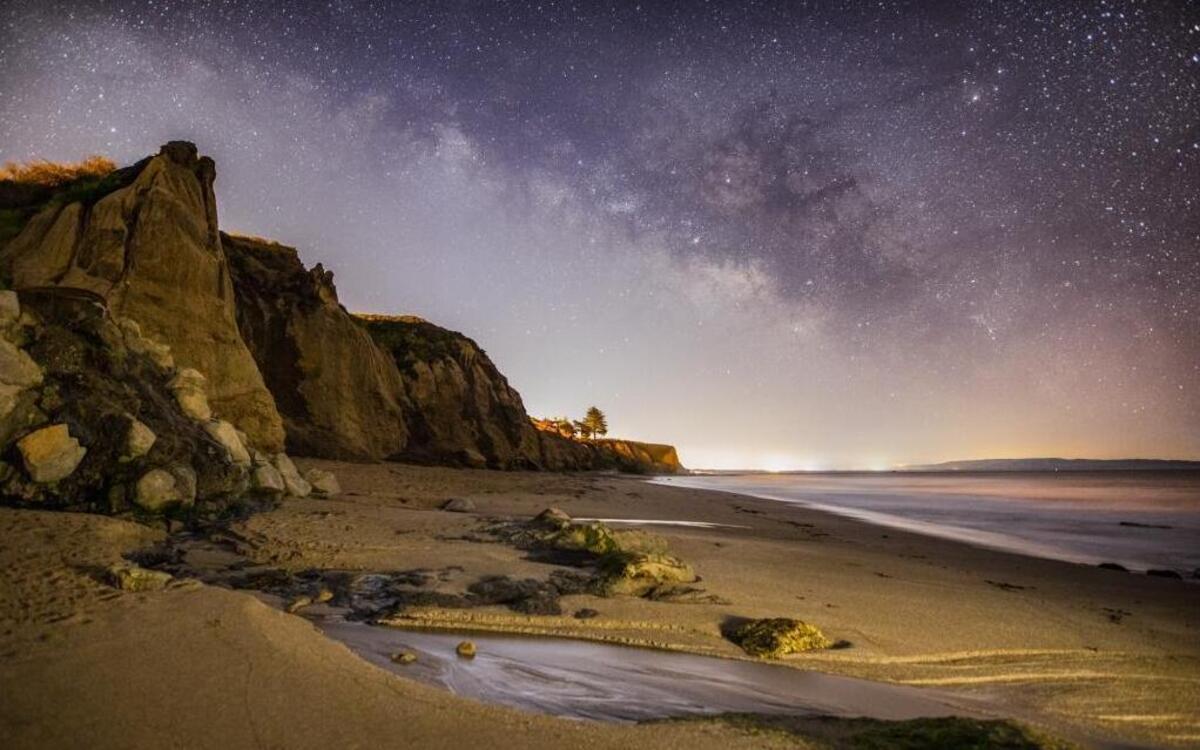
After a partial lunar eclipse and the “best meteor shower” of 2026, California sky watchers are gearing up for a change.
Read more A six-block smorgasboard. Sacramento’s Our Street Night Market returns to downtown
September brings the autumnal equinox, signaling the official start of fall in the Northern Hemisphere.
The harvest moon and planets will appear in California’s night sky during the month, along with the Milky Way galaxy.
Here’s when to watch
When is the first day of fall in 2026?
In the Northern Hemisphere, the fall equinox signals the start of a new season.
“During an equinox, the sun crosses what we call the ‘celestial equator’ — an imaginary extension of Earth’s equator line into space,” The Old Farmer’s Almanac said.
The equinox occurs when the sun’s center passes through the imaginary line from the north to the south.
Day and night are about equal in duration, the almanac said., inspiring the name “equinox” — meaning “equal night” in Latin.
In 2026, the official start of fall will be on Tuesday, Sept. 22, at 5:05 p.m., according to online clock Time and Date.
After the September equinox, days become shorter and the sun rises later and sets earlier.
Days become longer again after the winter solstice in December.
When is the full moon in September?
September’s full moon will reach peak illumination at 9:49 a.m. on Saturday, Sept. 26, according to Time and Date.
Why is September’s full moon called the harvest moon?
The harvest moon is the full moon that is closest to the autumnal equinox.
“The harvest moon typically occurs in September, replacing the full corn moon,” the Old Farmer’s Almanac said. “However, it occasionally lands in October, replacing the full hunter’s moon.”
The harvest moon gets its name due to the moon rising right after the sun sets, giving additional light to farmers while harvesting crops, according to the almanac.
Read more Tesla wall battery sparks fire inside garbage truck in Citrus Heights neighborhood
According to Date and Time, the next new moon will be on Sept. 10 at 8:27 p.m.
Can I still see the Milky Way?
September is one of the last months to catch a glimpse of the Milky Way galaxy in the Northern Hemisphere until spring , according to National Geographic.
Los Angeles’ Griffith Observatory described the Milky Way as an “island of starlight.”
“Billions of stars and countless planets, plus stellar birthplaces and graveyards, are strung out along its arms,” the observatory said.
Which planets and stars will be visible in California?
Other celestial bodies will be apparent in the night sky.
“All five naked-eye planets are visible during September,” Forbes said. “Venus and Mercury shine after sunset, Mars and Jupiter appear before sunrise, and Saturn is visible for much of the night.”
You’ll also be able to spot Uranus and Neptune with “optical aid” such as a telescope, according to Forbes.
Mars and the moon will appear close together in the sky at 3 a.m. Sunday, Sept. 6, and Monday, Sept. 7 while Jupiter and Saturn will appear about 90 minutes later.
Before sunrise on Tuesday, Sept. 8, the moon will be close to Jupiter and be visible until the sun rises.
Venus can be seen near the moon on Monday, Sept. 14 before sunset and again on Friday, Sept. 18, as the planet reaches its peak luminosity of the year, National Geographic said.
The twin stars in the Gemini constellation — Castor and Pollux — will align with Mars, creating a trio in the morning sky on Friday, Sept. 25.
Where are the best places to stargaze?
For the best views of shooting stars, planets and more, head away from the city.
The ideal stargazing locations offer “unobstructed views of the horizon,” National Geographic said. “Mountains, moorlands, deserts and remote islands are good choices, thanks to their isolation, clear conditions and lack of light pollution.”
Read more A six-block smorgasboard. Sacramento’s Our Street Night Market returns to downtown